Daniel Steiner's video series reveals how historical and modern maps can deepen our understanding of urban geography and city evolution.
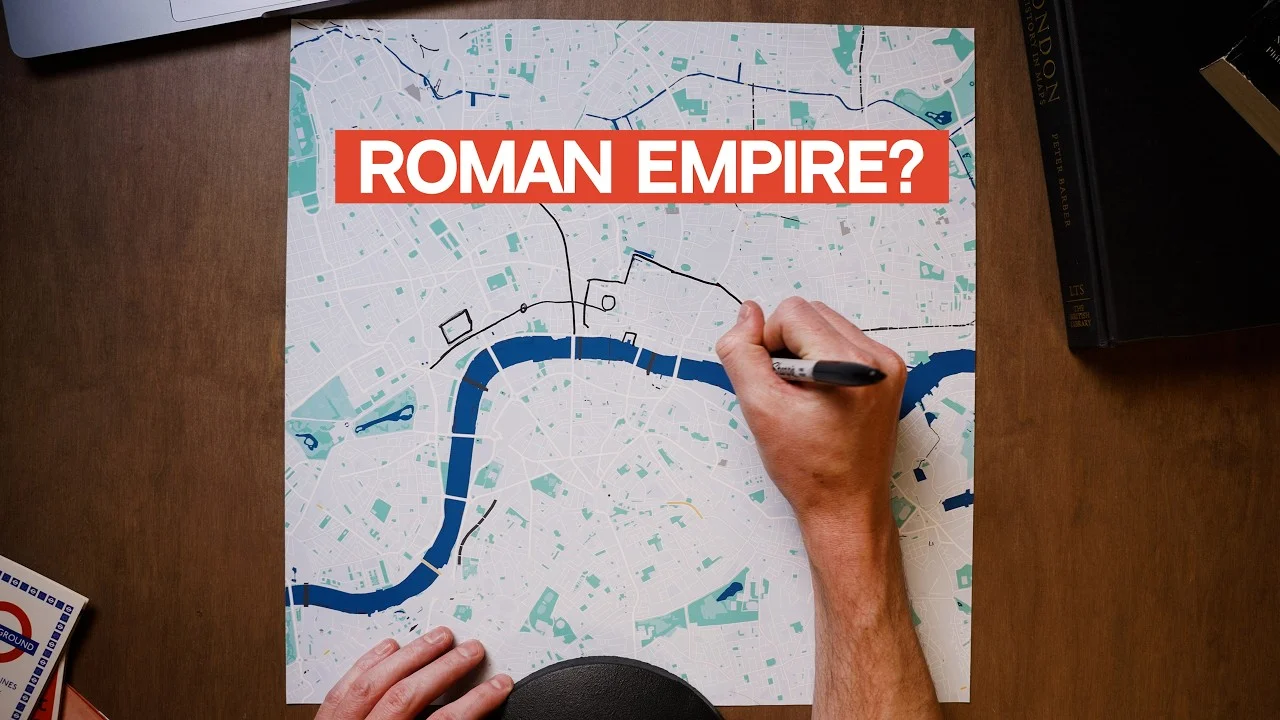
City maps serve as a fascinating entry point for comprehending urban environments. Today, we have access to detailed, real-time maps that visually represent any city, offering features like satellite and street views. However, this wealth of information can give a false sense of familiarity with our surroundings, which often dissipates when technology fails—like when your phone runs out of battery. Knowing your regular routes doesn't equate to a true understanding of an entire city. This notion speaks to a larger issue in our relationship with technology and urban exploration. Are we becoming overly reliant on digital interfaces at the expense of experiencing the tactile elements of our environments?
Bridging the Gap Between Maps and Urban Life
YouTuber Daniel Steiner addresses this gap in his map explainer series, which has gained traction among both urban enthusiasts and casual viewers. He bridges the abstract concept of maps with the tangible aspects of urban experience, pulling together threads that often go unnoticed by both locals and visitors. By using both contemporary and historical maps, he reveals how cities like London and Tokyo evolved to their current forms. Steiner enhances his analyses by visiting these cities firsthand and collaborating with local experts who highlight urban features that often go unnoticed by residents.
These can be anything from remnants of ancient Roman infrastructure in London to neglected overpasses in Tokyo, illustrating how historical layers contribute to current urban realities. Unlike typical tourist attractions that highlight only the famed landmarks, Steiner's narratives weave through the layers of history that define these urban environments. For instance, he points to the original grid of Manhattan still visible in Central Park or the pre-canal topography in Amsterdam. Such insights compel viewers to reconsider their perceptions of these cities beyond what's charted in digital maps.
The Need for Deep Exploration
One exploration, however, isn't enough to fully grasp a city's complexities. It's essential to recognize that urban centers are not just static points on a map; they're dynamic ecosystems influenced by ongoing developments, cultural shifts, and historical narratives. Steiner has returned to New York for multiple videos focused on specific areas such as Broadway, Brooklyn, and Staten Island. His repeated visits illustrate the richness of urban exploration, revealing stories that unfold across different neighborhoods. Each episode often ends with a request for viewers to suggest new subjects or neighborhoods for future exploration, especially within the multifaceted urban tapestry of Los Angeles.
This invitation for audience interaction underscores an essential truth about urban studies: the more you dig, the more you discover. Steiner's approach emphasizes that cities are intricate environments where full comprehension eludes even longtime residents. The intricacies of urban life cannot be captured in a single video or a quick Google search. The layers of history, culture, and social dynamics interact in unexpected ways. What this means for you is that if you're working in the space of urban planning or simply want to understand the pulse of a city, there's a wealth of knowledge waiting at every intersection.
The Symbiotic Relationship of Maps and Experience
These city profiles, including Steiner's insightful explorations of Seattle and Savannah, reveal that cities are intricate environments where full comprehension eludes even longtime residents. Steiner’s approach suggests a symbiotic relationship between the macroscopic overview that maps provide and the minute details discovered through immersive local experiences. This dual approach resonates with the inherent charm of cities; no matter how long we spend in them, there's always more to learn. The idea that maps simply serve functional purposes—point A to B—falls short of encapsulating the rich stories behind urban grids.
Steiner’s videos underscore the message that exploring urban areas requires both top-down perspectives from maps and bottom-up engagement with the streets. You'll gain a better appreciation for how the narratives of the past shape the cities of today. And while it's easy to rely on GPS apps for navigation, the experience of walking through neighborhoods, engaging with local businesses, and understanding community dynamics fosters a deeper connection to those environments. (And this is the part most people overlook.)
Future Implications and Significance
For those captivated by the intersection of urban planning and culture, Steiner's series might just inspire a deeper appreciation for the stories our cities tell through their maps. In a time when technological advances often overshadow the richness of human experiences, initiatives like his remind us that maps are just a starting point. They can spark curiosity, but true understanding demands a deeper engagement with our surroundings. This approach might influence urban studies and the way new generations of urban planners view city spaces. If educators incorporate methods reminiscent of Steiner’s work, we could see a shift in how future planners and citizens interact with their environments. The implications are vast. Understanding urban areas holistically could lead to better community solutions, more inclusive city policies, and a more profound societal appreciation for our shared spaces.
Related content:
- Why Dutch & Japanese Cities Are Insanely Well Designed (and American Cities Are Terribly Designed)
- A Wonderful Archive of Historic Transit Maps: Expressive Art Meets Precise Graphic Design
- Animations Visualize the Evolution of London and New York: From Their Creation to the Present Day
- The Genius Urban Design of Amsterdam: Canals, Dams & Leaning Houses
- 136 Maps Reveal Where Tourists & Locals Take Photos in Major Cities Across the Globe
- Japanese Designer Creates Incredibly Detailed & Realistic Maps of a City That Doesn’t Exist
Based in Seoul, Colin Marshall writes and broadcasts on cities, language, and culture. He’s the author of the newsletter Books on Cities as well as the books 한국 요약 금지 (No Summarizing Korea) and Korean Newtro. Follow him on Twitter at @colinm.



Discussion
Sign in to join the discussion.