David Byrne's new book, "Sleeping Beauties," examines how great ideas go dormant and later reawaken, drawing from diverse historical and artistic contexts.
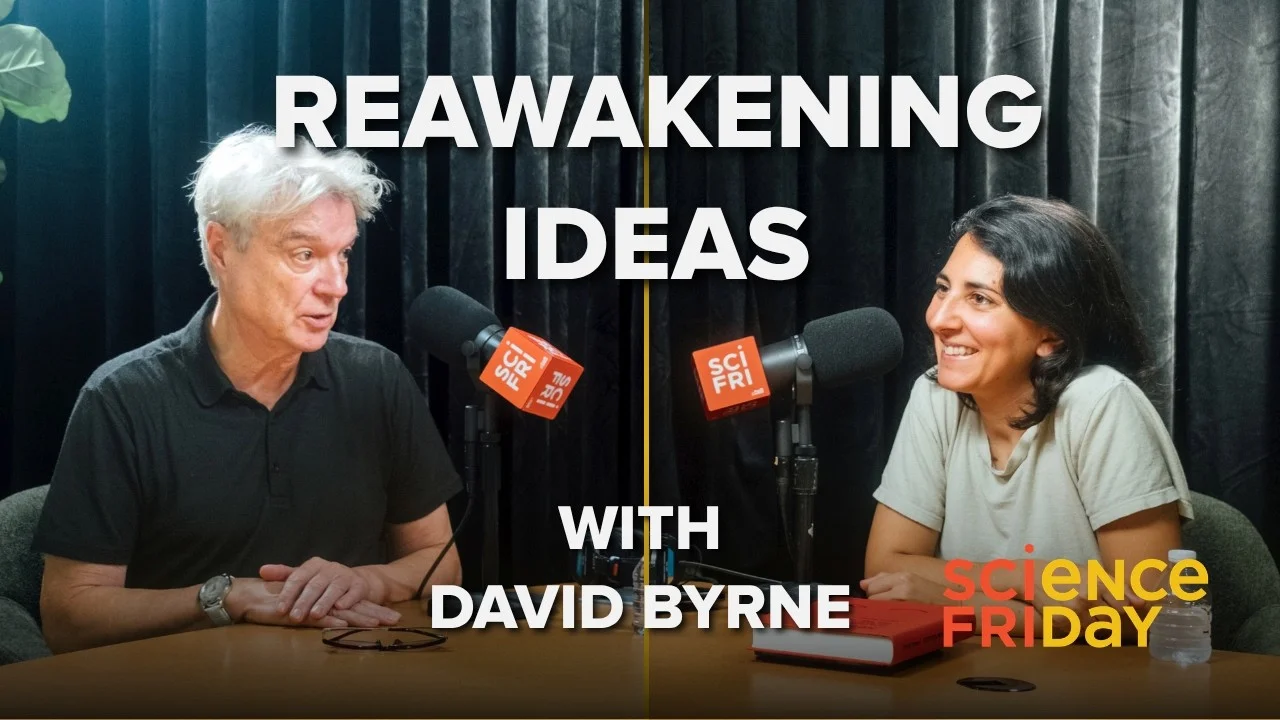
For many, David Byrne is synonymous with the iconic band Talking Heads, a legacy that has defined his artistic journey. Yet, his creative output extends far beyond music, encompassing a range of projects from solo albums and theatrical productions to books and even creative designs like bike racks. His latest endeavor, Sleeping Beauties: Why Good Ideas Go Dormant and How They Wake Up, dives into the nature of ideas and their fluctuating popularity, challenging conventional understanding of creativity and recognition.
The Concept of "Sleeping Beauties"
Byrne first encountered the concept of “sleeping beauties” while exploring a research paper by Anthony van Raan, a study focusing on the cyclical nature of scientific ideas. The paper, titled Sleeping Beauties in Science, examines how certain scientific discoveries, like Vera Rubin's insights into dark matter, remain unrecognized for extended periods. This isn't just a story of missed recognition; it raises significant questions about how we value knowledge and the circumstances that allow certain ideas to be overlooked for so long. Despite her groundbreaking work in the 1970s, Rubin's theories only gained traction decades later, illustrating how ideas can lay dormant before being rediscovered. It highlights the often unpredictable trajectory of ideas—from conception to recognition.
Patterns of Creativity Beyond Science
Here’s the thing: Byrne points out that the phenomenon of forgetting and rediscovering is not confined to science. He sees similar patterns across various creative fields, including music, literature, and visual art. It's a thought-provoking observation that suggests creativity does not only flourish in the limelight; sometimes, it's the undervalued ideas that have the potential to inspire future generations. Ancient Roman concrete serves as another example he mentions, where the investigation into its unique durability only gained momentum in recent years. In this way, Byrne underscores the reality that the world of creativity can often operate in cycles of neglect and revival, raising the question of what other "sleeping beauties" currently await their resurgence.
Review Insights and Comparative Analysis
Adam Grant’s review of Sleeping Beauties in the New York Times Book Review highlights the wide array of case studies Byrne analyzes. The book discusses how figures have revitalized interest in artistic works such as Bach’s compositions and Vermeer’s paintings after periods of neglect. This is where Byrne’s work ties back to the lessons of the past: understanding which conditions facilitate the surrounding discourse can help us make sense of today’s creative environment. It compares closely with scientific advancements that reignited theories related to continental drift and black holes, showing that the rebirth of ideas isn’t limited to the artistic sphere. What does this imply for creators trying to make an impact? It teaches a valuable lesson in patience, in waiting for the right moment to reintroduce a concept.
The Ironic Cycle of Cultural Memory
During a recent interview on Late Night with Seth Meyers, Byrne was asked whether any of his own creations have experienced this cycle of obscurity and revival. His response pointed to a different reality: while some of his work might not age well in his own assessment, it's often those very pieces that end up resonating with future audiences. This irony of cultural memory suggests that today’s overlooked art could be tomorrow’s celebrated classic. This isn't just anecdotal; it’s a reminder that historical and personal context plays a significant role in how art is received over time. If you're working in this space, understanding that meanings can shift drastically will help prepare you for long-term acceptance, if not immediate acclaim.
Psychology of Resurgence: A Deeper Examination
Byrne’s exploration dives deep into the psychology behind how and why ideas become "sleeping beauties" and what triggers their eventual resurgence. He emphasizes the role of changing societal contexts, advancements in technology, and shifts in audience perception as critical factors that dictate the fates of ideas over time. Each of these elements contributes to the way we engage with art and concepts, revealing an often invisible but essential framework supporting the creative process. Trends in interest often fluctuate with societal values, which can ebb and flow unpredictably. This nuanced examination offers a compelling narrative not just about creativity but also about the broader mechanisms of cultural memory and how certain concepts remain relevant across generations.
Implications for Creatives and Thinkers
Ultimately, Sleeping Beauties serves as a reminder of the ebb and flow of ideas, encouraging readers to consider what current "sleeping beauties" may just need the right moment or shift to thrive anew. In a climate where instant gratification often dominates, this book challenges creatives to think long-term. After all, the true value of an idea may not be immediately apparent, and bearing patience in the creative process can reveal unexpected dividends. This is more significant than it looks. It invites artists, thinkers, and innovators to reevaluate their work's potential. The culture of today is saturated with noise; amidst it, some ideas might just need time—and the right conditions—to soar.
Related Content:
David Byrne’s New Illustrated Book Playfully Presents A History of the World (in Dingbats)
David Byrne: From Talking Heads Frontman to Leading Urban Cyclist
David Byrne’s Unusual Forms of Visual Art: Bike Racks, Corporate Signs & Powerpoint Presentations
David Byrne: How Architecture Helped Music Evolve
Brian Eno Explores What Art Does in a New Book Co-Written with Artist Bette A
Based in Seoul, Colin Marshall writes and broadcasts on cities, language, and culture. He’s the author of the newsletter Books on Cities as well as the books 한국 요약 금지 (No Summarizing Korea) and Korean Newtro. Follow him on the social network formerly known as Twitter at @colinmarshall.



Discussion
Sign in to join the discussion.