Nikola Tesla's groundbreaking inventions, from AC power to wireless technology, continue to shape our modern world and spark curiosity about his potential legacy.
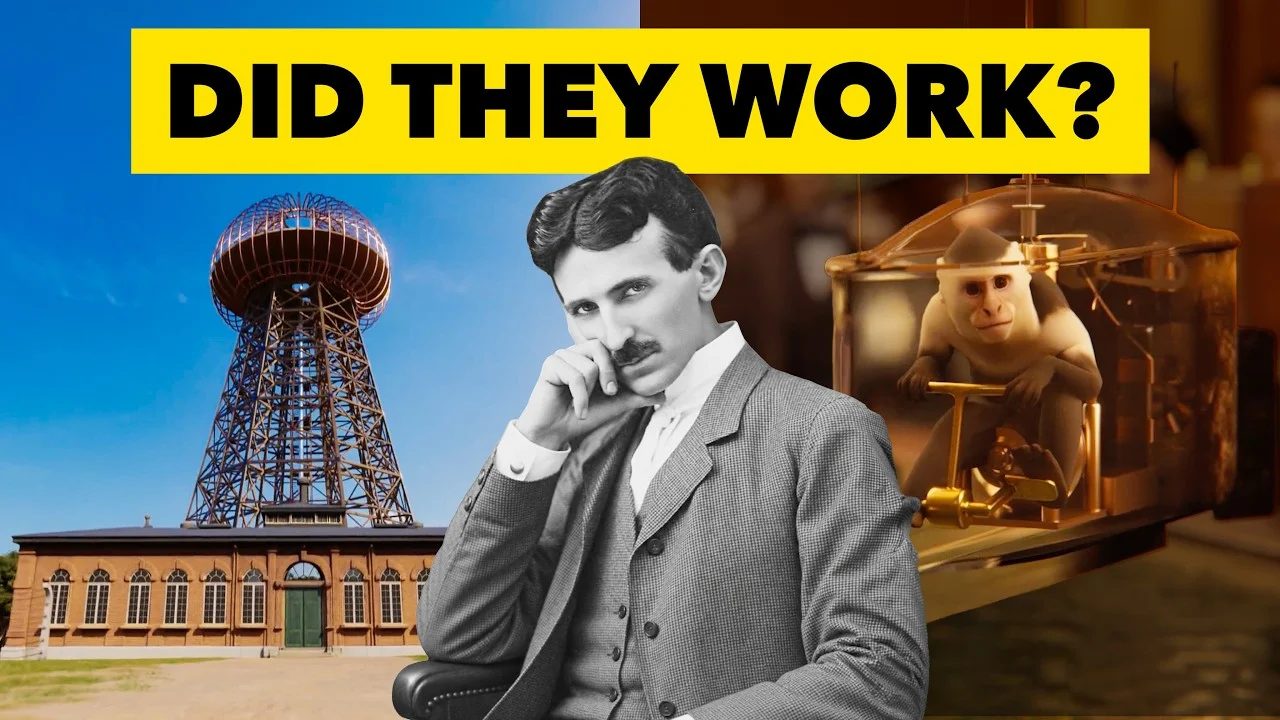
Nikola Tesla, a prominent figure well before the electric car company took his name, remains a topic of admiration fueled often by a limited understanding of his contributions and life. Many might recall his link to electricity or recognize his rivalry with Thomas Edison; however, Tesla's vision extended far beyond that, hinting at a world transformed by technology which can be explored in the fascinating new Lost in Time video.
A Glimpse at Tesla's Early Life and Innovations
Born in 1856 and passing away in 1943, Tesla thrived during an era of significant technological evolution. Educated in engineering and physics in Europe, he came to the United States with a wealth of knowledge that would soon revolutionize electrical engineering. One of his early demonstrations—a radio-controlled boat—left spectators in disbelief, many suspecting a trained monkey was at the helm. This 1898 showcase foreshadowed his foresight into a future filled with autonomous vehicles and long-distance control of machinery, concepts that at the time baffled the mind. His inventions like the alternating current (AC) power system and induction motor hit the mark just in time, delivering solutions to power distribution challenges that plagued the emerging industrial landscape. These advancements laid the groundwork for modern electrical infrastructure and facilitated the growth of cities and industries. Without his contributions, our current relationship with energy would look vastly different.
The Battle for Electricity
As the 19th century drew to a close, the quest to electrify America was in full swing. The rivalry between Thomas Edison and Nikola Tesla became emblematic of the struggle between two different philosophies of energy distribution. While Edison promoted his direct current (DC) system, which required an extensive network of local power stations, Tesla's alternating current (AC) system allowed electricity to be transmitted over much greater distances with fewer losses. The economic implications of AC became clear as towns and cities clamored for affordable electricity that could power homes, factories, and public spaces. Tesla offered a remedy through AC, which would eventually outshine Edison’s efforts, despite facing an intense smear campaign from him. Edison's public relations tactics attempted to discredit Tesla's innovations, branding them as dangerous. However, Tesla’s inventions would show their worth when AC was successfully adopted at the Niagara Falls power station, a milestone that has allowed it to remain the principal source of electricity for millions more than a century later. One can't help but ponder how history would differ if more of Tesla's ambitious ideas had been realized—perhaps homes would be equipped with fantastical inventions like personal death rays.
Unfinished Visions and Lost Opportunities
Fast forward to 1934, an aged Tesla made headlines again as he announced he had developed a groundbreaking weapon, 'teleforce,' that he claimed could "end all wars." This theoretical weapon, designed to strike with concentrated beams of energy, remained enigmatic, as his death in 1943 left behind little evidence to suggest it was ever functional. Unlike his earlier inventions, which had practical applications, this project felt more like a reflection of the anxieties of his later years and the changing landscape of global conflicts. Concurrently, the ambitious Wardenclyffe Tower project—the centerpiece of Tesla's dream to transmute the Earth into a colossal energy reservoir—suffered a crippling blow when financial backer J. P. Morgan withdrew support. This ended Tesla's vision of wireless electric power transmission, a concept that, today, remains a tantalizing possibility in energy discussions. Tesla's lofty ambitions of constructing a wireless communication system seemed almost outlandish at the time, yet they hinted at the technological advancements that would follow in subsequent decades.
The Complicated Legacy of Tesla
The narrative surrounding Tesla is as compelling as it is complex. His blend of practicality and enduring imagination fosters a sense of wonder about what could have been had he received the support his ideas warranted. The contrast between what he envisioned and what was realized raises questions about the nature of innovation and the socio-economic factors that support it. Tesla’s legacy serves not only as an emblem of creative genius but also as a cautionary tale about the fragile state of visionary thinkers. As we continue to innovate, Tesla’s story reminds us of the transformative power of visionary thinking and the necessity of financial backing and public support in bringing revolutionary ideas to life.
Looking Ahead: Implications of Tesla's Vision
What this means for you is that Tesla's ambitions are still relevant today. Modern discussions about renewable energy, wireless communications, and automation can draw inspiration from his groundbreaking ideas. As we explore new technologies, Tesla’s experiences serve as a reminder that visionary ideas can often face insurmountable obstacles, and that collaboration and financial backing are essential for success. Society must reflect on the lessons from Tesla's life to cultivate a culture that embraces and nurtures innovation. After all, we stand on the shoulders of giants—with Tesla undeniably among them.
Related content:
A Brief, Animated Introduction to Edison and Tesla
The Unlikely Friendship of Twain and Tesla
Tesla’s Academic Journey: A Glimpse into His Grades
Tesla's Predictions on Wireless Technology and Smartphones
Exploring Tesla's Impact: A Presentation by Marco Tempest
Tesla’s Predictions for the 21st Century: Wireless and Beyond
Colin Marshall writes and broadcasts on cities, language, and culture. He authors the newsletter Books on Cities and various publications on diverse topics.


Discussion
Sign in to join the discussion.