Finding the right balance in AI integration in education is vital for fostering critical thinking while utilizing new technologies effectively.
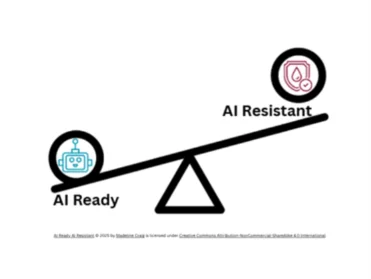
AI's presence in education is inescapable, and its impact is reshaping the way we teach and learn. Faculty members are now grappling with the implications of AI integration across syllabi and student interactions. Rather than resisting this change, educators should adopt a mindset that encompasses both preparedness for AI and a resistance to its detrimental aspects. An effective strategy involves balancing the embrace of AI with a commitment to preserve essential academic values.
Understanding AI Readiness and Resistance
AI Readiness entails embracing AI as a tool that can enhance education through improved creativity, critical thinking, and accessibility. This requires educators to build AI literacy among themselves and their students, promoting ethical usage. In contrast, AI Resistance emphasizes protecting the core aspects of learning, such as authentic thought, reflection, and personal expression. Educators must encourage students to analyze and synthesize information independently, rather than depending solely on AI's capabilities.
The Dangers of Over-Embracing AI
There are tangible risks associated with an over-reliance on AI. When education becomes overly focused on efficiency, there’s a danger of sacrificing depth and critical engagement. Students may produce polished work devoid of genuine struggle or curiosity. In this scenario, the educational experience turns mechanistic, potentially leading to a phenomenon known as "linguistic flattening." These concerns compel educators to scrutinize the ethical, environmental, and societal ramifications of rapidly integrating AI tools into the classroom.
The Risks of Excessive Resistance
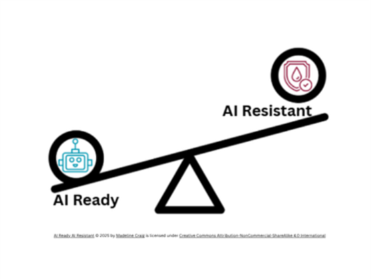
Conversely, overly resisting AI usage comes with its own set of disadvantages. Banning AI from educational settings limits students' exposure to modern tools that are crucial for their future careers. Additionally, utilizing AI detection tools can create barriers, especially for non-native speakers, further contributing to educational inequity. Research has already revealed that responsible AI integration can enhance student engagement and performance, underscoring the need for balance in our approach. Students must learn to navigate a world where AI is prevalent in everyday tasks, from shopping to healthcare.
A Balanced Mindset: AI Ready and AI Resistant
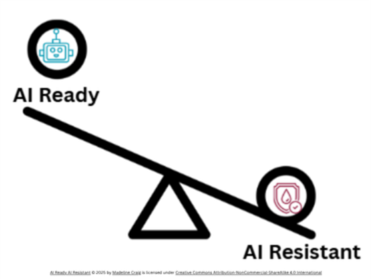
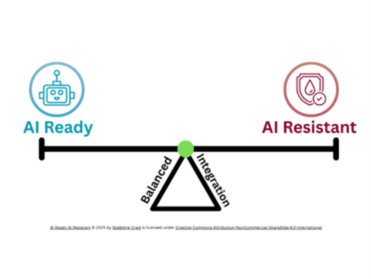
Adopting both AI Ready and AI Resistant mindsets is a rational approach to addressing these complexities. This balance hinges on designing educational experiences that allow for reflective, ethical, and transparent AI use. A human-centered approach positions us as guides rather than passive recipients of technology, emphasizing the value of human creativity and critical thought alongside technological advancement.
Acknowledging AI's growing significance, experts suggest integrating AI skills into everyday curricula, much like reading and writing. Institutions, including the U.S. Department of Labor, have begun promoting AI literacy as a key component of workforce readiness, further emphasizing the need for educational systems to adapt.
Strategies for Effective AI Integration
Instead of striving to create assessments that are entirely resistant to AI, educators should aim for designs that reflect both mindsets. Depending on the nature and stakes of a given course, it’s essential to identify the right balance. For example, some writing assignments might need to be completed in controlled environments, while others could leverage AI as an active learning tool, such as deploying a custom AI chatbot designed as a tutor.
Here are several strategies that embody a well-considered blend of AI Ready and AI Resistant:
- Scaffolded Assignments: Break larger tasks into manageable components, incorporating continuous feedback while allowing the use of AI for brainstorming and revisions.
- Project-Based Learning: Center class activities around real-world challenges, enabling collaborative work and the use of AI for creative problem-solving.
- Portfolios: Encourage the cumulative collection of student work, focusing on progress through iterative drafts and incorporating AI for content enhancement.
- Gamification: Integrate educational technology tools that employ formative assessments, enabling students to create their own study aids with AI assistance.
- Custom AI Chatbots: Enable students to develop their own interactive tools for learning that align with course content.
Ultimately, embracing a dual mindset toward AI empowers educators to navigate the evolving educational landscape thoughtfully. By fostering critical thinking and authentic learning while exploring the efficiencies AI brings, educators can prepare students for the complexities of tomorrow’s world. The dialogue surrounding AI in education will persist, and it's crucial for educators to engage proactively in shaping this discourse.
Dr. Madeline Craig is an Associate Professor and Technology Integration Coordinator at Molloy University’s School of Education and Human Services. Her expertise includes AI tools for educators, project-based learning, and online course design.
References
Chaudhary A. A., Arif S., Calimlim R. F., Khan S. Z., Sadia A. (2024). The impact of AI-powered educational tools on student engagement and learning outcomes at higher education level. International Journal of Contemporary Issues in Social Sciences, 3 (2). 2842–2852.
Gotoman, J. E. J., et al. (2025). Accuracy and reliability of AI-generated text detection tools: A literature review. American Journal of IR 4.0 and Beyond, 4(1), 1–9.
Kosmyna, N., et al. (2025). Your brain on ChatGPT: Accumulation of cognitive debt when using an AI assistant for essay writing tasks [Preprint]. arXiv.
Ng, D. T. K., et al. (2021). Conceptualizing AI literacy: An exploratory review. Computers and Education Artificial Intelligence, 2, 100041.
Paschalidis, A.I. (2025). AI and the great linguistic flattening. UNESCO Ideaslab.
U.S. Department of Labor. (2026). U.S. Department of Labor releases AI literacy framework providing foundational content areas, delivery principles to guide nationwide efforts.


Discussion
Sign in to join the discussion.