In the rapidly evolving landscape of education, balancing readiness for AI integration with a critical stance against its overuse is essential for meaningful learning.
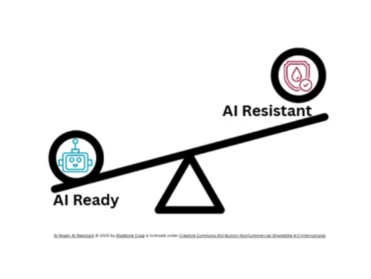
AI has become an omnipresent force in educational discussions. As institutions evaluate the integration of new AI-driven models, the conversations around teaching and assessment methods are transforming. More than just a tool, AI affects our approach to education as faculty grapple with its implications on student engagement and integrity. Adopting a balanced mindset that is both AI Ready and AI Resistant emerges as vital for educators aiming to maintain the integrity of the learning experience.
The AI Ready mindset embraces the advantages of AI in the classroom, such as enhanced creativity and accessible learning resources. Educators aim to build AI literacy while modeling ethical use of technological tools. On the flip side, the AI Resistant mindset is crucial for protecting the essence of authentic learning, emphasizing the importance of independent thought, personal expression, and critical reflection. Together, these two approaches form a necessary strategy for navigating the complexities introduced by AI tools.
Understanding AI Readiness and Resistance
Being AI Ready isn't just about adopting the latest technologies; it’s about leveraging AI to foster deeper learning experiences. It entails developing skills to use AI as a creative partner while ensuring that the core principles of education—reflection, analysis, and synthesis—are preserved. Conversely, an AI Resistant stance does not advocate for a total ban on AI in educational environments. Instead, it encourages a thoughtful analysis of when and how to implement AI technologies while ensuring that students cultivate their beliefs, skills, and creativity, minimizing the risk of becoming overly reliant on AI outputs.
The Perils of Over-Dependence on AI
Striking a balance is essential; leaning too heavily into being AI Ready could result in prioritizing efficiency and polished outputs over genuine educational experiences. The potential for "linguistic flattening," as it has been termed, and a decline in critical thinking skills arises from an overreliance on AI's instant gratification.
Conversely, excessively resisting AI can inhibit innovation. Banning these technologies in educational settings effectively denies students the opportunity to engage with tools that are becoming integral to many professional fields. Moreover, concerns about AI detection tools reveal weaknesses, such as bias against language learners, which could alienate students rather than supporting their development.
Finding the Middle Ground
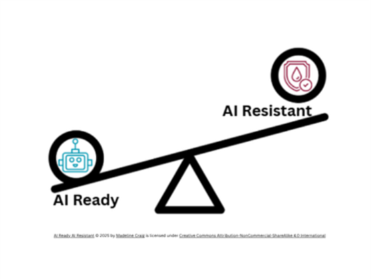
So, how can educators maintain this equilibrium? A balanced integration strategy echoes the notion that both AI Ready and AI Resistant approaches should coexist seamlessly. This involves designing learning experiences that engage with AI in a reflective and ethical manner, ensuring that technology assists rather than diminishes human creativity and inquiry.
By positioning AI as a supplementary tool, educators have the opportunity to shift their teaching paradigm to focus on human-centered applications of technology, benefiting both educators and learners. Recommendations include treating AI as a literacy requisite as essential as reading and writing, ensuring students develop competencies that prepare them for the workforce.
Implementing Mixed Teaching Strategies
Adopting both mindsets—AI Ready and AI Resistant—in classroom activities can yield diverse educational strategies. Here are a few proven approaches:
- Scaffolded Assignments: Break larger tasks into smaller segments, providing iterative feedback while allowing AI tools to assist in brainstorming and revisions.
- Project-Based Learning: Focus on real-world issues, guiding students to collaborate on projects that utilize AI for research and creative solutions.
- Portfolio Development: Encourage students to compile their work over time, emphasizing progression rather than solely final outputs, integrating AI for enhancements.
- Gamification: Employ educational technology that promotes engagement through game-like learning experiences, leveraging AI for personalized resources.
- Custom AI Chatbots: Facilitate learning by creating or utilizing chatbots tailored to course content, assisting with queries and providing interactive learning opportunities.
As the educational landscape shifts rapidly, the onus remains on educators to find their unique balance between readiness and resistance to AI. Holding both perspectives can unveil new dimensions of student engagement and critical thinking. Ultimately, as educators, recognizing this equilibrium may prove transformative, both in fostering analytical skills and in preparing students for a technologically enhanced future.
Dr. Madeline Craig, an Associate Professor and Technology Integration Coordinator at Molloy University’s School of Education, specializes in AI applications for educational settings, project-based learning, and online course design.


Discussion
Sign in to join the discussion.