Galileo Galilei's calculations of Dante's Inferno reveal a unique intersection between literature and early scientific inquiry, shaping future physics.
Galileo's Unlikely Task
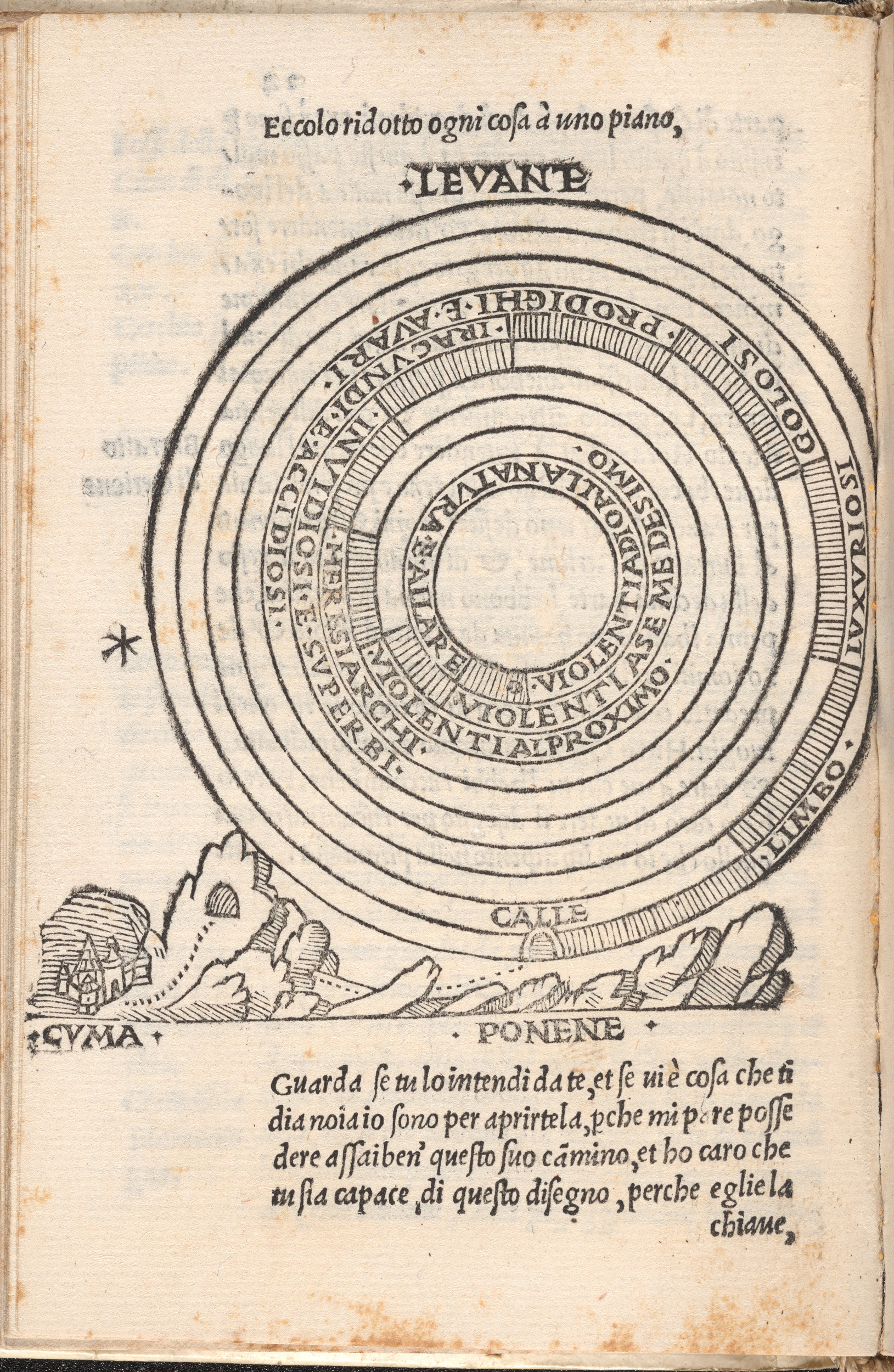
Galileo Galilei, a figure renowned for challenging scientific norms, once undertook an unexpected task: determining the dimensions of hell as depicted in Dante’s Divine Comedy. Commissioned by the Florentine Academy around 1588, Galileo approached this fantastical topic with a serious mindset, calculating that the infernal roof should be centered in Jerusalem, stretching to the Earth’s full radius and thick enough to measure at least 600 kilometers.
Galileo's choice to examine a literary construct speaks volumes about the intersections of art and science during the Renaissance. This was a period when the boundaries between empirical study and theological tradition were blurred, and thinkers sought to reconcile classical philosophies with emerging scientific evidence. His work on hell wasn’t just about the geography of sin; it represented a bold assertion that serious inquiry could be applied to fantastical subjects.
Methodology: Bridging Architecture and Literature
However, Galileo's projections were not mere flights of fancy. He drew from contemporary architectural achievements, notably Filippo Brunelleschi’s dome at the Florence Cathedral, as a model for his measurements. His findings were in stark contrast to the previous calculations by Alessandro Vellutello but aligned with those of fellow Florentine architect Antonio Manetti, whose geometric illustrations contributed to the discussion of infernal dimensions.
By anchoring his calculations in the architectural success of his time, Galileo connected the ethereal to the tangible. He wasn't just theorizing about hell; he was anchoring his ideas in the Renaissance’s fascination with geometry and perspective. This method reflects not only his intellectual capability but also the prevailing belief that understanding physical space could lend insight into spiritual realms—a notion that permeated the period.
Competition and Intellectual Context
It's intriguing to consider how personal rivalries might have influenced these assessments. The competitive spirit between Florence and neighboring Lucca underscores the desire for accurate representations, even within the realm of the fictitious. The fervor for reconciling religious scripture with empirical observation absorbed the intellect of many during the Renaissance, and for Galileo, this pursuit may have laid the groundwork for mathematical physics.
Cultural rivalry during the Renaissance acted as a catalyst for intellectual innovation. If you're working in this space, understanding these dynamics is essential. Galileo’s inquisitiveness was not insulated; it thrived amidst a culture where ideas were scrutinized, debated, and often fiercely contested. Thus, his calculations about hell were more than personal musings—they were part of an intellectual tradition that celebrated inquiry, competition, and synthesis of knowledge across domains.
A Historical Perspective: Bridging Literature and Physics
Mark Peterson, a historian and mathematician, posits that Galileo’s interpretations of Dante’s description of a non-Euclidean universe were pivotal. They arguably bridged literary concepts to fundamental physical principles that would emerge in later scientific thought. This academic pursuit enabled Galileo’s transition from a lecturer at the Florentine Academy to a mathematics instructor at the University of Pisa, furthering his career amidst rising tensions between science and religion.
Here’s the thing: understanding Galileo's work involves recognizing the broader philosophical currents of his time. The Renaissance was steeped in a resurgence of interest in humanism, emphasizing the potential of human reasoning. Galileo’s intellectual journey into Dante’s inferno exemplified how literature could shape scientific inquiry. Such engagements not only provided a platform for mathematical exploration but also underscored the tension of reconciling faith with reason.
Interpreting Inferno: Beyond Mathematics
In tracing Galileo's path through the labyrinth of infernal geometry, we're not just understanding his contributions to science but also the cultural context in which he operated. This venture into Dante’s hell wasn’t just a mathematical exercise; it represented an intellectual wrestling with the tenets of faith and observation that defined an era. Think of it as Galileo functioning as a bridge between two seemingly disparate worlds—the artistic and the scientific.
This interplay not only informed Galileo’s scientific methods but also left a lasting impact on how future generations would approach the relationship between literature and science. By integrating Dante’s visions with mathematical rigor, he opened pathways for subsequent thinkers to explore similar intersections—albeit in more empirical contexts.
Implications and Future Outlook
What does this exploration mean for us today? Galileo’s inquiry highlights the enduring relevance of interdisciplinary studies. In an age where specialization often reigns supreme, his example suggests that blending perspectives can lead to richer insights and approaches. The tradition of questioning and synthesizing different fields can foster a more holistic understanding of both scientific and humanistic endeavors.
As we continue to grapple with complex scientific questions and their ethical implications, perhaps revisiting Galileo’s approach will prove beneficial. The challenge remains: how do we frame our inquiries in ways that transcend disciplines? By looking back at how he embraced a literary figure like Dante, we might find inspiration in forging connections that enhance our understanding of contemporary issues, be they technological, ethical, or philosophical.
Related content:
Dante’s Divine Comedy: A Visitor’s Guide to Hell, Purgatory & Paradise
Physics from Hell: How Dante’s Inferno Inspired Galileo’s Physics
Beautiful 19th Century Maps of Dante’s Divine Comedy: Inferno, Purgatory, Paradise & More
Visualizing Dante’s Hell: See Maps & Drawings of Dante’s Inferno from the Renaissance Through Today
A Digital Archive of the Earliest Illustrated Editions of Dante’s Divine Comedy (1487–1568)
Based in Seoul, Colin Marshall writes and broadcasts on cities, language, and culture. He’s the author of the newsletter Books on Cities as well as the books 한국 요약 금지 (No Summarizing Korea) and Korean Newtro. Follow him on the social network formerly known as Twitter at @colinmMarshall.


Discussion
Sign in to join the discussion.