São Paulo’s innovative Sala do Futuro is transforming educational frameworks in Guarulhos, fostering engagement, coherence, and new student roles.
São Paulo is setting a new standard for education with its Sala do Futuro initiative, particularly evident in Escola Estadual Alberto Lacan in Guarulhos. Here, the atmosphere has palpably shifted, fostering an environment where learning isn't merely a function of rote teaching but instead thrives on collaboration and engagement.
Upon entering the school, it's clear that traditional classroom dynamics are evolving. While the fundamental elements—like teachers, students, and blackboards—remain, there's a fresh foundation at play that enhances educational interactions. This profound change makes educators not just conveyors of information, but dynamic mentors and problem-solvers, adaptable to individual student needs.
The context is essential: Guarulhos is near São Paulo/Guarulhos International Airport, a hub of opportunity that contrasts starkly with the economic realities many students face. For the youth in this neighborhood, the real journey towards different opportunities often begins within the walls of Alberto Lacan, rather than at the airport gates. In this school, a ‘runway’ of another kind is being built—an educational framework designed to elevate student potential.
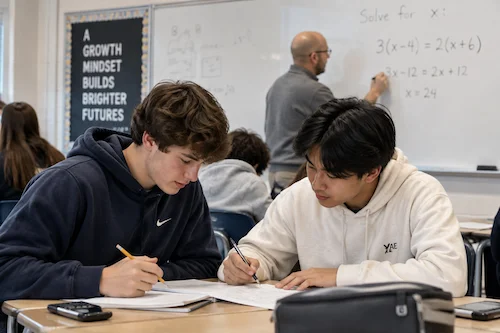
During a mathematics class, the difference is palpable. Attention fills the room as students focus on algebra, a topic that typically disengages learners elsewhere. This shift in focus occurs because instructors are implementing meaningful connections between abstract concepts and real-life relevance. The Sala do Futuro platform supplies educators with valuable resources—structured lesson plans and engaging materials—that allow them to cultivate a more interactive and effective educational experience.
Unlike conventional digital platforms, which merely serve as content repositories, the Sala do Futuro operates as an orchestrator of learning. Lessons are not standalone; instead, they fit into an intricately designed framework that guides students through daily learning tasks and aligns with their homework. This cohesive approach creates a rhythm akin to that of a well-rehearsed orchestra, facilitating a more synchronized educational experience.
Consider how transformative it is for teachers to access extensive resources that support their instructional methods. For less experienced educators, this serves as an invaluable training tool, while seasoned teachers can enhance their instructional strategies. The platform doesn't supplant the teacher's role; instead, it transforms them into architects of learning experiences, enriching student understanding while challenging their pedagogical methodologies.
Gabriely, a high school student at Alberto Lacan, exemplifies the impact of this initiative. She not only studies but also participates actively within the school as a student mentor. This role not only contributes to her family's needs but importantly reinforces her position in the educational ecosystem. This mentorship program bridges students and teachers, fostering a sense of community where peers can relate to one another's struggles.
Such initiatives counteract the often bleak pathways into informal, low-paying work that many adolescents might otherwise face. Instead, Gabriely’s role is one that cultivates dignity and purpose, enabling her to influence others positively while continuing her own academic journey. This integration of students into mentorship positions signifies a crucial component of the Sala do Futuro’s strategy to enhance learning while promoting personal development.
The homework experience, traditionally an isolated task, has also been redefined through Tarefa’s digital approach. Homework is not just assigned; it becomes an extension of the classroom's daily lessons, automatically corrected and tracked, enhancing both accountability and engagement. This immediate feedback loop offers students the timely guidance needed to grasp challenging concepts, while educators gain insights into their students' performance in real-time.
Effective teaching hinges on data, a pivotal aspect of the Sala do Futuro system. Every interaction within the platform generates valuable analytics that informs decision-making at various administrative levels. Instructional leaders can access comprehensive dashboards to identify educational trends and gaps, ultimately informing strategies for improvement across countless schools. This data-driven approach provides a level of transparency that can refine educational governance significantly.
Coherence represents one of the greatest hurdles in educational reform, and São Paulo tackles this challenge head-on. By aligning curriculum, teaching practices, and assessment methods across diverse schools, the system creates a tightly integrated educational experience for all students—especially those in underserved areas who frequently endure inequitable access to quality education.
The changes visible in Guarulhos reflect a determined effort to get fundamental educational practices right, deploying a deliberate alignment of resources and strategies. Sala do Futuro isn't a panacea but an essential infrastructure that reshapes educational possibilities. It preserves the vital role of dynamic teaching while enhancing its effectiveness, making quality education more accessible. This initiative underscores a broader narrative: success in education frequently arises from systematic execution rather than a lack of innovative thinking.
In essence, São Paulo’s endeavor illustrates that through intentional coherence—linking curriculum, instruction, and feedback—an equitable educational framework can emerge. This lays the groundwork for students to not just dream of success but to embark on their journeys toward it, armed with the knowledge and skills to thrive.

Discussion
Sign in to join the discussion.