Integrating digital fluency into K-12 education is pivotal for preparing students with essential skills for today's evolving job market.
By: Kimberly Smith
The gap between emerging technologies and K-12 education has never been more pronounced. As industries leverage advancements in fields like artificial intelligence and cybersecurity, it's evident that students must enter the workforce equipped with more than traditional skills. They need a solid grounding in digital fluency to navigate the new, complex job landscape effectively.
Recent findings from The Burning Glass Institute reveal that around 30% of essential workplace skills have undergone transformation over the past decade. This shift, fueled by digital advancements, is occurring twice as swiftly as historical trends suggest. Currently, it impacts about 35 million workers in the U.S., with over 60% of job titles in non-tech fields referencing AI.
In the context of education, it's essential to differentiate between digital literacy and digital fluency. Jennifer Sparrow, Associate Vice President for Research and Instructional Technology at New York University, articulates this distinction clearly:
“In learning a foreign language, a literate person can read, speak, and listen for understanding in the new language. A fluent person can create something in the language: a story, a poem, a play, or a conversation. Similarly, digital literacy is an understanding of how to use the tools; digital fluency is the ability to create something new with those tools.”
In essence, digital literacy is the basic operational knowledge of tools, while digital fluency encapsulates a deeper understanding of when and why to employ these tools effectively. Digital fluency empowers learners to select the appropriate tools for a particular problem and to use them creatively to generate novel solutions.
Components of Digital Fluency
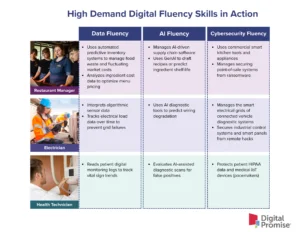
The framework of digital fluency can be broken down into five key components: curiosity fluency, communication fluency, creation fluency, data fluency, and innovation fluency. Building on this, we propose a sixth component: cybersecurity fluency. Today, virtually every worker is responsible for securing information and systems, directly or indirectly.
Digital Fluency Applied
Practically, digital fluency manifests in several ways:
- Generating novel ideas with digital tools and enhancing critical thinking.
- Utilizing data to inform decisions while recognizing when to question technology's suggestions.
- Employing technology to craft narratives and visualize data effectively.
- Awareness of cybersecurity risks and the implementation of protective measures for data and access.
These skills are not just hypothetical aspirations for future tech positions; they form essential capabilities needed in today's job market. Incorporating digital fluency into K-12 career pathways is vital for preparing learners with the skills and experiences that align with industry demands.
For instance, Digital Promise’s initiatives in rural Alabama showcase how diverse industries are actively seeking candidates adept at safeguarding systems and data. Student internships spanning sectors such as healthcare, finance, and retail highlight this widespread need.
Some school districts are already making strides by integrating digital fluency into career pathway experiences. Students are tackling real-world issues, such as local food insecurity, using scalable technologies, or even engaging in community projects like building tiny homes.
As AI technologies continue to intertwine with data management, and cybersecurity remains critical, the intersection of these fields points to a future of careers that are both resilient and adaptive. K-12 programs that prioritize digital fluency will likely empower students to not only secure entry-level jobs but also nurture fruitful careers in an ever-evolving technological landscape.
Kimberly Smith is Chief Innovation Officer at Digital Promise and co-leads the Center for Learner Pathway Innovations. She manages partnerships with school district leaders to foster solutions that promote learner success. With leadership experience in organizations like PBS and Discovery Education, she holds an MBA from Johns Hopkins and a BS in Journalism from the University of Colorado.
The post Digital Fluency Is the Missing Foundation in K-12 Career Pathways appeared first on Getting Smart.


Discussion
Sign in to join the discussion.