Discover how Pleasant Valley educators are guiding K-12 students in AI literacy through engaging lessons focused on ethics, biases, and responsible use.
How do you effectively teach students about artificial intelligence when the rapid evolution of technology, unequal access across grade levels, and limited classroom time pose constant challenges?
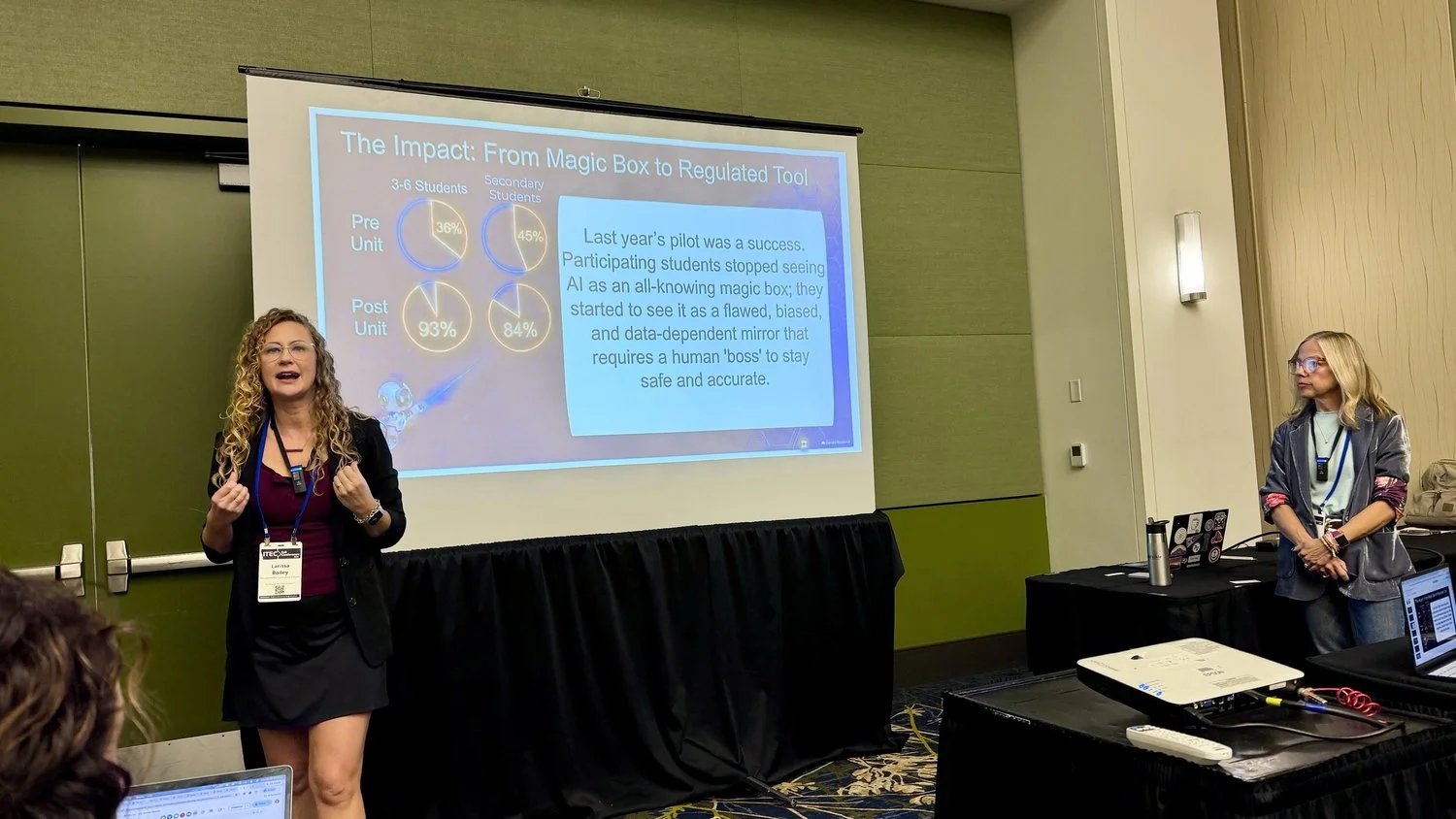
At the recent ITEC Fall Conference, Larissa Bailey and Aimee Peters from the Pleasant Valley Community School District tackled these pressing questions by implementing a series of AI literacy lessons tailored for students at all educational stages—from elementary through high school. Their approach not only addresses the complexities of teaching about AI but also provides valuable lesson materials that other educators are encouraged to adapt for their classrooms.
At the heart of their initiative is a compelling question: **How can AI be used responsibly, respectfully, and safely?** Using the [K–12 AI Learning Priorities](https://csteachers.org/ai-priorities/) framework, Bailey and Peters crafted a sequence of six distinct lessons aimed at different grade bands: grades 3–6, 7–8, and 9–12. These lessons go beyond mere technical instruction; they delve into crucial themes such as the mechanics of AI, the inherent biases present in AI outputs, safety considerations, and the ethical implications surrounding its use. Specifically, the older students explore topics like academic integrity, citation practices, privacy rights, and the environmental impact of AI technologies.
### Bringing AI Concepts to Life
One particularly engaging activity for younger students involves Google's [Teachable Machine](https://teachablemachine.withgoogle.com/), designed to provide a hands-on understanding of how AI learns. In this exercise, students illustrate apples and grapes, using their drawings to train a model to recognize these fruits. As the students test their model with new drawings, they soon discover that the AI doesn't always get it right.
Such moments are invaluable for discussion. They invite students to reflect on why the AI struggles: Did it have adequate training data? Could more diverse examples enhance its accuracy? As Bailey and Peters insightful noted, “AI's gonna give us an answer no matter what. But if it doesn't have the right training data, we can't trust that answer.” This experiential learning fosters a deeper grasp of concepts such as training data, pattern recognition, and the nuances of certainty in AI outputs.
### Unpacking Bias with Real-World Examples
The lessons also prompt students to critically analyze AI-generated images and question the assumptions they convey. For instance, one activity involves examining an AI-generated classroom scene, where students recognized that it perpetuated stereotypes about gender and ethnicity. This led to discussions about the origins of such biases and ways to create more inclusive representations.
In another instance, students reacted to an AI depiction of children that portrayed boys as misbehaving. Their observations spurred conversations about stereotypes and the influence of personal experiences on perceptions. Rather than simply pointing out biases, the curriculum challenges students to interrogate their roots, understand the effects of training data, and acknowledge that altering a prompt might not resolve inherent issues.
### Recognizing the Limitations of AI
A critical component of this curriculum is guiding students to differentiate between AI “experiences” and genuine human interaction. In the elementary lessons, students learn about chatbots and their perceived emotionality, highlighting that while AI can mimic human conversation, it lacks true understanding or experience. A poignant reminder from one teacher encapsulated this reality: “AI sounds human, but it's not your friend. It's a tool, it's a machine.”
High school students take this exploration further through interactive demonstrations involving AI such as Sesame Voice AI. They question the chatbot about its training data and its capacity for personal experiences. Responses can appear convincing, yet they lack the substance of firsthand knowledge—an essential distinction for learners to grasp.
### Promoting Responsible Engagement with AI
As the curriculum progresses, it starts to focus on how students can ethically engage with AI technologies. For younger students, the foundational principles revolve around **Permission, Privacy, and Respect**. In contrast, older students are encouraged to address information verification, proper citation of AI contributions, and maintaining academic integrity.
One notable lesson for middle school students involved using Google Gemini to analyze the reliability of chatbot responses. This exercise pushed students to scrutinize their assumptions and compare AI-generated content against human expertise. Additionally, there was a strong emphasis on the environmental implications of AI. Teacher feedback prompted the team to heighten awareness of this topic, showing a commitment to evolving the curriculum based on the needs of students.
### Iterative Development of AI Curriculum
The curriculum's development wasn't a one-off endeavor; it was the result of continuous review and refinement. Teachers, librarians, and administrators initially assessed the lessons, followed by input from student focus groups and pilot classes that helped pinpoint effective strategies and areas for improvement.
In a practical example, Peters employed collaborative teaching strategies, adapting lessons throughout the day based on real-time feedback from students. When students expressed frustration over an AI-generated image not aligning with their imagination, her prompt to be more specific in their requests became not only a lesson on AI but also on clear communication and prompt refinement.
Even though Pleasant Valley hasn't yet deployed generative AI tools for student use, the presenters firmly believe in the importance of AI literacy. With AI capabilities increasingly woven into everyday technology, like Google's AI Overviews, the district aims to equip students with foundational knowledge ahead of broader tool accessibility.
### Discover the Resources
This curriculum is just the beginning. Plans are in place to establish clearer grade-level outlines and integrate AI learning into existing subjects rather than repeat introductory lessons each year. Bailey and Peters have generously shared their lesson materials so other educators can adapt and enrich their classrooms.
You can explore their resources, including lesson plans, slide decks, assessment tools, and teaching guides, through the following links:
- [Elementary AI Literacy Lessons, Grades 3–6](https://drive.google.com/drive/folders/1yLjvN9vZSAkdYuFl_qCazWoBEa-4HaVm)
- [Junior High AI Literacy Lessons, Grades 7–8](https://drive.google.com/drive/folders/15r5vxu31-pnxoT6tim782YWWalVibFuT)
- [High School AI Literacy Lessons, Grades 9–12](https://drive.google.com/drive/folders/1J1ECOhnD5JBiMJ5bzadsmbYsuYH4s4Of)
In the upcoming sections, we’ll delve deeper into how these lessons are being implemented in classrooms and what teachers and students are learning from them.
Discussion
Sign in to join the discussion.