Discover how hands-on LEGO activities can illuminate the relationship between artificial intelligence and uniquely human capabilities.
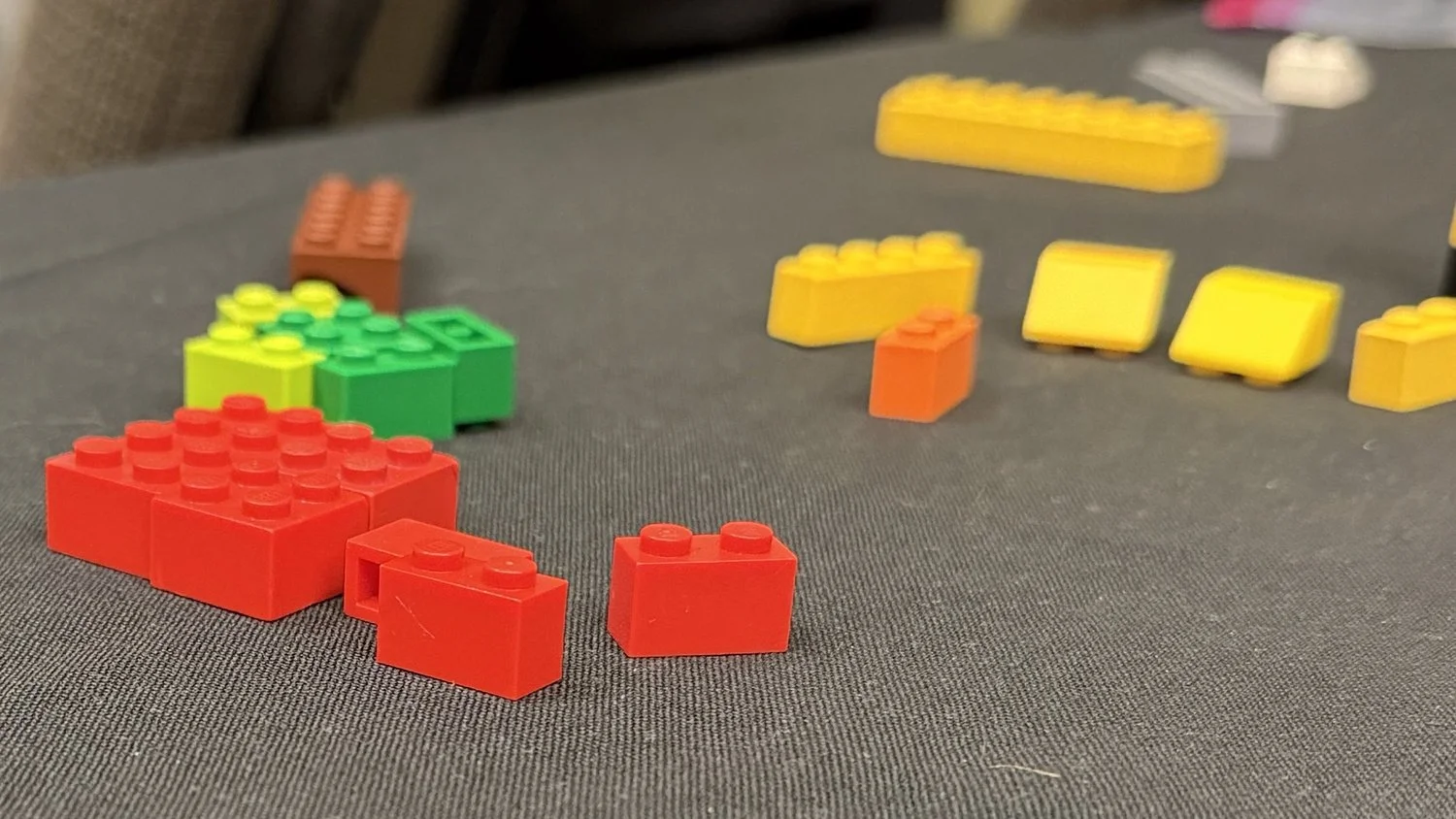
What can a simple assortment of LEGO bricks reveal about artificial intelligence? Quite a lot, as demonstrated during the “Teaching Inquiry Skills That Help Humans and AI Think Better Together” session at the ITEC Fall Conference, led by Raymi Choate and Lindy Trout Turnis from the Science Center of Iowa.
Understanding Human and AI Strengths
Central to the session were two interlinked questions: What defines our humanity, and what are the competencies of AI? Participants engaged in various hands-on exercises aimed at exploring these themes. The goal was not merely to identify tasks for automation but to discern when human qualities matter most.
One engaging activity was called Most Uniquely Human, where small groups sorted a list of abilities and traits from those perceived as uniquely human to those that a machine could mimic. This led to fruitful discussions about the roles of creativity, memory, communication, and emotion—can these traits be replicated by computers? While there aren’t definitive answers, the conversations encouraged a deeper understanding of what makes human capabilities distinct.
In that context, Raymi and Lindy emphasized an important principle: when assessing what tasks to automate, prioritize those that are less dependent on the qualities that enrich human relationships and experiences. Automation can effectively offload work that involves data processing and pattern recognition to allow humans to focus on more collaborative and emotionally nuanced tasks.
LEGO Bricks as a Model for Complexity
As part of this learning experience, participants were given bags of LEGO bricks to organize. Initially, the task seemed straightforward—sort the blocks by color. As we introduced additional sorting criteria, such as size or shape, the challenge escalated. The exercise becomes complex as participants struggled with prioritizing characteristics—learning how to organize multiple dimensions of information simultaneously.
This hands-on experience highlighted a crucial point: humans naturally tend to zero in on the most obvious features, making it challenging to juggle multiple aspects of data. In contrast, computers excel at managing layered, multidimensional information. This aspect of data processing laid the groundwork for discussions surrounding AI.
AI and Data Organization
In the realm of artificial intelligence, an embedding refers to a numerical representation that captures the essence of data in a way that AI systems can effectively analyze. Each embedding, represented as a vector—a list of numbers—can indicate relationships between various data points. In our LEGO activity, grouping similar bricks echoed how embeddings function, as bricks that shared characteristics were kept close together.
However, real embeddings complicate matters significantly, often existing in hundreds or even thousands of dimensions. The relationships represented may not always be immediately recognizable, yet our LEGO task provided a valuable analogy for understanding how AI organizes and interprets information.
Subsequent activities invited participants to assume the role of AI, using their interpretations of the LEGO arrangements to respond to various creative prompts set by Lindy. This exercise demonstrated how multiple interpretations could arise from the same set of data, emphasizing that while AI can generate responses that may seem perceptive, it lacks the genuinely human understanding tied to lived experience.
Moving AI Skills to the Classroom
The session's hands-on activities served as an effective entry point for educating students about AI, circumventing the requisite math complexities. Through this engagement, students explored the hurdles of multidimensional sorting and identified the potential advantages of leveraging AI for similar tasks—providing timely context for determining reasonable domains for automation.
Central to this inquiry is the question: what work should remain human? While AI thrives in sorting and classifying data, efficiency cannot be the sole motivator for automation. Educators must consider the human skills essential for developing responsible, empathetic, and capable individuals prepared for a technology-rich environment.
The Balance Between AI and Human Experience
Raymi and Lindy masterfully connected the technical concept of embeddings back to significant classroom conversations about the purpose of education and the ethical implications of AI. Their approach illustrated that understanding AI extends beyond mere usage; it encompasses a thoughtful reflection on technology, its potential, and its limitations.
Ultimately, the challenge lies in smartly incorporating AI without supplanting human experiences, relationships, and discernment. As students gain insight into the interplay between AI capabilities and human skills, they’re better positioned to navigate this increasingly digital landscape while valuing the nuances of their interactions.
It's not about automating every conceivable task but ensuring a balanced approach where AI complements human efforts and preserves what is inherently valuable in our shared experiences.
This post was drafted by ChatGPT based on notes and transcripts from the session.

Discussion
Sign in to join the discussion.