Jonathan Swift’s depiction of an automated writing machine in Gulliver's Travels gains new relevance as AI language models transform content creation.
The Printing Press: A Historical Inflection Point
The advent of the printing press in the mid-fifteenth century marked a significant shift in how written content was produced. This revolutionary technology not only increased the volume of printed material but also democratized information access. However, critics in earlier times speculated that the sheer quantity of writing often overshadowed its quality. What emerges here isn’t just an observation; it’s a commentary on society's proclivity for production over curation. Jonathan Swift's satirical insights capture this dilemma effectively. In Gulliver’s Travels (1726), he lambasts the excesses of writing that mimic, in some ways, our current digital age, where algorithms produce text at unprecedented rates.
Swift’s Vision: The Engine of Knowledge
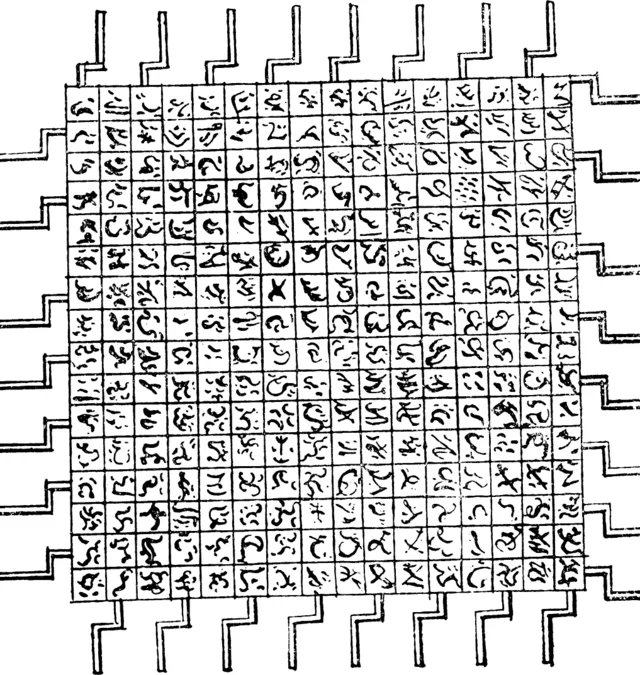
Within the confines of Lagado's Academy of Projectors, Swift's protagonist encounters the Engine, a contraption promising to democratize knowledge production. Swift characterizes it as a device allowing anyone, with minimal effort or intellect, to craft books on various subjects like philosophy, poetry, and science. This amusing yet alarming depiction resonates in an era where students can produce essays with little to no critical thinking involved. It raises a troubling question: Does ease of production equate to value? (And this is the part most people overlook.) The accessibility of technology today parallels Swift’s critique; while more people can create content, the quality often falters in exchange for quantity.
A Literary Precursor to Modern Computing
Chris Garcia from the Computer History Museum suggests that Swift's Engine could be one of the earliest literary references to a computing machine, predating Charles Babbage's work by over a century. While it’s tempting to dismiss it as mere whimsy, Swift’s vision raises substantial questions about authorship and authenticity. In particular, as tools like ChatGPT become ubiquitous, you can't help but notice the shifting definitions of what it means to be an author. With AI generating text and assimilating vast amounts of data, the original voice risks being undermined. The line between human creations and machine contents blurs, triggering debates on the contribution of individual creativity versus algorithmic output. This shift isn't without consequence; it diminishes the value placed on individual expression.
A Modern Echo of Swift's Concerns
Swift’s critique targeted not artificial intelligence engineers but the Royal Society, reflecting his concerns about the practical applications of scientific inquiry amid grandiose ambitions. In addition to the Engine, his satirical lens trained on outlandish scientific propositions—think sunbeams extracted from cucumbers or mixing paint by aroma. It’s striking how he recognized that the ambitions of the Enlightenment often stumbled over the shortcomings inherent in human nature. Today’s tech enthusiasts may contend that such human shortcomings can be masked by advanced computing power, but skepticism remains warranted. The complexities of human creativity cannot be reduced to algorithms.
The Price of Advancement: Quality vs. Quantity
This parallels present-day discussions about AI. While these technologies promise unprecedented capabilities, they also risk creating an environment where quality is sacrificed for quantity. The very advancements allowing machines to generate text at scale can lead to a dilution of genuine creativity and critical thought. For instance, when a school paper can be generated in seconds, the emphasis shifts from understanding and articulation to merely meeting assignment criteria. Swift’s concern that widespread access to writing tools could diminish the value of the written word remains pertinent today. Artificial intelligence may offer efficiency, but what about depth?
Implications for Education and the Future
What this means for you, especially if you're working in this space, is that the balance between technology and creativity is increasingly fragile. Educational systems may need to rethink how they approach writing and critical thinking. Schools could benefit from emphasizing the cultivation of individual voice in combination with technological proficiency instead of solely relying on AI. As tools become more commonplace, the challenge lies in how society chooses to integrate them without allowing creativity to erode.
In this digital age, you could argue that we stand on a precipice. The decisions made now about how to incorporate AI into education and content creation will shape not only our approaches to learning but also the future of creativity itself. Are we ready to confront the loss of authenticity in favor of parade-quality trivia? Swift likely would have raised a concerned eyebrow.
Related content:
How George Orwell Predicted the Rise of “AI Slop” in Nineteen Eighty-Four (1949)
Why AI Companies Are Buying — And Then Destroying — Old Books
George Orwell Got a B- at Harvard, When Michael Crichton Submitted an Orwell Essay as His Own
A Busy Person’s Introduction to Large Language Models (LLMs)
Based in Seoul, Colin Marshall writes and broadcasts on cities, language, and culture. He’s the author of the newsletter Books on Cities and the books 한국 요약 금지 and Korean Newtro. Follow him on Twitter at @colinm.

Discussion
Sign in to join the discussion.