Figma’s presentation at ISTE Live 2025 showcased how to enhance lesson engagement with FigJam, featuring hands-on activities and a collaborative atmosphere.

At the ISTE Live 2025 conference in San Antonio, Texas, Figma's booth stood out amid the bustling Expo Hall. Attendees were not only keen on discovering FigJam, Figma's collaborative online whiteboard, but also flocked to a popular station that allowed them to customize their own trucker hats. My session, titled The Curiosity Effect: Irresistible FigJam Activities, engaged both those in attendance and those participating remotely.
Setting the Stage at ISTE Live 2025
The ISTE Live conference is a significant event in the educational technology calendar, drawing educators, tech leaders, and thought leaders from around the globe. It serves as a platform for showcasing the tools and strategies that are shaping modern classrooms. Within this vibrant context, Figma's presence underscored the increasing intersection of design thinking and education. FigJam, as an online collaboration tool, reflects a broader shift towards interactive and visual learning experiences, aiming to revolutionize how educators and students engage.
Figma’s decision to offer customized trucker hats symbolizes their understanding of educators' need for both functional tools and light-hearted engagement opportunities. It shows a savvy marketing approach — rather than simply pushing software, they create memorable experiences that resonate with attendees, fostering a sense of community around their products. People love free stuff, after all. But this goes deeper. By offering a hands-on activity, Figma effectively demonstrates the collaborative spirit of FigJam, encouraging participants to experiment and express their creativity.
Igniting Curiosity in Lessons
My presentation aimed to provide educators with practical strategies for enhancing lesson engagement through curiosity. In the context of teaching, curiosity acts as a catalyst for learning; it can transform passive participants into active learners. The strategies I introduced focused on enhancing engagement through elements such as surprise, anticipation, and prediction. In many teaching environments, pouring over textbooks can lead students to disengagement. Therefore, shifting to activities that encourage questioning and exploration becomes essential.
During the session, participants explored techniques that involved hands-on interaction with FigJam templates designed to transform these concepts into easy-to-implement activities. Each technique is backed by research in cognitive science, emphasizing how curiosity can improve retention and understanding. Encouraging educators to incorporate fun elements like mystery reveals and warm-up exercises isn't just about having a good time; it's about making learning transformative and memorable. This aspect is often overlooked in traditional education models, where standardized testing can stifle creativity and inquiry.
When attendees engaged with the FigJam templates during the session, they not only learned how to implement these strategies but also experienced them firsthand. That kind of immersive learning helps solidify the concepts, allowing educators to envision how they can apply similar techniques in their own classrooms. A hands-on approach facilitates a deeper understanding of educational philosophies that emphasize engagement — and in an age where student attention is increasingly fragmented, that’s a pivotal outcome.
Recording and Resources
To ensure the session reached a broader audience, I recorded it with a tripod and wireless microphone, though the lively atmosphere posed challenges for audio clarity. In busy, vibrant conferences like ISTE Live, capturing pristine audio amidst the excitement often proves difficult. To counter this, I turned to Adobe's Enhance Speech v2 tool, tailored to amplify spoken audio. The tool’s efficiency in cleaning up the sound made it a go-to for public speakers grappling with noisy environments.
You can view the presentation in this 23-minute video or explore the FigJam file I utilized during the talk. These resources aim to make concepts accessible to educators beyond the conference attendees, enabling a wider implementation of curiosity-driven teaching methods. As educational technology continues to evolve, the availability of recorded sessions and accompanying materials can bridge gaps for those unable to attend in person.
Don't forget to check out Figma for Education's collection of templates for additional resources. These templates can help educators further explore the potential of FigJam in their curricula while nurturing curiosity in their students. Such collections demonstrate Figma's ongoing commitment to supporting educators through relevant and practical tools.
Manuel S. Herrera created a vibrant sketchnote capturing the key points of my presentation, offering a visual summary that complements the ideas discussed. Visual aids in workshops often play a significant role in helping concepts stick. Sketchnotes can serve as a dynamic form of note-taking, merging images and words into a cohesive learning experience. This can resonate particularly well, as educators often work to convey complex ideas in accessible ways.
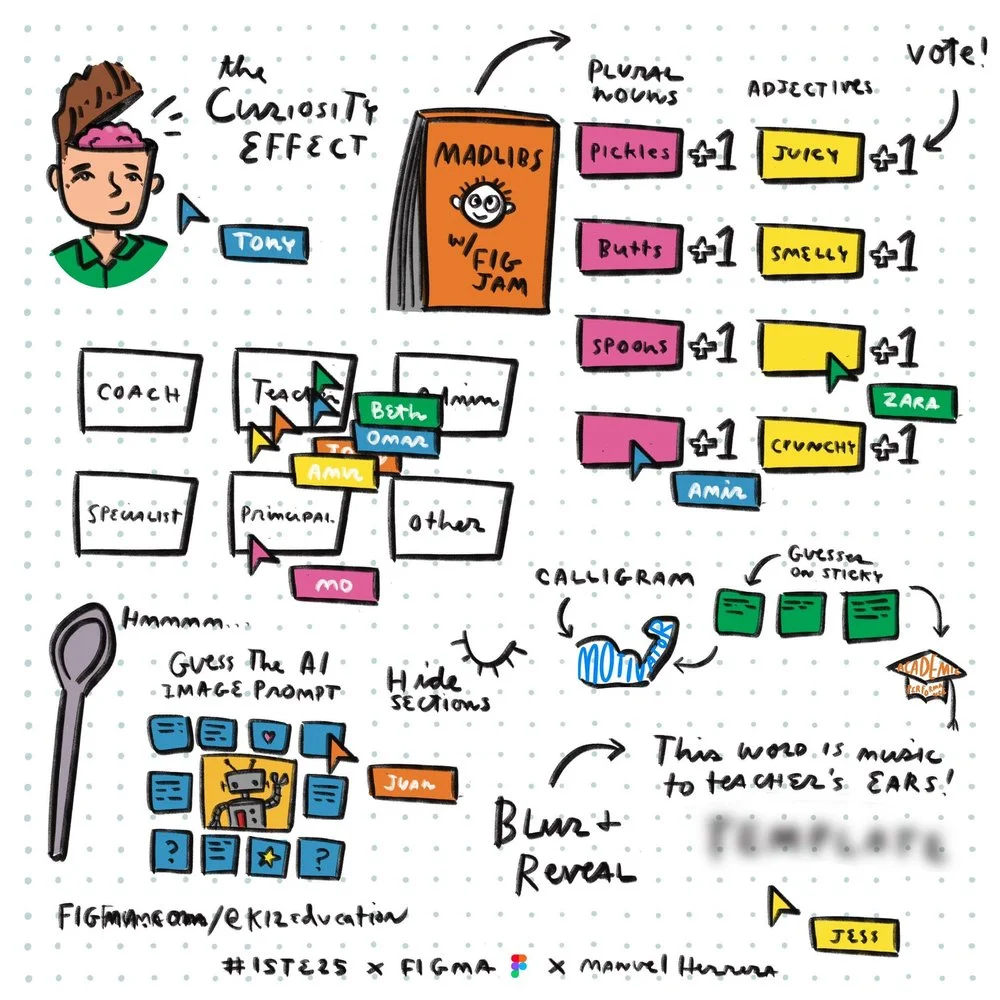
Looking Ahead: The Significance of Curiosity in Education
The ongoing discussions around curiosity-driven learning point towards a significant educational trend. As traditional lecture-based methods face criticism for failing to engage students effectively, there's a pivot towards more dynamic teaching strategies. Encouraging curiosity isn't just a feel-good approach; it’s backed by evidence that suggests when students are curious, their learning is deeper, more sustained, and often more enjoyable. If you're working in this space, now might be the time to rethink how you design educational experiences.
Moreover, this movement could shape educational technology development in the coming years. Companies like Figma are recognizing this shift and creating tools that support such teaching methods. As educational institutions increasingly prioritize engagement, the tools they choose to implement could have lasting impacts on student outcomes. There's more than meets the eye with these trends; the implications are profound, not only for teachers and students but also for tech companies aiming to stay relevant in this rapidly changing educational environment.



Discussion
Sign in to join the discussion.