Spotting AI-generated content is easier than ever as specific writing traits emerge across various language models.
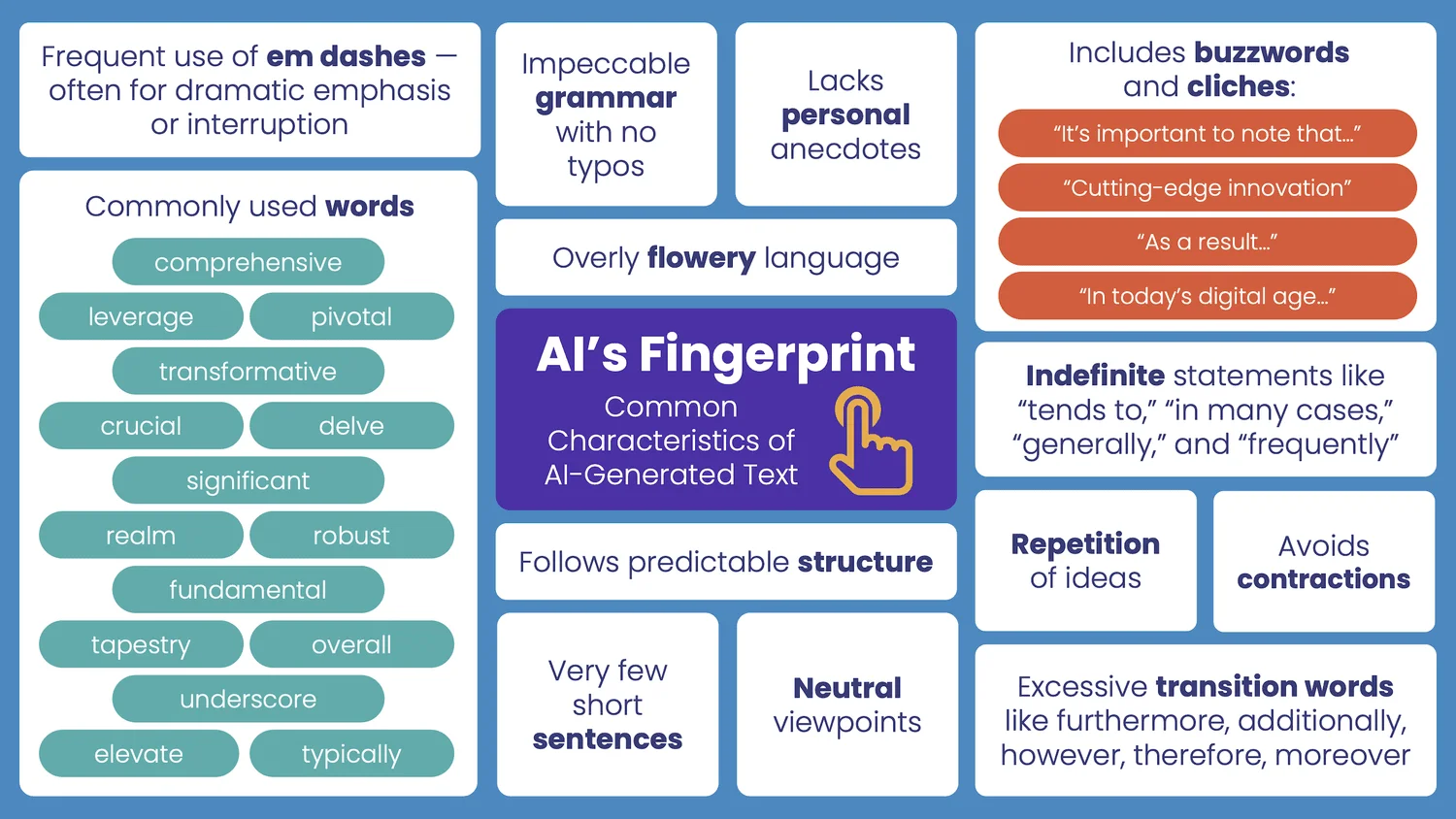
The growing prevalence of AI tools like ChatGPT, Gemini, and Claude has led to recognizable writing patterns that enthusiasts and critics alike can identify. Users often notice repetitive words and phrases, a hallmark of these models. This phenomenon raises important questions about originality and authenticity in written content, especially as AI plays an increasing role in both professional and personal writing.
Understanding AI Writing Patterns
AI-generated text often mirrors the datasets on which these models were trained. That means they can exhibit certain stylistic patterns that users begin to recognize. For instance, you might find similar sentence structures or familiar phrases surfacing across different pieces of content, even when they're generated by distinct tools. This lack of diversity can lead to a certain predictability that’s not usually seen in human writing.
These tools utilize deep learning and natural language processing techniques to understand and generate text. They map relationships between words, phrases, and concepts based on large amounts of data. While this approach allows for the generation of fluid, coherent text, it isn't foolproof. AI often lacks the nuanced understanding that comes from human experience and perspective, which can lead to the repetitiveness noted by users.
Shifting Tones and Styles
While it’s possible to encourage a less formal tone or a creative style, these systems frequently revert to their default modes in future outputs. One of the biggest challenges with AI writing tools is their tendency to correct themselves back to more formal, neutral tones after any initial divergence. This can become frustrating for users who are looking for a specific voice or stylistic nuance in the text. The expectation that an AI can adapt to a user’s stylistic preferences is not always met satisfactorily.
In many practical applications—from marketing copy to creative writing—specific tones can significantly alter the impact of the message. As users interact with these systems, they may find themselves having to adjust the output manually, which raises the question of whether the time savings that AI can offer are worth the compromises in stylistic flexibility. Users may wind up dedicating just as much time to editing AI-generated text as they would to composing original content. This, in itself, could dilute the efficiency that many proponents of AI writing tools advocate.
Identifying AI-Generated Content
However, detecting AI composition isn’t foolproof. A few traits don’t definitively mean a text is AI-generated, and with the right prompts and edits, these tools can produce impressively human-like writing. This gray area creates challenges for educators, businesses, and content creators who are trying to discern the origin of a piece. There are burgeoning technologies aimed at distinguishing AI from human-generated text, but they aren’t universally reliable.
Many instances of AI-written text may initially pass as human-generated even by seasoned editors. The ability of these systems to produce coherent responses follows patterns understood by humans, just as a skilled writer would use their knowledge of language. One might argue that it’s not the frequent reiteration of phrases that gives away AI authorship, but rather the subtle tells—logical missteps or lack of depth in arguments—that truly reveal its origins. What this means for you is an evolving challenge: how do you verify authenticity? How can you ensure originality?
Common Characteristics of AI Writing
AI writing has formed its own identifiable characteristics, which can often be observed in multiple layers. Many users report issues with clarity, coherence, and overall engagement. One defining quality, as highlighted in the graphic referenced, is a tendency to include repetitive wording. AI often reiterates certain phrases or structures due to its reliance on training data that may emphasize certain patterns over others. And this is the part most people overlook: understanding these markers can be essential for those using AI to craft compelling narratives.
Never forget that the effectiveness of AI writing varies greatly. Schools and universities face an increasing challenge as students utilize these tools for essays and projects, raising concerns about authenticity in academic work. Additionally, businesses must grapple with the implications of AI-generated content on brand voice, messaging, and maintaining a competitive edge in communication.
Implications and Future Outlook
As AI tools like ChatGPT, Gemini, and Claude continue to be integrated into our daily routines, the implications for content creation are profound. We're approaching a point where the line between human and machine-generated writing is increasingly blurred. Companies may rely on AI for efficiency, but this comes with trade-offs in terms of creativity and emotional resonance. The risk here is significant; brands that fail to maintain a human touch in their written communication may alienate their audiences.
Looking ahead, the demand for identifying AI-created content could pave the way for new technologies designed to scrutinize and analyze text more rigorously. Tools that help differentiate styles, stemmed from human authors versus AI mimicking, are becoming increasingly vital. If you're working in this space, keeping up with these advancements might offer a competitive advantage. The question remains: can AI writing tools enhance productivity without compromising the essence of good writing? As we delve deeper into this technology, the answer may greatly shape the future of digital communication.

Discussion
Sign in to join the discussion.