AI's integration in K-12 education is rising, but its environmental impact and influence on student skills demand careful consideration from educators.
Understanding AI's Energy Impact in Education
In the fast-paced world of educational innovation, artificial intelligence is making a significant mark. By 2026, it's expected that a staggering 74% of Gen Z students will be studying in K–12 environments that have instituted rules around AI usage. A recent Gallup survey highlights that 65% of these students feel encouraged to use AI for their assignments. This rapid incorporation signals a shift in educational frameworks, often outpacing the research needed to measure the full impact of such tools.
As K–12 educators explore AI's potential, they also face critical decisions about how to maximize its benefits while mitigating concerns. Research from the Association for Education Finance and Policy indicates that schools are integrating AI technology faster than scholars can effectively assess its consequences. Meanwhile, a 2025 RAND study revealed that over half of middle and high school students are already tapping into generative AI for their academic work.
Balancing Opportunities and Concerns
The National Education Association (NEA) asserts that educators see promise in AI for bridging learning gaps, tailoring instruction, and aiding multilingual communication, especially among students with disabilities. These technologies could potentially lessen the burden placed on teachers, an issue that has become more pressing amid rising educator burnout. However, questions about privacy, the phenomenon of AI hallucinations, and the diminishing role of personal interaction in areas like Individualized Education Programs (IEPs) cannot be ignored.
The landscape is ripe for inquiry: how will students' increasing reliance on AI influence their skills, creativity, and ability to discern credible information from unreliable sources? If you're immersed in educational policy or instruction, this is more significant than it appears at first glance. The imperative to cultivate AI literacy includes not only understanding how to operate these tools but also knowing when they might hinder rather than help skill development.
The Environmental Dimension of AI Literacy
While AI promises to modernize education, its environmental footprint is garnering attention. The intricacies of AI-related energy consumption reveal a paradox: the instantaneity of AI interactions conceals the substantial physical resources required to sustain them. MIT research recently illuminated that generative AI could ramp up electricity usage dramatically, leading to increased carbon emissions and higher water demands for cooling systems. Notably, in 2024, U.S. data centers guzzled approximately 200 terawatt-hours of electricity, a figure comparable to the entire yearly energy consumption of Thailand. Of this, AI-specific servers were accountable for 53 to 76 terawatt-hours—enough energy to power millions of American households for an entire year.
Yet, this narrative isn't entirely bleak. The MIT Energy Initiative suggests that AI has the potential to foster cleaner energy transitions by optimizing power grids and supporting infrastructure improvements. Understanding both the advantages and the environmental costs of AI usage is becoming a vital aspect of students' learning journeys.
As we aim to educate the next generation about responsible energy use, it’s crucial to frame AI discussions within a broader scope of shared resource responsibility. From early childhood, students learn to conserve electricity and water. Similarly, AI's usage should also be approached with care and mindfulness, promoting deeper contemplation about its purpose and impact rather than discouraging its use altogether.
Teaching students how to utilize AI responsibly goes beyond simple operational skills. It challenges them to critically evaluate the necessity and implications of AI tools in their work. Framing discussions around AI’s resource implications, educators can guide students to reflect on the rationality of their choices. For instance, do they truly need AI to complete a task, or could traditional methods suffice? This kind of reasoning fosters a class of technologically literate individuals who appreciate the balance between utility and sustainability.
In summary, integrating AI into education offers unique opportunities and challenges. Moving forward, fostering a nuanced understanding of AI’s environmental impact and resource consumption will be essential to cultivate students who can navigate this technological landscape thoughtfully and responsibly.### Shaping Thoughtful AI Users
The conversation surrounding AI's environmental footprint isn’t just an academic exercise—it's a necessity for the next generation. As educators, we shouldn't merely prepare students to wield technology; we must instill in them the sense of responsibility that comes with it. It's not just about knowing how to leverage AI; it's about understanding the broader impact of their engagement with it.
Students shouldn't have to master the intricacies of data centers or energy distribution to think critically about AI's energy demands. Instead, they can start by recognizing that with ownership of a resource comes the duty to use it wisely. Just like we teach children to switch off lights when they leave a room, we can guide them in understanding that tech use isn’t inherently bad—it's the manner in which we engage with these technologies that requires scrutiny.
### Community Engagement as a Learning Tool
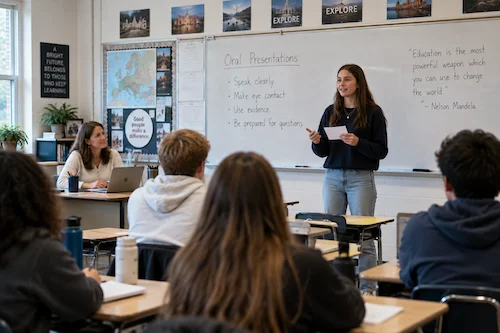
Encouraging students to lead discussions on AI, energy, and responsible technology use can significantly broaden their perspective. By organizing forums or panels, they have the chance to elevate their voices beyond the confines of the classroom. This gives them space to explore various viewpoints—from educators’ to tech professionals’ to environmentalists’—and to better appreciate the complexity of the issues at play.
Such exercises in community engagement challenge students to think critically. They need to ask themselves what differing stakeholders care about, identify points of contention, and determine what evidence substantiates different claims. This is where the learning becomes richer: forging dialogue that helps them develop skills in communication, leadership, and civic participation.
### The Path to Responsible AI Literacy
Ultimately, AI literacy should encompass more than just technical understanding; it should inspire thoughtful usage. Students should learn to weigh the utility of AI tools alongside their environmental implications. The idea isn't to induce guilt or discourage exploration, but rather to equip them with the critical thinking skills necessary to make informed decisions.
As AI continues to permeate educational systems and our daily lives, simply knowing how to engage with it won’t suffice. Students will need to evaluate whether AI is appropriate for the task at hand, consider the resources involved, and assess whether the advantages of its use outweigh the potential costs.
Responsible AI literacy can empower students. It’s about developing a mindset that fosters intentionality in tech use—a principle that encourages them to ask, “Is this the right tool for the job?” only once they’ve grasped both its capabilities and its limitations. By instilling these values, we are not only preparing them to use AI effectively but also to be conscientious stewards of the technology that will shape our future.


Discussion
Sign in to join the discussion.