As technology transforms industries, modern workers echo the Luddites' fears, rallying against AI and data center expansions that threaten job security.
A Historical Paradox
One anecdote involving Milton Friedman sheds light on an enduring dilemma: during a visit to a canal construction site in 1960s China, Friedman questioned an official about the use of hand laborers instead of machinery. The bureaucrat responded that hand work created more jobs. Friedman quipped, “If it’s jobs you want, you should give those men spoons instead.” While the accuracy of this story is questionable, it points to a long-standing conflict over automation and labor that has roots in the early days of industrialization. This tension between efficiency and employment has persisted for centuries, raising fundamental questions about the societal value placed on work itself versus productivity.
The Luddites' Legacy
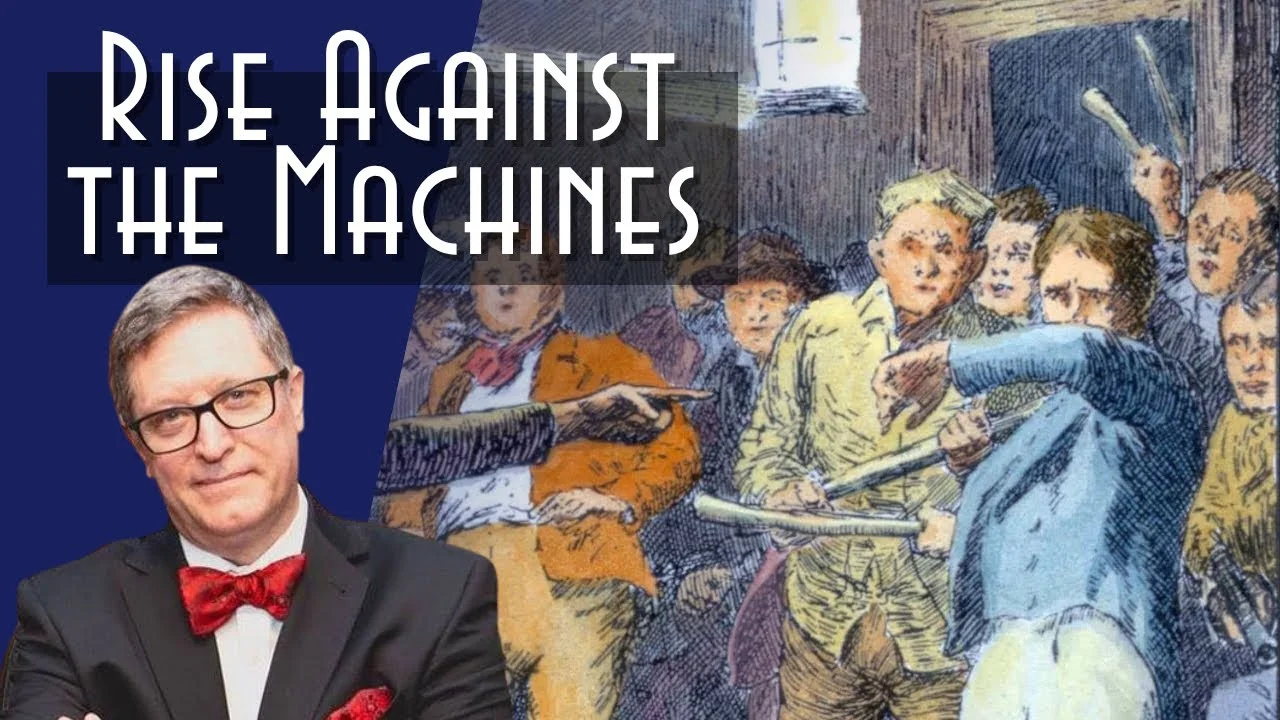
Historically, the Luddites emerged in 1812, marked by an armed uprising of about 150 laborers at a Huddersfield mill. Their frustration stemmed from losing jobs to automated looms in the textile industry. The protests were intense, featuring violence, with one notable incident resulting in the death of two attackers at the hands of soldiers. While Ludd's actual actions for which they were named may be embellished, the name has persisted, especially in today’s discourse surrounding technology. In many ways, the Luddites became symbols of resistance against the impersonal nature of industrialization and the consequences of profit-driven innovation that disregarded human cost.
Modern Luddism Rises
Today, as AI technology accelerates, even knowledge workers express concerns that their professions are at risk. The call for restrictions on AI development is likened to a contemporary echo of Luddism. This raises questions about the relevance of mass production; would anyone assert that the automated creation of basic items, like socks, is a meaningful advancement for humanity? Or is it merely a hollow victory that sacrifices jobs at the altar of efficiency? What this means for you — if you're working in this space — is that the apprehension surrounding job displacements is reaching critical mass. Knowledge economies, once thought to be insulated from such upheaval, are now feeling the tremors of rapid technological changes.
Perception of Job Security
It’s essential to understand that Luddism wasn’t a movement that resonated with a large portion of the workforce. Instead, it mainly appealed to a select group of skilled artisans who faced threats from lower-end factory work. These workers were accustomed to specific trades that required significant training, a distinguishing feature of their professional identity. It’s not surprising to see similarly elite sentiments within today’s workforce, especially among educated individuals concerned about the implications of AI. After all, many sectors prioritize a unique blend of creativity and critical thinking—qualities that many fear can be undermined by algorithms and automation. The confidence that comes with specialized skills can quickly dwindle in the face of advancing technology.
Contemporary Movements and Clubs
Recent trends reflect this historical pattern. Luddite clubs cropping up on college campuses and events like the “Summer of Ludd” at New School indicate a growing awareness and protest against automated technologies, particularly in response to data center constructions. Students and community members are rallying against the environmental and social impacts of such technological expansions. Their concerns often highlight how these developments can exacerbate existing inequalities. If only nineteenth-century Luddites could provide insights into the current predicament, it would certainly be an eye-opening discourse. The modern-day response reminds us that while technology progresses, the social fabric needs attention, lest we ignore those left behind.
Forward-Looking Perspectives
The dialogue surrounding technology’s impact on work continues to evolve. Current workers are grappling with the rapid changes, just as their historical counterparts did. At stake isn’t just individual job security but the origin of meaningful work itself. The challenge lies in finding a balance between embracing technological advancements and ensuring that human labor retains its value in the job market. Here’s the thing: this isn’t purely about job loss; it’s about redefining what work means in a tech-dominated world. The journey we’re on will require a keen understanding of both history and modern implications as we prepare for the future.
Implications for the Future
As we reflect on these themes, the implications become clear. The conversation around AI and automation isn’t merely academic; it’s a societal issue that affects millions. If you’re involved in policy-making, technology development, or even education, it’s worth considering how to mitigate these risks. Fostering a dialogue that involves multiple stakeholders—workers, technologists, and educators—could pave the way for solutions that respect human labor while embracing innovation. The challenge is to craft a future where technology acts as an ally, not an adversary. The numbers here, in terms of workforce displacement, are underwhelming but potentially devastating for those unprepared.
Related content:
- Alan Watts's Prediction on Automation and Universal Basic Income
- Experts on AI's Impact on Job Markets Across Various Sectors
- The Engineering Marvels Behind Silk and Ancient Commerce
- Building Stadiums in Qatar: The Labor Controversies
Colin Marshall writes on cities, language, and culture. Find more of his work at his blog.



Discussion
Sign in to join the discussion.