Building a responsible AI framework in schools requires ongoing scrutiny, community involvement, and ethical oversight to ensure equity in education.
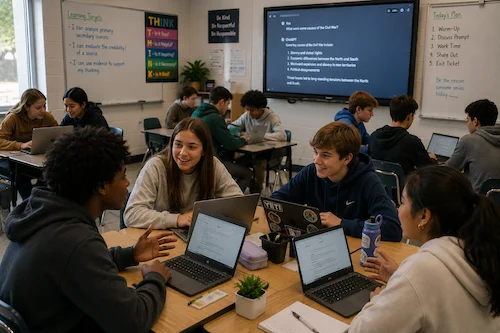
In the rapidly advancing landscape of education technology, the integration of AI tools poses unique challenges, particularly regarding equity in the classroom. As students prepare to enter a workforce where collaboration with AI is the norm, schools must go beyond general policy frameworks and tackle the specific ethical implications of AI in their daily practices.
Understanding AI's Role
Large Language Models (LLMs), while proficient at many tasks, often lack the contextual understanding necessary for equitable education. This is concerning, considering that many districts rely on broad policy statements provided by state educational bodies, such as Minnesota's Guiding Principles for AI in Education. These guidelines, although helpful, often fall short of addressing the local and immediate equity issues educators face in the classroom.
When there's a disconnect between district policies and real-world classroom dynamics, teachers aren't equipped to deal with the ethical challenges that arise from using AI tools. It's imperative that ethical AI implementation becomes an active, continually evolving practice, requiring stakeholder input and ongoing professional development.
Identifying Equity Challenges
The introduction of AI in schooling isn't simply a neutral enhancement; it brings several systemic risks:
- The New Digital Divide: As highlighted by education analyst Michael Trucano, disparities in AI training for educators are emerging. Schools in affluent areas are almost twice as likely to provide formal AI training compared to underfunded districts. This disparity can exacerbate existing inequities unless states implement targeted support mechanisms to help less-resourced districts access proper training and tools.
- Linguistic and Cultural Bias: AI tools trained primarily on data from English-speaking and Western cultures risk marginalizing diverse voices. Studies from Cornell University and others have shown that automated evaluations can unfairly penalize students for dialectical differences and culturally distinct expressions, a misstep educators must guard against.
- Detection Flaws: AI detection software's limitations disproportionately affect English language learners, as noted by UCLA's Jordan Galczynski. Tools that assess writing might misinterpret the developing linguistic structures of these students as signs of dishonesty, further complicating their educational journey.
- Surveillance Risks: Unfettered use of test proctoring tools may discriminate against neurodivergent students and those from racially minoritized backgrounds. Research from Denisa Gándara shows that algorithms trained on historical data can misrepresent students' potential, often leading to incorrect evaluations of their success.
Establishing Ethical AI Practices
To navigate these challenges, schools must embrace a proactive approach, shifting from passive adherence to a more rigorous and cyclical practice centered on three key elements:
- Equity Archaeology: Prior to adopting any AI tools, districts must scrutinize the training data underpinning these technologies. Many tools operate as “wrappers” on existing AI frameworks, meaning understanding the biases present in these foundational models is critical.
- Co-creating Meaning: Human oversight must guide significant instructional decisions rather than relying solely on algorithmic outputs. Educators should contextualize AI findings within the unique dynamics of their classrooms, as their nuanced understanding of students far surpasses any model's capability.
- Ongoing Accountability: Ethical evaluations shouldn't cease after contracts are signed. Schools need a continuous feedback loop to assess how deployed tools are affecting student learning and privacy, with the understanding that they should halt use if tools fail to meet ethical standards.
Actionable Strategies
Turning ethical considerations into practical measures involves actionable strategies that empower educators:
- Demand Vendor Transparency: Require vendors to provide clear transparency regarding data governance and anti-bias testing as a prerequisite for contract approval.
- Engage a Diverse Set of Stakeholders: Ensure adoption committees consist of classroom teachers, tech staff, parents, and students, rather than centralizing the decision-making process within administrative bodies.
- Expand Professional Learning: Educators should receive comprehensive training focused not just on AI functionalities but also on critically assessing tools for biases and maintaining the human oversight essential for educational integrity.
- Implement Safe Monitoring Alternatives: Protect student rights and psychological well-being by allowing opt-out options for automated surveillance tools during assessments.
The stakes are too high for schools to adopt a blanket policy of banning AI. Rather, it's essential to understand how these tools can be effectively integrated into educational methodologies. As students prepare for a future where AI collaboration is the norm, they must learn both the strengths and limitations of AI. However, before educational institutions can prepare students, they need to refine their approaches toward ethical AI use, ensuring practices grounded in scrutiny, informed human judgment, and a strong commitment to equity.



Discussion
Sign in to join the discussion.