Increased clarity on math instruction through data analysis has led to notable improvements in student performance within Washington Township schools.
Transforming Instructional Strategies
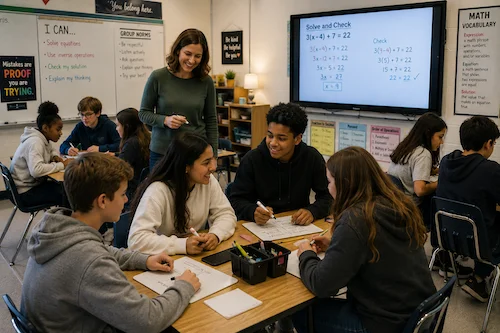
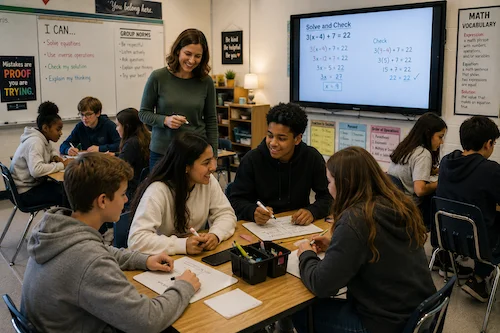
Consider a scenario where a team of middle school math educators gathers to address a persistent issue. Their eighth graders repeatedly miss a key question related to graphing a system of equations. As the conversation unfolds, the educators realize that students may lack a fundamental understanding of what a solution entails. This moment exemplifies the shift in teaching strategy at the Metropolitan School District of Washington Township, emphasizing a data-driven approach that focuses on the teaching process rather than solely on student error. The educators are not just troubleshooting; they are actively re-evaluating their pedagogical approaches in response to the data they collect.
Such adjustments reflect a broader movement in education where real-time data is becoming a central pillar in instructional planning and delivery. This goes beyond just identifying students' mistakes. The goal is to understand the educational processes that lead to those mistakes. In many districts, the lack of foundational knowledge is a systemic issue. By addressing these gaps, Washington Township isn't merely reacting; they're strategically advancing their instructional capabilities. This level of analysis sets the framework for more nuanced educational discussions.
Engagement Through Real-Time Data
The incorporation of real-time, classroom-level data has spurred richer dialogues during their weekly professional learning communities (PLCs). These discussions are not only about improving assessments but genuinely reflect on instructional methods, ultimately fostering better student achievement. The impact is measurable: Washington Township’s seventh and eighth graders scored 36.2 percent on the Indiana state proficiency exams in spring 2025, with projections pointing to a 40 percent success rate by spring 2026. This trajectory signifies a notable bounce back from the pre-COVID level of 34.3 percent, hinting that the district is on a path to recovery and improvement.
But here's the thing: improvements in assessment scores don't always correlate with long-term understanding. While the rising numbers are a positive sign, we must ask whether these gains are sustainable. Many educational initiatives often see initial boosts only to level off as teachers, students, and curricula adapt to new expectations. The district's challenge will be to maintain this momentum without losing sight of deeper learning outcomes.
Prioritizing Meaningful Data Collection
While schools have become adept at gathering data, the challenge lies in ensuring it informs instructional refinements. The transformation at Washington Township has seen the middle school math team embrace a data platform that facilitates comprehensive insights. This system allows educators to analyze student performance more meaningfully, turning assessments into discussion starters rather than mere metrics of success. This strategy underscores a critical educational premise: effective use of data can create a feedback loop where teaching methods evolve in direct response to student needs.
Students now partake in two weekly assessments designed by instructional coaches, reflecting a unified strategy across all three middle schools. This pivotal change in perception has transformed the interpretation of student performance data: it’s no longer just a number, but a catalyst for deeper educational conversations about methodologies. For educators, this shift fosters a sense of ownership and accountability regarding student outcomes. They'll be more inclined to explore various teaching methods, knowing there's a backing of data driving their choices.
Elevating Academic Expectations
The data-driven approach provides a clearer overview of the curriculum, emphasizing a spiraling method that revisits previously learned concepts to aid retention. The result? Enhanced rigor in classrooms as teachers develop common pacing guidelines across middle schools. Increased expectations have motivated not only teachers but their students, who are now asking more profound, insightful questions. This synergy plays a significant role in linking classroom performance to success on state assessments.
Interestingly, this model places significant emphasis on fostering a culture where inquiry is encouraged. Students engaging in deeper questioning may reflect a new-level confidence that challenges traditional teacher-student dynamics. The typical classroom isn't just a place for rote learning anymore; it’s morphing into an environment rich with exchange and exploration. If you’re working in this space, consider the implications for classroom management. Teachers might need to adapt their styles to accommodate this emerging dynamic where questions can drive lesson flow, rather than merely sticking to prescribed materials.
Broadening Data Application Across Disciplines
Finding the right balance in educational tools is essential to maintaining momentum. With an established data framework, the Washington Township district has created a cohesive environment among the 29 math educators across its three middle schools, poised to extend these practices to the high school math department this fall. Collaboration has become fundamental, with lessons learned in the math department also benefiting the English Language Arts (ELA) program via similar data applications.
The middle school math team is eager to continue advancing instructional strategies, now focusing on real-time data implementation in classrooms. There’s an ongoing effort to improve teachers’ abilities to craft assessments aligned with standards, identifying specific areas where students might struggle. For example, discrepancies in answers can indicate different conceptual misunderstandings that require targeted interventions. This attention to detail may significantly improve response strategies in future lessons.
What stands out for teachers is the newfound confidence from school leadership in their expertise. Clear representation of why successes are occurring fosters a culture of trust and respect within the educational community, paving the way for greater autonomy in teaching methods. This trust is essential; it empowers educators to take risks and innovate, which could lead to further instructional breakthroughs down the line.
Future Outlook: A Model for Educational Transformation
As Washington Township moves forward, lessons from their intensive data analysis and collaborative model at the middle school level promise to reshape the educational framework at the high school level. The rationale here is that if such systems work well in middle schools, there's no reason they can't translate into high school settings. Establishing strong data practices early on may pave the way for a generation of students who are not only proficient in mathematics but also comfortable with analytical thinking.
This shift could potentially open doors for similar districts grappling with the challenges posed by outdated instructional strategies. As the education sector increasingly leans on technology and data, Washington Township’s model offers a promising glimpse into what’s possible. Schools may face challenges implementing these changes, but the potential benefits — enhanced student engagement, improved achievement scores, and an empowered teaching staff — far outweigh those hurdles. What this means for you, as educators or stakeholders, is that data isn’t just numbers on a page; it’s a pathway to better education for every student.


Discussion
Sign in to join the discussion.