Explore a curated selection of digital snacks designed to enrich students' brain breaks, improving focus and classroom engagement.
Introducing Digital Snacks for Students
During my Digital Snacks: Breaks for Students' Brains presentation, I highlighted the importance of brief mental pauses in educational settings. This practice isn't just about giving students a moment to breathe; it's about acknowledging the cognitive demands placed on them in an increasingly fast-paced and information-rich environment. These intervals can alleviate stress, mitigate cognitive overload, and foster social interactions, giving students a vital opportunity to reset for better focus and engagement. Educators have long recognized that the human brain requires time to process information, and integrating short breaks into the learning schedule aligns with cognitive science principles regarding attention and retention.
Curated Collection of Digital Activities
For years, I’ve been compiling a Digital Snacks collection. It's not merely a list of random games or activities — it's a thoughtfully curated selection aimed at maximizing student engagement during those crucial breaks. To qualify as a digital snack, activities must meet several specific criteria:
Free
Browser-based
No student logins required
Low preparation needed
These parameters are essential because they ensure that both students and educators can access the snacks without additional barriers. In a classroom setting, time is precious, and any complication in accessing a resource can deter its use. This accessibility can be a game changer in how teachers think about break time; they can pivot quickly between activities without planning hiccups.
Categories of Digital Snacks
This collection is organized into distinct categories: Relaxing, Cognitive, Physical, Creative, Sensory, Social, and Humor. Each category serves a different purpose and caters to various needs within the classroom environment. For instance, a relaxing activity can help students decompress after a challenging math lesson, while a cognitive snack could engage their brains in a light problem-solving activity. Within each category, you'll find a variety of online activities and YouTube videos tailored to engage students effectively. Diversifying the types of snacks means there’s something for every mood and learning style, which is what makes the collection particularly appealing to educators.
Community Feedback and Rating System
Activities are hosted on a Padlet that includes a voting system, allowing users to express their opinions. This feedback mechanism is vital for fostering a sense of community among educators, as users are encouraged to give a thumbs up to favorites and a thumbs down to less favorable options. This system doesn’t just help to surface the most appreciated activities; it also empowers users. When teachers share their thoughts, they contribute to the ongoing improvement of the collection, which can help define what truly works in diverse classroom settings.
A Resource for Educators
This collection has been invaluable when stepping in as a substitute teacher, providing quick and effective ways to implement meaningful breaks that enhance the learning experience. The flexibility and quick access of the Digital Snacks make it easier to maintain an engaged and focused classroom, even when unexpected situations arise. Substitutes often face challenges in managing a new group of students, and having these resources at hand simplifies the process of keeping the students engaged during downtime.
Insights from Educators
Destiny Wagner, Chief Education Nerd at EdTech Nerds, attended my presentation at GaETC 2025 and generously shared her slides from her session, Calm the Chaos: Brain Breaks that Work, which features many valuable ideas on maintaining classroom engagement. Educators like Destiny are increasingly recognizing that effective teaching isn't just about delivering content; it's also about creating a balanced environment where mental breaks are incorporated as a key component of the learning process.
New Additions to the Digital Snacks
Thanks to insights from Destiny, I've incorporated several new digital snacks into my Padlet. Highlights include:
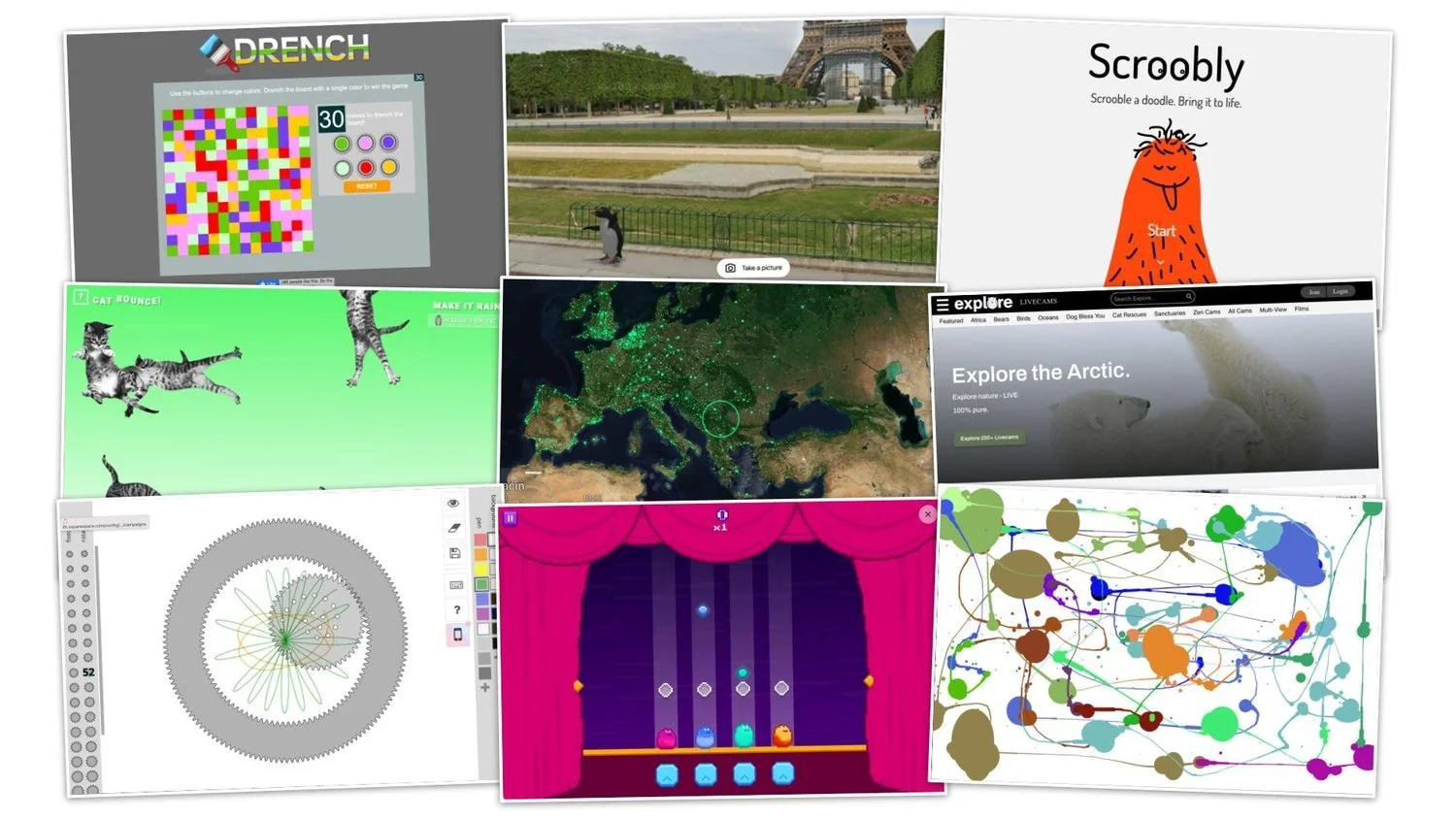
Blob Beats - A rhythm game that synchronizes with remixed classical music.
Patatap - An interactive experience where users create sound and visuals by tapping.
Body Synth - Transform body movements into music via webcam.
Radio Garden - Explore global radio stations through a virtual globe.
Hopper the Penguin - Place a dancing penguin anywhere on Google Maps.
Cat Bounce - Manipulate bouncing cats across your screen.
Drench - A color-based game where you flood the board with minimal moves.
Scrobbly - Design a character that mirrors your movements using a webcam.
Jackson Pollock - Create digital splatter art with mouse movements.
Online Spiralgraph - Generate intricate designs using customizable settings.
Fridge Poem - Arrange virtual magnets to craft poems or phrases.
Explore Live Webcams - View live feeds from various animal and nature locations worldwide.
These new additions reflect the growing trend in educational technology to embrace interactive, digital play as a means to teach and engage. Each platform invites exploration and creativity, elements that resonate deeply with students today. (And this is the part most people overlook.) The digital environment has become more than a tool; it’s now a medium through which students can express themselves and explore concepts in a more hands-on manner than traditional approaches allow.
Implications for Future Learning Environments
What this means for you—if you're working in this space—is that digital snacks could represent a small but significant shift in how we approach student engagement. With the rise of technology use in classrooms, there’s potential for even greater integration of these types of activities. Educators must continue to assess how such tools can complement traditional teaching methods while also addressing the importance of mental health in learning environments. The feedback loop established through community interaction not only enhances how the snacks are curated but also signals an ongoing adjustment to the needs of students, teachers, and the broader educational ecosystem.

Discussion
Sign in to join the discussion.