
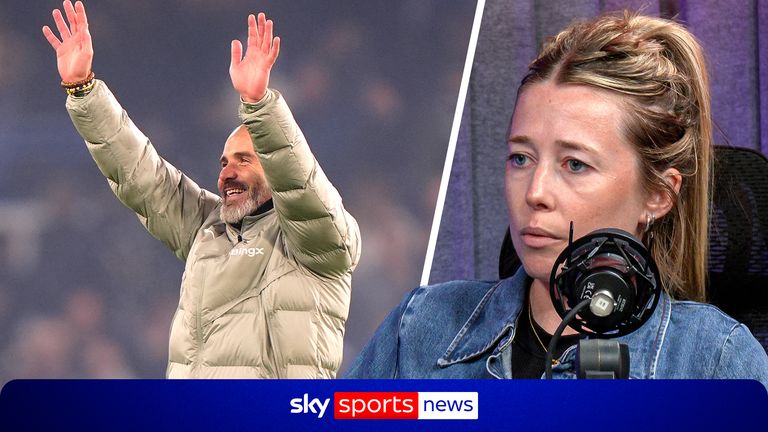
Enzo Maresca as Man City manager: Can Italian make a success of his return to a club so entrenched in Pep Guardiola's way?
Plenty of the Premier League's top clubs have rolled the managerial dice ahead of next season. Manchester City are one of those starting a new era, turning to Enzo Maresca in the wake of Pep Guardiola's decision to depart.
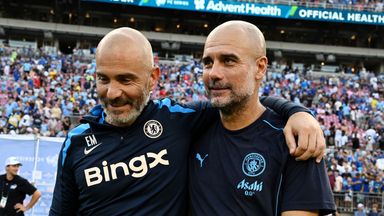
Maresca is returning for his third stint at the club, having been an academy coach in 2020-21 and then Guardiola's assistant in 2022-23 - the famous Premier League-Champions League-FA Cup treble-winning campaign.
He is familiar with the pursuit of silverware, but is yet to be the one to deliver it at such scale. So, how well positioned is he to lead Man City to glory in 2026-27?
Maresca has been given a kind start to his term, meeting Bournemouth, Crystal Palace and Coventry City in his first three outings - a generous run to be able to establish some early rhythm. It also gives Man City's World Cup warriors, those in battle until the very last, a chance to ease back in.
Rodri played nearly every minute of Spain's triumphant campaign and is the most susceptible to breaking down with fatigue. Given those first three fixtures will still heavily favour Man City without him, he should benefit from a phased return.
Maresca will, however, be under pressure to deliver given how winnable those fixtures are on paper. He cannot afford to cede ground early, especially as City face Man Utd and Liverpool in two of the next three in September. Clearly both of those rival bouts hold significance beyond the result.
As the Italian acknowledged when joining, he is in a "dream situation", inheriting a well-balanced squad with incredible talent and depth, built by Guardiola. "It provides the consistency I need to do my job effectively," he said.
The demands will therefore be the same as what were placed on Guardiola, without necessarily having the unique job security the Spaniard was afforded. Guardiola always managed on his own terms. Maresca has a strong bond with chairman Khaldoon Al Mubarak, but won't necessarily get the same privilege.
In terms of style, it's not quite rinse and repeat but there are plenty of similarities between Maresca and Guardiola's preferred way of playing.
Both are rooted in possessing the ball, favouring control, and pressing aggressively. Maresca is arguably more expansive, though, wanting to stretch the pitch with wingers that play high and wide.
City's wingers have been coached more recently to play a style where they tuck inside and rotate to create central overloads. Most of the play revolves around Rodri, but it's fluid.
Watching City under Guardiola often meant seeing defenders step into midfield, midfielders become forwards, or even drop into full-back. Maresca's more rigid 4-2-3-1 structure will likely make for more traditional roles.
It also requires a high-functioning No 10 to link play. At Chelsea, that was Cole Palmer. Maresca has got Phil Foden or Rayan Cherki to choose between, should he wish to adopt the same setup here.
There has been a concerted effort over the past two or three transfer windows under Hugo Viana to lower the average age of the squad. It's dropped from 29 to just over 25, albeit a leadership void has appeared following the departures of Bernardo Silva and John Stones this summer - and Kevin de Bruyne before them.
Rodri and Ruben Dias are important, while last season saw City lean further into a leadership role for Erling Haaland. Marc Guehi and Josko Gvardiol are also experienced, stable figures, plus Mateo Kovacic. The spine of the team remains incredibly strong.
Recomended Posts

© 2026 - VIPBOX - All Rights Reserved

Leave a Comment