
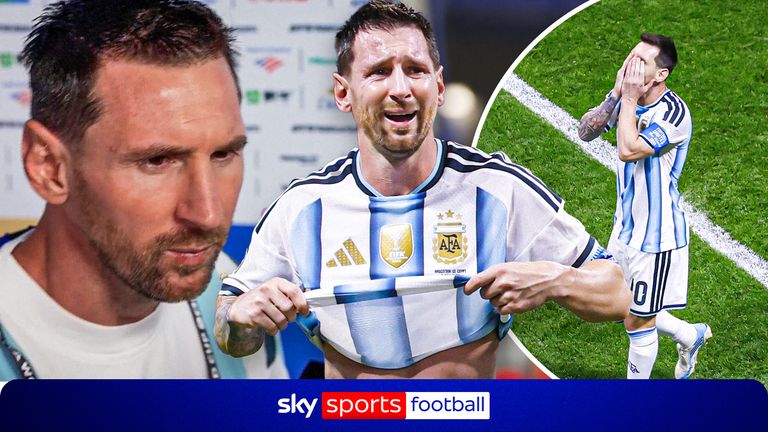
World Cup 2026: Superstar players, politics and hydration breaks among the standout themes of tournament so far
A rest day at the World Cup provides the opportunity to take stock of how the biggest-ever edition has gone so far.
Have pre-tournament presumptions about off-field issues been proved correct? Which players and teams have set the storylines on the field? And what will be the legacy of the 2026 competition?
The man who supposedly had the fairytale ending to his World Cup career four years ago: Lionel Messi.
Few would have predicted the Argentina legend, at 39 years old, delivering the game-changing, headline-grabbing performances he has so far. The current World Cup's top scorer has further fuelled his claim to be the greatest of all time.
But the A-listers have all shown up at this World Cup. Kylian Mbappe, Erling Haaland, Harry Kane, Ousmane Dembele and Vinicius Jnr have been among the goals. Jude Bellingham has been a game-changer for England. And even Cristiano Ronaldo came up with a couple of moments to hit back at his critics.
With the leading actors centre stage there has been less room for breakout stars, but Switzerland's 20-year-old Johan Manzambi has made his name - along with Cape Verde's 40-year-old goalkeeper Vozinha. USA's Folarin Balogun made a flying start, too, but his World Cup story took a twist...
The first-ever 48-team World Cup was preluded with concerns about batterings, mis-matches and predictable results and, unsurprisingly, there were hammerings in the group stage.
Qatar, Curacao, New Zealand, Saudi Arabia and Iraq each experienced heavy losses - and Ronaldo was among the players to feast on weaker opposition when Portugal put five past Uzbekistan.
But there were upsets too - and the campaign of Cape Verde is the biggest endorsement of the expanded tournament.
Among the smallest nations ever to qualify for a World Cup, they held European champions Spain to a goalless draw in the group stage and then gave world champions Argentina a huge scare in the last 32.
Elsewhere, Qatar drew with Switzerland, Curacao repelled Ecuador, and DR Congo took a point off Portugal to reach the knockouts for the first time.
The bloated group stage was a marathon and the equations required for teams to qualify as best third-place sides rankled. But whatever FIFA boss Gianni Infantino's reasons for increasing the size of the tournament - a gift to the world or a grab for more money and votes - it's hard to argue the new and rarely-seen faces at this World Cup added extra colour and intrigue.
It's not just the minnows breaking new ground.
Switzerland have reached a first World Cup quarter-final since 1954. South Africa made it out of the group phase for the first time ever. Co-hosts Canada earned their first-ever point and win en route to the last 16. Norway have never made the last eight before.
For fans of many countries, this is a World Cup which has delivered memories to treasure.
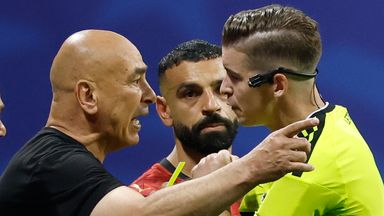
There have been more stoppage-time winners than we've ever seen before at a World Cup - 10 of them after Argentina's incredible turnaround win over Egypt.
Hydration breaks and VAR checks have led to inevitable extensions of each match, and that added time has delivered incredible moments.
The Algeria-Austria ding-dong deep into injury time was jaw-dropping. Iran's disallowed winner in the final seconds against Egypt cost them a knockout place. Brazil's Gabriel Martinelli scored the latest winning goal in a World Cup knockout game (since 1966) - a 95:00 heartbreaker for Japan.
This has been a World Cup where you have to keep watching to the final whistle.
Boos have rung out midway through each half during games at this World Cup. Fans in the stands have made it clear they do not like the hydration breaks. While the three-minute stoppage for players to grab a drink has been necessary in the burning heat many matches have been played in, the blanket rollout - even to matches taking place in air-conditioned stadiums - has drawn criticism.
While some have pointed to their introduction as being advertising opportunities, they have changed the way football is played. Defensive teams have the chance to reset midway through a half. Struggling sides can get redirection from their coaches. England, in particular, have benefited from Thomas Tuchel's frantically issued words of wisdom in these moments.
"These breaks are so important to give players a break during tournament play, while also allowing all coaches a dedicated moment in every match - not just depending on the weather conditions - to engage directly with their players," said Infantino after England's win over DR Congo. It appeared to be the first time the FIFA boss had deviated from clearly labelling the intention of the breaks to be for physical reasons.
Are hydration breaks here to stay? If so, football matches being split into quarters could be the lasting legacy of this World Cup.
As mentioned above, it has been a hot, hot summer in North America. So far, though, the show has largely been able to go on.
For instance, France and Paraguay baked in 39C in Philadelphia on July 4 - but kept playing, despite the city's Independence Day parade being shelved.
There have been three weather-impacted matches, with Mexico's games against Ecuador and England pushed back an hour, and France-Iraq delayed for two hours at half-time, because of storms.
There could be more disruption to come, with a thunderstorm forecast around the time of the England vs Norway game in Miami, but three games out of 96 is a relatively low ratio, given six out of 63 were impacted at last summer's Club World Cup.
When Infantino controversially handed USA President Donald Trump the inaugural FIFA Peace Prize in December, the closeness of their relationship could not have been more clear. That connection emerged again when Trump revealed he had personally called Infantino to get Balogun's suspension reviewed ahead of USA's last-16 tie with Belgium
Recomended Posts

Latest News
© 2026 - VIPBOX - All Rights Reserved

Leave a Comment