The 1858 transatlantic cable marked a pivotal shift in communication, connecting North America and Europe and laying the foundation for modern connectivity.
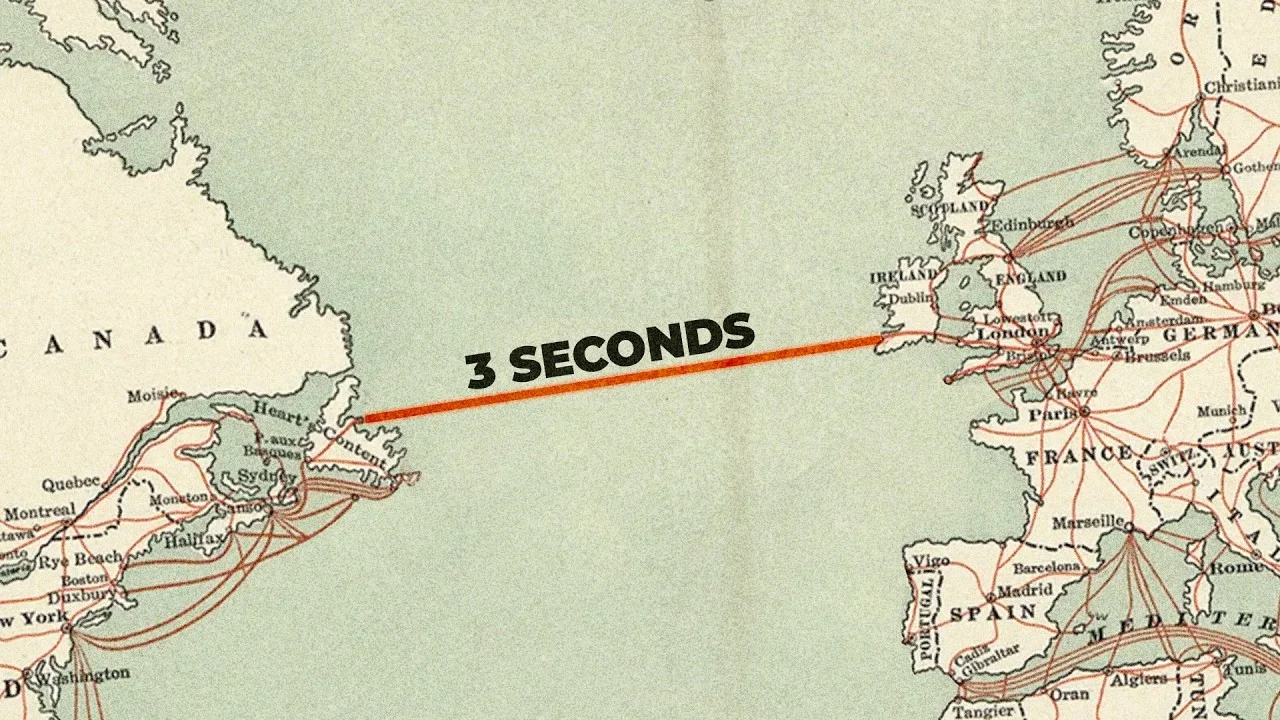
The term wireless has transitioned from novelty to necessity, yet our current expectations of effortless information transfer owe much to the wires that preceded them. A significant chapter in communication history began with the laying of a 2,000-mile transatlantic cable in 1858, bridging North America and Europe and setting the stage for a network that would eventually evolve into today's interconnected world. This shift from wired to wireless communication didn't occur in isolation but rather as the culmination of centuries of technological advancement and human ingenuity.
The Telegraph: Pioneering Long-Distance Communication
Before the cable made its debut, telegraphy served as the pinnacle of communication technology, aptly described in Tom Standage's book, The Victorian Internet. The telegraph was not merely a tool; it was a revolution that forever altered the fabric of society. This form of communication dates back well before the cable was laid; early efforts included Jean-Antoine Nollet's feat in 1746 of sending static electricity over a line involving 200 monks and Claude Chappe's 1792 semaphore towers, which operated without electricity. These early systems showcased humanity's persistent drive to achieve long-distance communication, often underlining the societal need for quicker information exchange—especially in the context of business and governance.
Telegraphy was transformative for its time. It enabled news to travel at the speed of electricity rather than the speed of a horse. This was a radical change that reshaped economies and fostered greater political cohesion across distances that were previously insurmountable. You can imagine the buzz that must've permeated markets and cities alike as news from afar could be transmitted almost instantly. The importance of the telegraph in shaping modern communication can't be overstated.
Electrifying Developments in the 19th Century
Fast forward to the early 1800s, where the introduction of Alessandro Volta's chemical battery made electric telegraphy feasible. This advancement was monumental, paving the way for new forms of communication that harnessed electrical energy. Yet, it wasn't until the 1830s that Samuel Morse developed his iconic dot-and-dash code, revolutionizing the transmission of messages. This led not just to the birth of Morse code, but to the establishment of communication protocols that would govern electronic correspondence for decades to come, a foundation upon which modern communication builds.
The resulting Morse code, along with the telegraph devices invented independently by Morse, William Cooke, and Charles Wheatstone, laid the groundwork for a rapidly expanding network of communication lines—these were the arteries of the information age that followed. Interestingly, Morse's contributions were more than technical; they signaled a cultural shift where information began to be viewed as a commodity, something that could be sent, sold, and consumed.
Challenges and the Legacy of the 1858 Cable
The idea of linking these domestic telegraph lines across the Atlantic was ambitious, almost audacious. Even though the initial cable laid in 1858 failed within months of its deployment, it marked a crucial first step in connecting continents. This failure didn't signify an end; rather, it highlighted the resilience of this vision and the sheer importance of transcontinental communication. Behind that single cable lay years of testing, engineering, and countless improvements aimed at making communication both instantaneous and reliable.
Today, roughly 600 undersea cables facilitate global internet traffic, underscoring the cable's fundamental concept and its striking evolution over the years. It's fascinating to think that without these underwater connections, modern communication as we know it would be unrecognizable. Every email sent, every video streamed, and every article read is made possible because of that first attempt at international linkage. Initial failures can lead to transformative progress, a lesson that rings true in tech today—think of how industries have changed in the wake of failed startups or unresponsive software.
Related Content:
Explore the Mundaneum: A 20th-Century "Internet" on Millions of Cards
A Glimpse of the Internet in 1973: An Old Map Resurfaces
A Captivating 3D Animation of the Ocean's Depths
Mark Twain's 1898 Sci-Fi Prediction of the Internet
The Future of Communication: What Lies Ahead
If you’re working in this space, the implications of how communication has evolved are profoundly significant. The history of the transatlantic cable reminds us that innovation often comes with trials and setbacks. As we march toward an increasingly digital future, understanding this history will be key in framing how we address current communication challenges. Today's technologies, like satellites and fiber optics, already promise remarkable speeds, yet the desire for connectivity continues to foster debates on privacy, security, and accessibility.
The future of communication also raises questions around equity. As new technologies emerge, will they be accessible to all, or will they widen existing gaps? This is the part most people overlook. Policymakers, technologists, and everyday users must stay attuned to these concerns as we navigate the complexities of the digital age.
While we stand on the brink of further innovations, be they in artificial intelligence or quantum computing, the ghost of that initial undersea cable serves as a reminder: sometimes, it’s the smallest leaps toward connectivity that can yield the most expansive changes.
Colin Marshall, based in Seoul, writes and broadcasts on cities, language, and culture. He authors the newsletter Books on Cities and the titles No Summarizing Korea and Korean Newtro. Follow him on the social network formerly known as Twitter at @colinm.

Discussion
Sign in to join the discussion.