"Interplanetary Revolution," a unique Soviet animated film from 1924, blends surreal storytelling with unconventional animation styles, challenging viewers with its bizarre narrative.
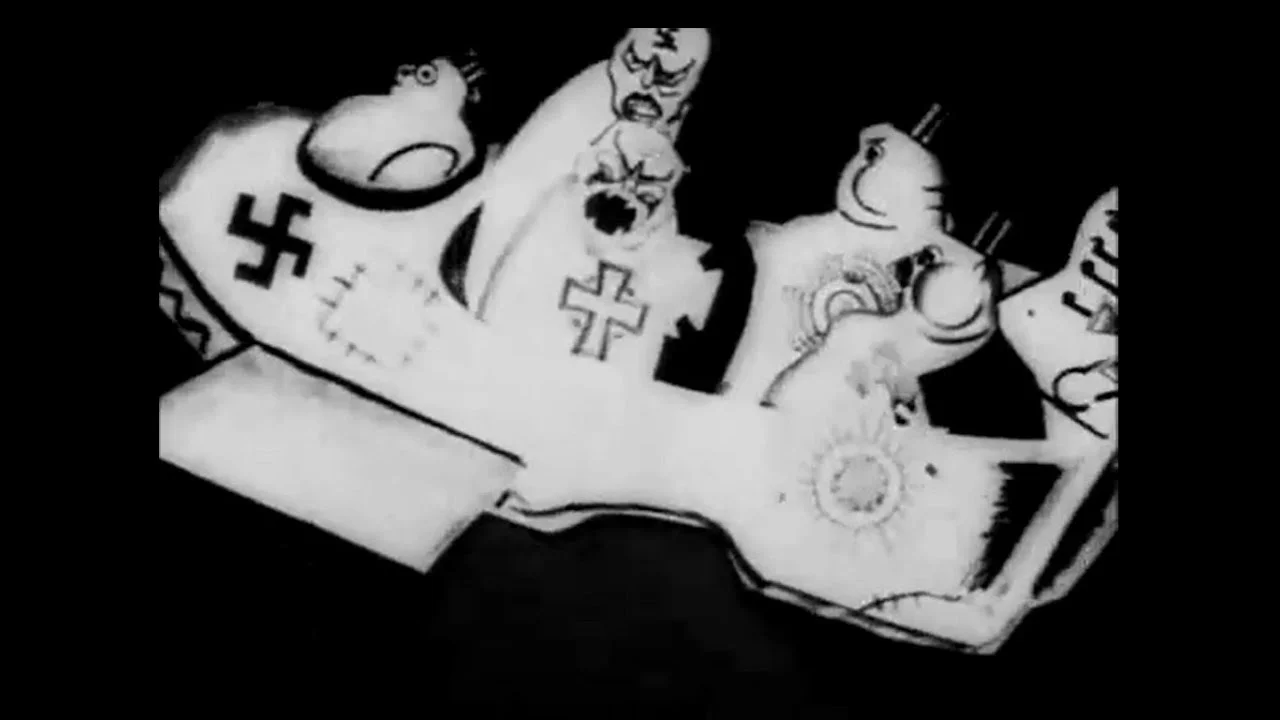
Produced in 1924 by Zenon Komissarenko, Youry Merkulov, and Nikolai Khodataev, Interplanetary Revolution stands out as one of the most peculiar examples of Soviet propaganda cinema. It offers a fascinating glimpse into the political climate of its era while simultaneously showcasing the burgeoning techniques of animation. The film resonates today not just as a piece of art but as a historical artifact steeped in the ideologies and emotional tumult of post-revolution Russia.
Animation Techniques and Visual Style
This film employs a mix of traditional cel animation, collage, and stop motion, creating a disorienting viewing experience reminiscent of outsider artist Henry Darger. This eclectic approach to animation gives the film a distinctive, unsettling aesthetic that draws viewers into its odd narrative. The use of collage, in particular, allows for a surreal layering of images that defies conventional storytelling, placing the viewer firmly in a world that feels divorced from reality. You can’t help but feel a jolt of discomfort when confronted with its bizarre visuals, much like a fever dream.
Painted backgrounds juxtaposed with animated figures create an unsettling contrast, forcing the audience to engage more critically with the imagery. This was not simply an artistic choice; it was a calculated method of propaganda, designed to convey a vision of a socialist utopia under constant threat from capitalist greed. Here’s the thing: this style remains influential, hinting at the limits of what animation can communicate beyond mere entertainment. In an age where animation is often commodified and streamlined, the daring creativity of Interplanetary Revolution serves as a stark reminder of how art can challenge viewers on multiple levels.
A Bizarre Narrative
The plot features Comrade Coninternov, a Red Army warrior who journeys to Mars and overthrows capitalist forces—a tale that favors creative absurdity over coherence. An opening intertitle introduces Coninternov's mission to vanquish capitalist foes, making the story immediately appealing to those familiar with anti-capitalist themes. The film's opening scene sets a ridiculous tone with a wild-eyed bulldog wielding an axe, representing the capitalist class. This initial absurdity reflects the broader ethos of the Soviet Union in the 1920s—a society grappling with its identity amid revolutionary fervor.
As the narrative unfolds, an array of surreal scenes, including capitalist figures adorned with swastikas from which they suck the blood of the proletariat, solidifies the film’s critique. By the early 1920s, the swastika had been appropriated by Germany's nationalist right, which Soviet propagandists weaponized against capitalists. This adds a layer of historical significance, illustrating how iconography can shift in meaning over time. The chaos escalates as capitalists, depicted as absurd caricatures, flee to space on a giant flying shoe, leading to a film experience that’s bizarre to say the least. The imaginative, often anarchic representation of class struggle propels the viewer into a unique ideological confrontation; it’s satire mixed with a call to arms.
Some might dismiss this film as mere propaganda, but that would overlook its artistic merits and the historical context of its creation. During a time when the Bolshevik government's legitimacy depended heavily on visual media, the grotesque stylization of capitalist villains served a dual purpose: to entertain and to indoctrinate. As the audience watched Coninternov's absurd adventures, they were being conditioned, perhaps unknowingly, to embrace the revolutionary spirit. It transcends simple storytelling; it’s a cultural artifact that requires deeper contemplation.
The full film is available to watch above and is included in our collection of Free Animated Films, part of a broader assortment featuring over 4,000 titles, including classics and documentaries. For those invested in understanding early 20th-century animation or propaganda mechanisms, this film is indispensable.
Implications and Significance
The impact of Interplanetary Revolution extends beyond its initial viewing and into the broader context of animation and propaganda. Its experimental approach to animation techniques laid the groundwork not just for future Soviet films, but for animated cinema as a whole. Many critics argue that modern animation has lost its radical potential, becoming largely formulaic in commercial contexts. If you're working in this space, consider this film as a case study in pushing boundaries.
Moreover, the film's explicit anti-capitalist message resonates in today's political climate, where issues of class struggle and economic disparity repeat throughout history. Its bold and confrontational narrative encourages both artistic and political discourse—and this is the part most people overlook. The film serves as a cautionary tale about how powerful narratives can be crafted and manipulated to serve specific ends. As society navigates the complexities of activism and representation, Interplanetary Revolution remains a pertinent example of how art can reflect, critique, and even reshape socio-political realities.
Related Content
Watch Dziga Vertov’s Soviet Toys: The First Soviet Animated Movie Ever (1924)
Watch the Surrealist Glass Harmonica, the Only Animated Film Ever Banned by Soviet Censors (1968)
Watch Dziga Vertov’s A Man with a Movie Camera, Named the 8th Best Film Ever Made
The Beautiful, Innovative & Sometimes Dark World of Animated Soviet Propaganda (1925–1984)
Jonathan Crow is a writer and filmmaker whose work has appeared in Yahoo!, The Hollywood Reporter, and other publications.

Discussion
Sign in to join the discussion.