Martin Luther King Jr. drew heavily on philosophical thought, particularly from Hegel and other thinkers, to support his nonviolent activism and civil rights movement.
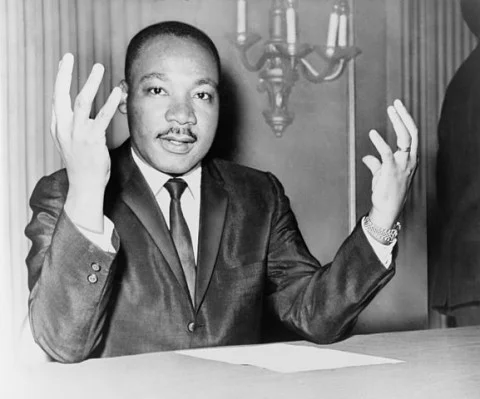
Image by Dick DeMarsico, via Wikimedia Commons
The Philosophical Context of King's Activism
While many recognize Martin Luther King Jr. as the face of the Civil Rights Movement, the philosophical underpinnings of his thought and activism often go unnoticed. His approach not only drew from other civil rights leaders but also engaged deeply with established philosophical traditions, particularly the works of German philosophers like Georg Wilhelm Friedrich Hegel and Immanuel Kant. In doing so, King was able to craft a unique narrative around nonviolent resistance, arguing against racial segregation and injustice in the United States.
Hegel's Influence on King's Ideology
King's academic journey at Boston University and Harvard opened doors to philosophical inquiry that profoundly influenced his thinking. He enrolled in a two-semester seminar on Hegel's works, taught by Edgar Brightman. During this period, he engaged with the complexities of Hegel's dialectical method, particularly the idea that growth arises from struggle, a notion that aligned well with King's vision for social change. As King reflected in his autobiography, his studies of Hegel were both "rewarding and stimulating," revealing philosophical tensions he aimed to navigate in his activism.
“Although the course was mainly a study of Hegel’s monumental work, Phenomenology of Mind, I spent my spare time reading his Philosophy of History and Philosophy of Right.”
Nonviolence as a Dialectical Process
King’s interpretation of Hegelian philosophy wasn't merely academic; it served as a framework for his understanding of social justice. In his pivotal work, Stride Toward Freedom, King explicitly encapsulated his philosophy of nonviolence as a synthesis of oppositional forces, striving to reconcile quiescence and violence:
The principle of nonviolent resistance seeks to reconcile the truths of two opposites—acquiescence and violence—while avoiding the extremes and immoralities of both.
Engagement with Existentialist Thought
King's philosophical exploration extended beyond Hegel. Influences from existentialism, particularly writings by figures like Søren Kierkegaard, shaped his understanding of human existence and morality. He acknowledged the existentialists' grasp of fundamental truths about humanity and expressed a significant transformation in his intellectual outlook. His essay, “Pilgrimage to Nonviolence,” documents this evolution, highlighting how confrontations with various philosophical schools challenged his prior beliefs.
“My encounter with Existentialism shocked me, especially since I had been raised in a rather strict fundamentalist tradition.”
Intersections with Kant and Other Thinkers
King's philosophical canon also included Kant, Spinoza, and Nietzsche, each of whom contributed to his understanding of morality, duty, and the human condition. His critical approach allowed him to dissect and discuss the limitations and merits of these philosophies, amplifying his advocacy for civil rights. In lectures, he drew upon these philosophical traditions to articulate a profound vision of justice, equality, and humanity's moral imperative to resist oppression.
The Legacy of Hegelian Thought in Civil Rights
Hegel's dialectical method not only shaped King’s philosophy but also connects to a larger historical narrative where philosophical thought has interacted with revolutionary action. Interestingly, what remains less discussed is how Hegel himself may have drawn from black revolutionary thought, notably influences from the Haitian Revolution, which potentially shaped his theories on freedom and power dynamics.
Conclusion: King's Philosophical Remnants Today
Martin Luther King Jr.'s philosophical engagements reveal a thinker who was deeply invested in the ideas of his time and actively sought to apply them in the fight against racial oppression. His legacy transcends mere activism, positioning him as a philosopher in his own right, capable of using established ideas to dismantle systemic injustice. As society continues to grapple with issues of race and equity, King's intellectual legacy remains a cornerstone for understanding the moral landscape of activism.
Related Content:
‘You Are Done’: The Chilling “Suicide Letter” Sent to Martin Luther King by the F.B.I.
200,000 Martin Luther King Papers Go Online
Download 140 Free Philosophy Courses: Tools for Thinking About Life, Death & Everything Between
Josh Jones is a writer and musician based in Durham, NC.



Discussion
Sign in to join the discussion.