Explore the Silk Road's vast trade networks, cultural exchanges, and the historical significance beyond its namesake fabric.
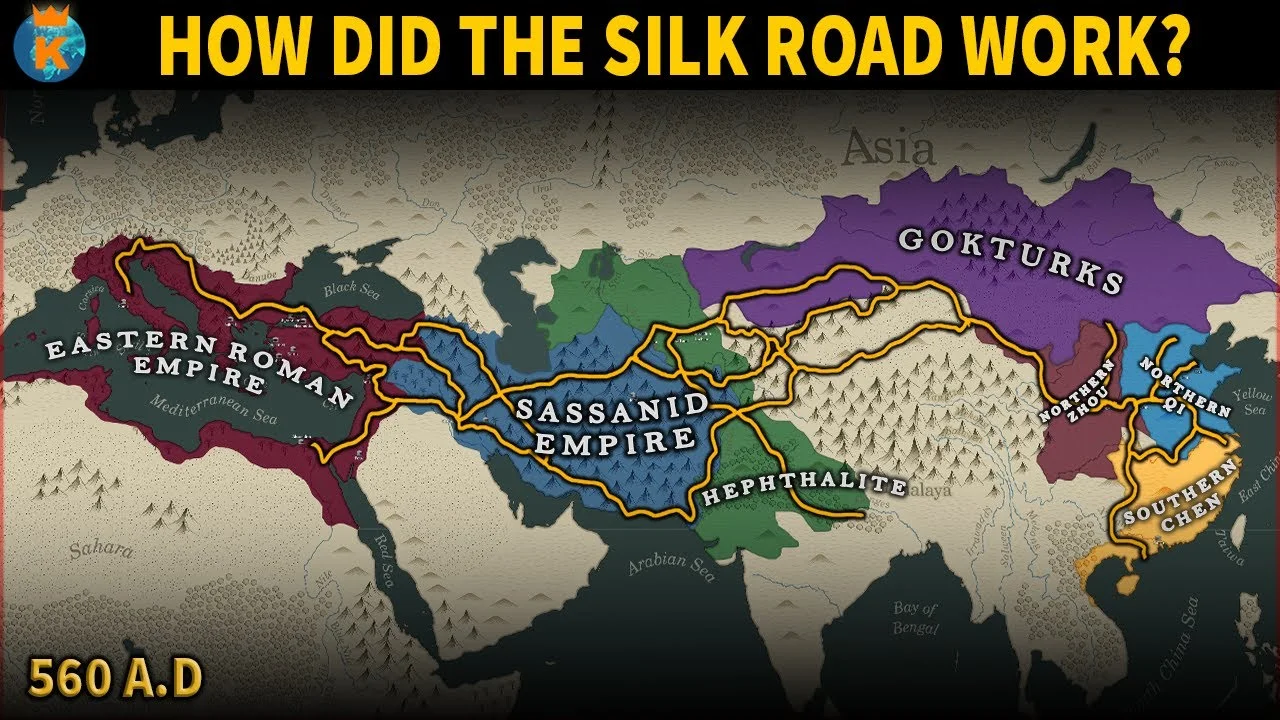
The Silk Road, often mistakenly identified merely as a route for trade in silk, encompasses a vast network of trade routes connecting Asia, Africa, and Europe. This intricate system of pathways facilitated a myriad of goods over 1,500 years, adapting to various climatic, geopolitical, and civilizational shifts. Goods exchanged included not only silk but also tea, porcelain, and gunpowder to the West, while offering glassware, horses, and wine traveling the opposite direction. This vibrant exchange made the Silk Road pivotal not just for commerce but also for the spread of ideologies, beliefs, and even diseases like the Black Death.
The officially recognized commencement of the Silk Road dates back to 130 BC. However, its origins trace back further to around 500 BC, with the establishment of the Royal Road by Darius I’s Achaemenid Empire, which spanned roughly 2,000 miles from modern-day Iran to Turkey, reaching down to India and North Africa. While the Royal Road had notable economic implications, it lacked the deep cultural impacts that would characterize the Silk Road.
Cultural Exchange and Historical Significance
What truly distinguishes the Silk Road is not just the exchange of goods but the profound cultural interactions it enabled. Merchants and travelers along this network played essential roles in the dissemination of ideas, religions, and philosophies. While few made the entire journey across the Silk Road, their exchanges contributed significantly to a cross-pollination of cultures that reshaped regions.
A key figure in the Silk Road's history is the Venetian explorer Marco Polo, who, in the 13th century, made the full trek to Kublai Khan’s court. His accounts provide an enduring romantic view of the Silk Road, despite acknowledging the risks involved in such travel. Marco Polo's writings highlight the complexities of navigating this lawless expanse filled with dangers like banditry, extreme weather, and diseases, painting a vivid picture of the challenges faced by travelers of his time. The impact of his stories transcended mere geography; it sparked curiosity and inspired future generations of explorers and traders, suggesting that the journey was as enlightening as the destinations themselves.
The Journey Then and Now
Today, the experiences of traveling the Silk Road starkly contrast with the past. Modern travel allows one to traverse from Rome to Xi’an within hours, a journey achievable with a stopover in Beijing. Although one might think Marco Polo would find our travel comforts excessive, his curiosity about our current "roads in the sky" would likely overshadow any notions of hardship. The evolution of travel technology—from caravans to planes—reflects not only advancements in human ingenuity but also changes in global interconnectedness.
Understanding the Silk Road's historical context is crucial for grasping its lasting influence on trade, culture, and international relations. The exchange of goods was merely a vehicle for much larger exchanges of human experience and culture, making the Silk Road an invaluable chapter in the annals of history. This is more significant than it looks. It laid the groundwork for complex trade routes that influence modern globalization and continue to shape cultural identities.
Implications for Today’s Global Trade
The Silk Road isn't just a relic of the past; its legacy has implications for today’s global trade and cultural exchanges. In a world where supply chains stretch across continents, the routes pioneered by Silk Road traders still echo in contemporary logistics and commerce. If you're working in this space, consider how the foundational practices of trade established centuries ago continue to be relevant. The Silk Road's model of exchange doesn’t just belong to ancient history—it has morphed into a blueprint for how nations interact economically and culturally.
And this is the part most people overlook: the Silk Road demonstrated that trade is more than mere transactions; it’s a complex interplay of trust, understanding, and negotiation. The relationships formed along these routes often dictated the terms of engagement between disparate cultures and civilizations. Today, as we face challenges like protectionism and nationalism, such lessons from the past could provide valuable insights into how we can foster better international relationships.
Related Insights
For those interested in exploring more about trade routes and their sociocultural impacts, additional resources include analyses of silk production engineering and examination of medieval trade routes. The more we understand the intricacies of these exchanges, the better equipped we'll be to navigate today's intertwined global economy.


Discussion
Sign in to join the discussion.