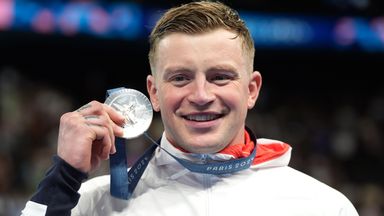
I had multiple sides to my identity growing up. I was a sporty kid raised in suburban south London. I was mixed race. And I wasn't interested in girls.
As one of very few non-white kids in the pool, I suppressed my sexuality because I desperately didn't want to be any more different. I was already bullied and became scared of my differences, to the point that I didn't want to think about them.
I was ashamed and would have given anything to be 'normal'. 'How will people react?' That's all I could think about being my true self. Now, I'd love the chance to go back and say: 'Embrace it. Have the confidence to be yourself and don't hide anything.'
That's what I hope my story can encourage among today's young people.
I think it does. On a school visit, a young boy said he was too scared to come out; I was the first person he told. Since then his teacher says he's come out to his family and friends and can finally be himself. The fact I could touch his life and influence it positively makes me really proud, but I also wonder how many people would have benefitted from greater representation 20 or 30 years ago.
Because of the climate their generation endured, many of the sporting icons who would later become pioneering LGBT+ figures like Mark Foster, Colin Jackson and Kelly Holmes only felt ready to come out in retirement. That was perfectly common until recently, and as a result I, and other athletes my age, grew up without role models in that space. I'm delighted that today is a new story entirely.
That's why LGBT+ History Month is important: we stand on the shoulders of those who've gone before us, and without pausing to reflect we might forget that today's LGBT+ athletes benefit from the bravery of Mark, Colin, Kelly, Tom Daley, Tom Bosworth, Jake Daniels, Nicola Adams and many, many more - hopefully, I dare say, myself included.
People might ask why that's important. About four years before the end of my competitive career I came out publicly, with incredible support from my team-mates and loved ones. And, yes, it made no difference to them.
It made a huge difference to me, though. For a start my competitive performances transformed. I didn't have to pretend to be the perfect athlete - serious and intimidating - so I could do what worked for me. That meant smiling, waving to the crowd, and walking out with Ariana Grande playing through my headphones.
It helped me compete without fear and become Jamaica's first openly gay athlete. I also hope it showed young people - sporty and not - that you can be yourself and still be successful, you can be gay and a sportsperson; your identity and sexuality are mutually exclusive of nothing else.
© 2026 - VIPBOX - All Rights Reserved
Leave a Comment