Conrad Wolfram challenges the relevance of traditional math education, urging a shift towards real-world applications and fostering math identities in students.
In a compelling discussion with Bruce Dixon, Conrad Wolfram emphasizes the need to rethink math education in light of technology's growing impact, particularly from machine learning and AI. He suggests that educators must reassess current practices to better align math instruction with real-life applications, paving the way for meaningful learning experiences.
Wolfram, who leads Wolfram Alpha and Mathematica, has long argued against the disconnect between school math and its practical use in the world. His perspective centers on the premise that traditional math curricula rarely reflect the realities of problem-solving that students will face outside academic environments. Schools often focus on theoretical aspects rather than practical applicability. This misalignment can lead to a workforce that struggles with mathematical concepts in real-world scenarios.
The Evolution of Math Identity
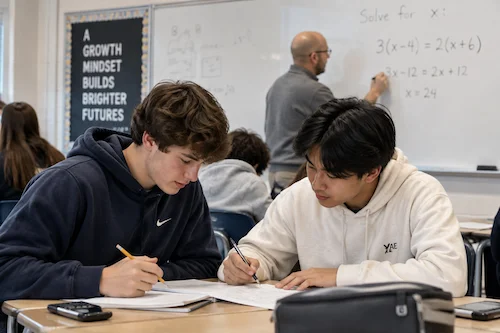
My personal journey through math education serves as an illustrative backdrop for this conversation. Early achievements in math, such as acing timed tests in first grade and winning classroom competitions, led me to believe I was a "math person." However, that confidence waned in eighth grade when I was relegated to a slower track in algebra, which undermined my self-image as a capable math student. It highlights a pivotal moment when many students may begin to associate their identity with their perceived abilities in math. Reflecting on this transition raises questions about how early experiences shape our mathematical identities and, subsequently, our opportunities as adults.
The importance of fostering a positive math identity can't be overstated. Many students, especially those from underrepresented backgrounds, can lose their confidence over time due to rigid grading standards or teaching styles that don't resonate with them. If you're working in this space, you know that replacing traditional methods solely based on memorization with approaches that value problem-solving and creativity is vital. A shift in focus could better prepare students for future challenges.
Wolfram's Real-World Math Framework
According to Wolfram, effective math use in real life involves four key steps:
- Define the problem.
- Convert it to symbolic representation where possible.
- Pose relevant questions to explore.
- Interpret the outcomes to assess their meaning and relevance.
This framework highlights that math learning should not just be about rote memorization or following algorithms but rather about engaging with mathematical concepts at a deeper level. The approach Wolfram proposes allows students to view math as a tool for problem-solving rather than a mere academic subject to endure. It pushes for an interactive learning process that invites students to actively engage and question rather than passively absorb what they’re taught (and this is the part most people overlook).
Challenging Conventional Practices
This conversation prompts a broader reflection on how educational environments cultivate or hinder positive math identities among learners. It raises the critical question of whether current math teachings adequately prepare students for modern challenges. Are we failing to nurture an inclusive perception that "we are all math people"? Building confidence and curiosity in mathematics should be central to our educational efforts.
There's a real risk that the static nature of many math curricula not only fails students but also diminishes their potential. Traditional learning paradigms often emphasize a "one-size-fits-all" approach where students who may think differently get sidelined. This can lead to an output of students who either fear math or see it as irrelevant to their aspirations. As we lean into discussions within the Modern Learners Community, the goal is to foster an environment where educators and learners collaborate to construct more engaging and applicable math experiences. If educators genuinely work toward this vision, we can reshape the narrative around math education.
Implications for the Future
The implications of Wolfram's insights strike at the heart of educational reform. As technology continues to evolve, so too must our strategies in teaching math. Current generations will inherit a world where data drives decisions and quantitative reasoning is essential. This evolution raises pressing questions: How will our educational systems adapt? Will they continue to rely on outdated methodologies, or will they embrace a more integrated approach to math education?
What this means for you—whether you're an educator, student, or parent—is clear: The call for change is not just theoretical; it's essential for developing a future workforce that's well-equipped to handle complex problems. For educators, the time to rethink math instruction is now. It's about creating pathways for students to not only engage with math but to excel in it, building skills that will serve them in technological and job-market landscapes that are increasingly dominated by AI and machine learning. These shifts won't just benefit individual students—they'll influence the economy at large, and potentially reshape how we understand and value mathematics as a discipline.
With the backdrop of technological advancement influencing all areas of life, the principles advocated by leaders like Wolfram underscore a necessary pivot. As we acknowledge the importance of practical, real-world math skills, we create opportunities for students to redefine what it means to be proficient in mathematics. That’s a conversation that deserves ongoing attention and action.


Discussion
Sign in to join the discussion.