Danish schools prioritize trust and autonomy for teachers and students, presenting valuable insights for improving education in the U.S.
I’ve been following Pernille Ripp for over a decade. Through her writings on her blog and books, she emphasizes humane approaches to education. Her recent move back to Denmark provided an opportunity to examine how educational practices differ there compared to the U.S. What stands out is not just what makes teaching in Denmark better, but how many of these principles could be effectively adapted for U.S. schools.
One significant takeaway is that many improvements could come from reducing rather than adding burdens to teachers and students. Shortening the to-do lists may not require additional funding or new programs, just a shift in how educational expectations are set. It’s time to visualize bringing some of Denmark’s successful practices into the American educational framework.
Transforming Teacher Experiences
Assumed Competence and Trust
In Denmark, teachers operate under a system that inherently trusts their professional judgment. Unlike U.S. practices that impose pacing guides and checklists, Danish educators work from broad, age-related goals. Recently, educational authorities cut the extensive list of goals down to about ten. This fosters rapid, pragmatic adjustments to curricula based on students’ needs without being bogged down by committee reviews.
Pernille articulates this trust well: “The system assumes I know what I’m talking about, valuing my experiences with students.”
How to adapt this in the U.S.: Shift the emphasis from rigid curriculum mandates to collaborating with teachers on adjustments. Invite staff to assess existing programs, encouraging modifications rather than strict adherence to unsuitable scripts.
Trust Over Control
In her observations, Pernille notes how U.S. regulations suggest a lack of trust in teachers. This is marked by scripted lessons and rigid policies, which often constrain educators' autonomy. Conversely, Danish teachers operate under a default of trust, enabling them to make quick decisions, such as taking students outside without any formal permissions.
“Trust is given until lost,” she explains, emphasizing that it’s a privilege granted to educators from the start.
Starting points for the U.S.: School leaders should frequently express their trust in faculty, ensuring that new policies don’t contradict this message. Further, evaluating and possibly relaxing restrictive rules related to classroom management and field trips could free up educators to focus on their teaching.
Fostering Healthy Work Environments
Pernille typically works a 40-hour week, of which only 20 are spent teaching. During busy periods, her management asks what can be removed from her responsibilities — an approach that’s refreshingly supportive. Workspaces for teachers are designed to separate them from student interruptions, allowing for dedicated prep time free from distractions.
When ill, she only needs to notify the school, eliminating the stress of planning for substitute teachers, as trained substitutes are readily available to step in.
Applying this approach in the U.S.: Prioritize teacher preparation time by protecting it from unnecessary disruptions. Explore restructured schedules that allot longer uninterrupted periods for lesson planning, and reassess the substitute teacher culture to allow more flexibility for teachers needing time off.
Enhancing Student Learning
Instilling Autonomy Early
Danish schools instill responsibility in students from a young age, fostering independence in tasks ranging from packing backpacks to managing materials. Pernille recalls how her daughter struggled with what seems like simple tasks, highlighting how American students often receive more support that can hinder independence.
Students are empowered to learn from experiences rather than work under strict supervision, promoting a culture where mistakes become learning opportunities.
Implementing this in the U.S.: Begin by allowing students to make more choices about their activities, even if they're small. Acknowledge mistakes as learning, rather than failures, and analyze school policies to identify which could be relaxed to foster autonomy.
Redefining School Environments
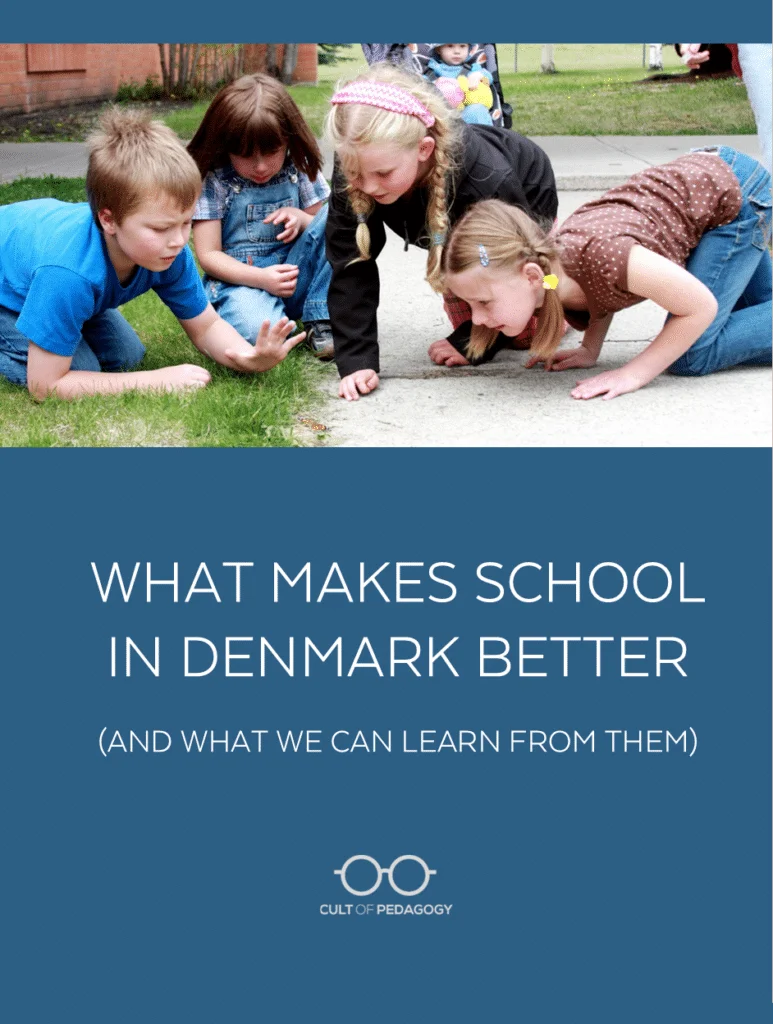
The Danish school day emphasizes outdoor play and movement as essential to student well-being. Students are expected to go outside daily, regardless of weather, and engage in various play activities without excessive interference from adults. This freedom includes allowing some level of physical roughhousing during recess — a stark contrast to many American schools.
According to Pernille, the focus is on safety, not on enforcing rigid controls over children's play.
Action steps for U.S. educators: Increase outdoor time for students, creating opportunities for unstructured play that doesn’t necessitate educational justification. Pilot programs advocating for longer recess or allowing physical activities that encourage play can be initiated without waiting for district-wide mandates.
Rethinking Homework Assignments
In Denmark, homework is minimal and when assigned, it is intentional and manageable. Pernille experienced pushback from a parent who preferred she focus on in-school learning rather than sending work home. This perspective encourages children to engage in family and personal activities outside of school hours.
“Kids are expected to be kids,” she asserts, advocating for a significant reduction in homework.
How to adapt homework policies in the U.S.: Consider eliminating unnecessary assignments or limiting homework to manageable tasks. Encourage parental involvement by protecting family time and recognizing that learning happens in various environments.
Emphasizing Student Voice
Danish schools incorporate student voices in meaningful, structured ways, utilizing time dedicated to community conversations. This regularly scheduled class hour allows students to address conflicts and social issues openly and constructively.
“Schools are for community, not for individualism,” Pernille stresses.
Implementing this in the U.S.: Establish regular times for class discussions or community engagement without specific academic objectives. Treat these moments as valuable components of the learning experience, allowing students to express their thoughts on improving the curriculum.
Academic Rigor without Pressure
Expectations in Denmark are high, but the urgency present in U.S. classrooms isn’t as prevalent. Grades aren’t assigned until seventh grade and foundational learning is approached more gradually. Students often arrive at fluency later than their peers in the U.S., proving that slower is sometimes better.
Pernille encourages cutting back on overly ambitious curricula to allow deeper engagement. “Pretend you operate at 80% capacity and decide what’s essential to accomplish,” she advises.
Advice for American Educators
For teachers in the U.S. who may find themselves constrained by existing systems, Pernille offers a call for grace and reflection. She recommends embracing “good enough” and deliberately simplifying curricula wherever possible. Engage students in the process, inviting their input on which aspects of their learning they find most impactful.
This reflection, coupled with a mindset of forgiveness towards the pressures of the educational system, could lay the groundwork for substantive change.
For ongoing insights, educators can follow Pernille Ripp on Instagram and explore her book, Passionate Learners.


Discussion
Sign in to join the discussion.