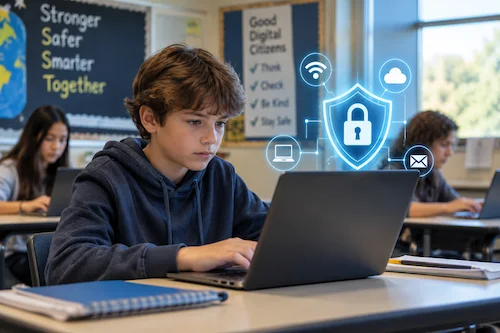
K-12 cybersecurity education should focus on practical skills and real-life decision-making, not just awareness of rules and guidelines.
Critical Insights:
- Cybersecurity is more about judgment than memorization
- Cybersecurity remains a top priority for schools
- Fragmented student data poses significant risks
- Explore more about K-12 cybersecurity in eSN’s IT Leadership hub
Today's students make daily cybersecurity decisions, but simply sharing a list of rules does little to prepare them for real threats. As schools increasingly turn to technology, the evolving nature of cyber threats poses a real challenge. According to the U.S. State of EdTech 2026 report, over 600 education leaders have identified cybersecurity as their predominant tech concern. Compounding this are significant barriers, as 65% point to insufficient staffing and budget constraints as major hurdles.
While districts are investing in multiple security measures like firewalls and multifactor authentication, these technologies cannot replace the critical need for human judgment. Students and staff face decisions daily, from clicking links to sharing sensitive information, where discernment plays a pivotal role.
The Disconnect Between Knowledge and Action
Most students are acquainted with basic online safety tips: don’t share passwords, avoid suspicious links, and be cautious about their online personas. Yet, issues arise when the threats aren't overtly alarming. Consider a phishing email that looks legitimate, complete with a recognizable logo and a false sense of urgency—these tactics can easily confuse even the cautious. In such scenarios, recognizing the threat requires more than memorization; it demands discernment and a critical mindset.
Students must be equipped not only with the knowledge of rules but with the capability to evaluate situations. Questions like "Who sent this?" or "What happens if I click this link?" should become second nature. This practice is essential before they face actual cybersecurity risks.
Safe Learning Environments for Real Decisions
Instead of relying solely on instructional approaches, classrooms can introduce simulated phishing scenarios that challenge students to decide how to react. Would they click a link, verify the sender, or report the message? Engaging them in this thoughtful decision-making process prompts essential discussions about why they made their choices.
For example, in a controlled exercise, if a student mistakenly follows a malicious link, the learning experience remains intact. They can later analyze their thought process and identify what clues they overlooked—reinforcing their knowledge without serious consequences. By using simulations and gamified scenarios, students can safely navigate various cybersecurity dilemmas, from social engineering to phishing attempts, building confidence in their judgment.
Integrating Cybersecurity into Digital Literacy
Beyond merely instructing students on cybersecurity, schools should integrate these skills into broader digital literacy programs, making these lessons accessible to everyone—not just aspiring tech professionals. Most students will encounter online accounts and cloud applications in their lives, so guiding them in making prudent cybersecurity decisions becomes essential.
The Cybersecurity and Infrastructure Security Agency (CISA) emphasizes this view in its Protecting Our Future report, advocating for a unified cybersecure culture where cybersecurity is a shared responsibility, not solely that of IT professionals.
Small Steps to Big Changes
U.S. schools don’t need to overhaul their entire curriculum to incorporate cybersecurity education. Short, engaging activities can yield significant benefits. A simple exercise could involve students comparing two different emails to determine trustworthiness or analyzing a scenario where an unsafe link was clicked.
These discussions need not require extensive resources; they hinge on encouraging analytical thinking: scrutinize information, question requests, and articulate the rationale behind decisions made. Schools can’t foresee every threat on the horizon, but they can instill resilient habits in students that will serve them throughout their lives, such as pausing before acting, double-checking information, and knowing when to ask for assistance.
The goal isn’t to turn students into cybersecurity experts. Instead, it’s about encouraging practice in a safe environment, ensuring that students learn from their missteps in scenarios where mistakes don’t lead to real-world consequences. The foundation built in these experiences will last well beyond their school years, equipping them to navigate an increasingly complex digital world.



Discussion
Sign in to join the discussion.