New university offerings prioritize human and technical skills development, preparing learners for demands in an AI-influenced job market.

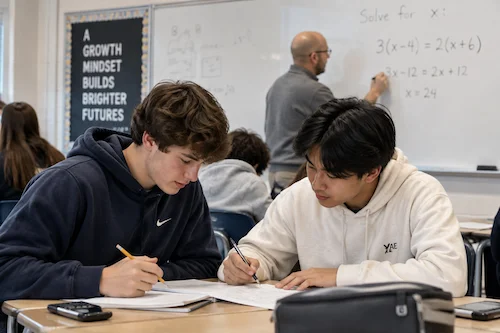
Recent developments in higher education are responding to the shifting skills landscape shaped by artificial intelligence. New certificates and specialization programs have emerged, specifically aimed at equipping learners with critical human and technical skills needed in an advanced economy. This is not merely an academic trend; it reflects broader societal changes where technology continuously reshapes job requirements and career paths.
The Skills Gap: A Growing Concern
Insights from the QS World Future Skills Index 2027 reveal an alarming trend: over 92,000 employers identified significant gaps in essential skills such as critical thinking and leadership. As businesses increasingly rely on technological advancements, the need for a workforce that can adapt and think critically becomes more pressing. This disconnect between employer expectations and graduates’ skill sets presents a challenge for educational institutions and serves as a clarion call for universities to develop programs that address these gaps.
Fostering Leadership in Dynamic Industries
Graduate certificates are gaining traction among professionals who seek to deepen their expertise while keeping options open for future academic advancements. These stackable credentials enable learners to enhance their leadership and innovation capabilities while simultaneously earning credits towards a potential master’s degree. It's a pragmatic approach that responds to the immediate needs of the labor market.
- Engineering Management Graduate Certificate (Northeastern University): Focus on building management skills alongside technical engineering knowledge.
- Healthcare Innovation, Design, and Entrepreneurship Graduate Certificate (University of Illinois Urbana-Champaign Gies College of Business): Acquire the design thinking and leadership skills essential for solving real-world healthcare challenges.
Investing in such programs makes sense for working professionals. It allows them to bolster their competitive profiles without committing to multi-year degree programs. They can cater their learning to sectors they're already involved in or wish to break into. This form of education reflects a shift towards lifelong learning; professionals need to keep evolving as industries change.
Broadening Learning Opportunities Across Disciplines
Universities are also widening pathways for in-depth learning in high-demand sectors by introducing new specialization programs. These offerings support individuals looking to boost their careers, pivot into new fields, or engage in personal development. Designed with lifelong learning aspirations in mind, they cater to different career stages.
- Healthcare Project Management: Fundamentals to Practice Specialization (Minnesota State University, Mankato): Master project management principles in healthcare settings while enhancing leadership skills.
- Effective Supervision: From Manager to Leader Specialization (Minnesota State University, Mankato): Develop confident communication and team coaching capabilities for effective leadership.
- Everyday Tax Concepts: US Individual, Corporate & Estate Tax Specialization (Minnesota State University, Mankato): Build a strong foundation in U.S. tax laws and strategies.
- Everyday Cybersecurity: Protecting People, Data & Business Specialization (Minnesota State University, Mankato): Gain practical insights into cybersecurity and effective threat management.
- Piano Techniques and Essentials Specialization (Berklee College of Music): Nurture your musical creativity through foundational piano skills.
This breadth of programs reflects growing recognition that education needs to be more tailored and accessible. Individuals don’t just want a degree; they seek practical skills that can advance their careers or fulfill personal aspirations. And this is the part most people overlook: the traditional model of education isn’t sufficient anymore. Students are circulating in a marketplace that favors flexibility, efficiency, and specialization.
The Implications of These Educational Shifts
The emergence of these new educational programs signals a significant transformation in how higher education institutions are perceived. Universities are increasingly seen as facilitators of lifelong career development rather than just traditional degree-conferring entities. As they embrace this role, they also face greater expectations to ensure their curricula are relevant to current job markets.
For those working in this space, awareness of the shifting focus becomes critical. Educational institutions must continuously assess industry needs and adapt their offerings accordingly. This ongoing dialogue is crucial, not merely a checkbox exercise. If universities fail to keep pace with industry requirements, they risk alienating prospective students who seek tangible, job-ready skills.
Beyond immediate employer demands, this transformation may influence broader economic factors. A more skilled workforce, aligned with advanced technological capabilities, could contribute to increased productivity, innovation, and economic resilience. In this sense, the implications aren't just academic; they touch on societal outcomes as well.
As these educational trends continue, stakeholders should pay attention to how they reshape industries and, ultimately, the job market. A disjointed approach could exacerbate existing skill shortages, while thoughtful integration into existing frameworks could enhance outcomes for employers and graduates alike. The road ahead is complex—balancing accessibility, quality, and adaptability will be no small feat. But the future of education depends on it.

Discussion
Sign in to join the discussion.