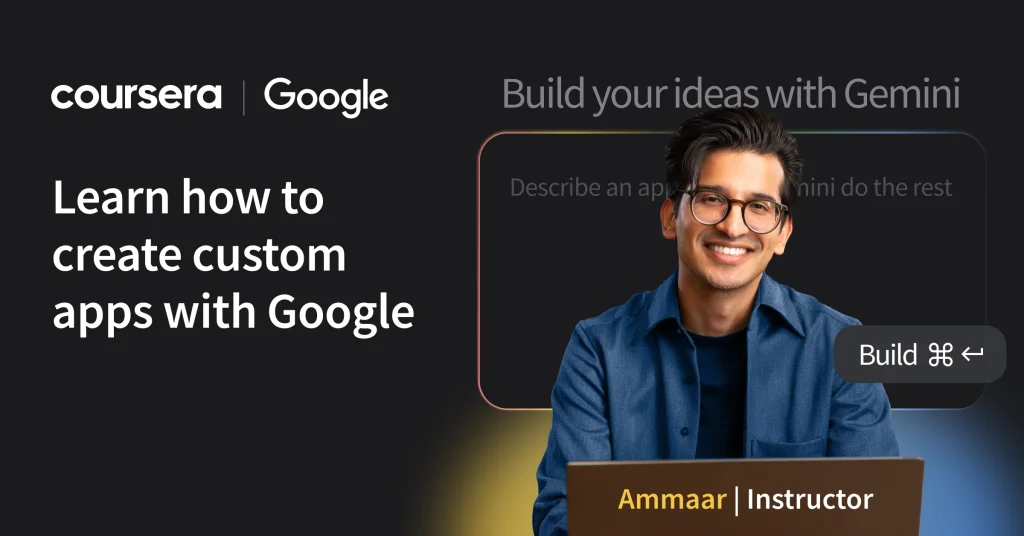
Google's new vibe coding course on Coursera empowers professionals to transition from AI users to builders, tapping into practical AI application skills.
Introduction to Vibe Coding
Google has unveiled a new course focused on vibe coding as part of its AI Professional Certificate on Coursera. This latest addition aims to transform professionals from mere users of AI into active creators of AI-driven applications. While you've probably heard about applications of AI, the ability to move from passive consumption to active creation represents a significant shift in how both individuals and organizations interact with technology.
The Evolution of Software Development
Historically, software development has hinged on the ability to write code. Developers needed a strong grasp of programming languages, algorithms, and a myriad of technical skills to bring their ideas to life. However, vibe coding shifts this paradigm. This approach invites non-programmers from diverse fields—be it marketing, design, or operations—to wield the power of AI for application development. It's about harnessing AI's capabilities without requiring deep technical knowledge, which can be incredibly empowering.
By engaging with natural language and intuitive AI tools, individuals across various sectors can now develop applications that streamline task automation. This not only democratizes technology but also enables those who may not identify as "coders" to be active contributors in the AI space. The emphasis is on problem-solving, iterative development, and user trust rather than simply coding proficiency. This reflects a broader trend across the tech sector toward accessibility and user-driven innovation.
Course Structure and Content
Designed and instructed by Google experts, this course introduces a structured approach for planning, constructing, debugging, and deploying AI-powered applications with tools like Google AI Studio, Gemini, and Gemini Canvas. This isn't just a classroom experience; it’s a practical workshop where theory meets real-world application. Learners will become familiar with tools that are currently setting the standard in AI technology, which can be an invaluable asset in today’s job market.
This course goes beyond simplistic one-click code generation. It underlines the iterative processes used by software developers. For instance, students learn to recognize candidate projects for automation, convert ideas into functional prototypes, and address troubleshooting tasks—a cycle that mirrors traditional software development but is adapted for users without a coding background. And this is the part most people overlook: coding prowess isn’t the only path to innovation anymore.
In addition to application deployment, a significant takeaway will be understanding how to create applications that are not only functional but also secure. Given rising concerns around data privacy and security, this aspect cannot be understated. Acquiring the ability to deploy applications that protect organizational data is increasingly essential for any professional looking to incorporate AI into their work.
Skills Acquired through ‘Vibe Coding’
Participants will engage in creating multiple AI-driven applications while acquiring essential capabilities:
- Planning and architecting applications prior to writing prompts
- Debugging and refining apps within Google AI Studio
- Deploying applications securely to safeguard organizational data
- Implementing a repeatable framework for crafting AI solutions flexible enough for future projects
The skillset developed here aims to reinforce the idea that AI isn’t just the domain of computer scientists. With vibe coding, professionals across a variety of roles can step into the future of tech with confidence. The ability to plan projects before diving into the technical aspects is a fundamental shift that will influence how teams approach any automation projects—inviting collaboration between technical and non-technical team members.
Impact on the Workplace
This course enhances the existing Google AI Professional Certificate, which has successfully helped over a million learners advance their AI expertise, making it relevant as AI technologies evolve. This alignment ensures that students are not only learning the basics of AI but also gaining access to the latest tools and best practices from Google. If you’re working in this space, this could change your team's dynamic considerably.
The collaboration with Google demonstrates a continual commitment to driving practical AI education, equipping learners with skills that have tangible impacts in their workplaces. By making the creation of apps attainable for countless professionals, vibe coding prepares a broader workforce—one that can adapt to changing technological landscapes without the traditional barriers of coding knowledge. The implications are profound; businesses that embrace this mindset will likely see increased productivity, innovation, and employee engagement.
Future Outlook
The introduction of vibe coding is just one facet of the ongoing transformation within the tech industry. As more organizations recognize the relevance of AI across various functions, the demand for accessible education in these technologies will only grow. What this means for you is that the skills gained from such courses may soon be as critical as traditional technical skills in the job market.
The future appears to trend toward making complex technologies simpler and more accessible, and vibe coding symbolizes that direction. As organizations implement more AI solutions and seek to integrate technology into their workflows, training programs like this will likely evolve to meet these needs. Expect new capabilities, new tools, and perhaps even new definitions of what it means to be a developer—that’s already in the air.


Discussion
Sign in to join the discussion.