The rising discourse around assessment challenges traditional views, calling for a reevaluation of educational practices as we move into 2019.
Transforming Educational Conversations
The end of the year often prompts us to reflect on significant milestones, not just in our personal lives but also within education. As we look toward the future, 2018 has shown us that the dialogue surrounding learning environments is undergoing substantial shifts. Educators, students, and thought leaders are increasingly called upon to rethink what education should resemble.
The Role of Provocation
In the wake of changing dialogs, it becomes essential to create platforms for sharing diverse insights about education. At Modern Learners, our goal is to cultivate an environment where teachers and educational professionals can voice their thoughts honestly, engaged in meaningful discussions. True provocation is more than an assertion; it’s about questioning assumptions, examining the ‘why’ behind our educational practices, and exploring new perspectives that challenge the status quo.
The Focus on Assessment
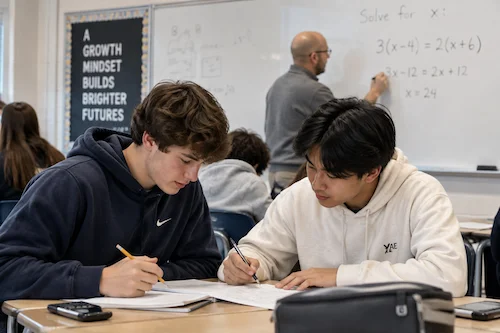
Our selection for the 2018 Provocation of the Year centers around one pivotal concept: assessment. This term has frequently surfaced in various conversations, workshops, and online discussions throughout the year, and it demands our attention. Its significance cannot be overstated; it's a term that has been distorted beyond recognition, provoking strong reactions among students and educators alike. Student assessments, often consequential, are harshly criticized for their roles in teacher evaluations, school closures, and their contribution to heightened stress among learners.
The Reaction to Assessment Practices
Upon the release of our Assessment Ebook in March, we witnessed an overwhelming response. Many participants engaged with the material that encouraged them to scrutinize their zoning practices, reflecting on previously unquestioned norms. These interactions served as a catalyst for meaningful discussions around assessment methodologies.
Reflecting this momentum, we witnessed a record turnout of 645 participants for our June webinar on assessment, demonstrating a growing interest in reevaluating current practices. Additionally, our recent Modern Learners Labs in Auckland and Christchurch drew engaging responses, further indicating a collective yearning for change. This enthusiasm led us to launch our inaugural Modern Learners Course, with "Reimagining Assessment" as the clear focal point.
A Wider Educational Movement
The conversation around assessment is not limited to our initiatives at Modern Learners. Esteemed authors and educators, like Deborah Meier and Anya Kamenetz, have contributed to the discourse in 2018 through influential publications, challenging established ideas about evaluation in a bid for reform. Books like Beyond Testing, The Test, and The Testing Charade signify a growing resistance against traditional measures of assessment.
Alfie Kohn, renowned for his insights on education, encapsulated this sentiment well, stating, “assessment should be an unobtrusive servant of teaching and learning.” This perspective invites us to reconsider how assessment fits within the broader educational landscape. It shouldn’t dictate—but rather support—teaching methodologies aimed at fostering student growth.
Rethinking Grades and Transcripts
The momentum towards reimagined assessment practices aligns with movements focused on alternative credentialing models, such as the Mastery Consortium. More educators are engaging in discussions about implementing a "gradeless" approach, exploring how these ideas might transform student engagement and authentic learning experiences.
The Conversation Beyond Education
Moreover, conversations about assessment are permeating societal discussions. A recent opinion piece from Adam Grant outlined that academic performance is not necessarily indicative of professional achievement, which challenges the historical reliance on grades as a measure of success. This highlights a pressing need for a broader dialogue encompassing parents and the public to communicate the significance of rethinking assessment practices.
A Call to Action for 2019
Looking ahead, it's vital to share insights on reimagined assessment not just within academic circles but across communities. We must embrace the challenge of translating our beliefs about assessment into meaningful discussions shared with parents, students, and the public. The risk lies in assuming that everyone understands the reasoning behind proposed changes.
Therefore, the agenda for educators in 2019 is clear: we must articulate our beliefs and engage in dialogue that prioritizes reflective thinking about assessment. Standing firmly on our convictions can lead to fruitful conversations and drive the educational community toward a more thoughtful approach to teaching and learning.
From all of us at Modern Learners, we wish you a fulfilling holiday season filled with reflection and connection, as we prepare for another year of critical conversations in education.

Discussion
Sign in to join the discussion.