Warm Demander Pedagogy fosters deep student connections, blending empathy with high expectations to create a supportive learning environment for all.
Understanding the Heart of Warm Demander Pedagogy
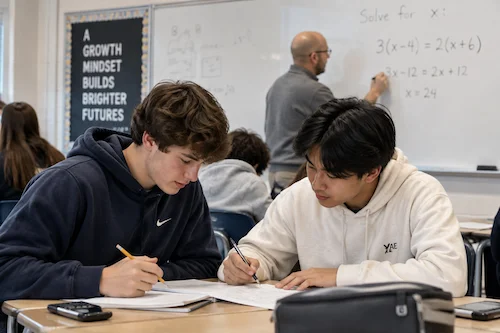
Teaching isn’t just about delivering content; it’s about fostering a deep connection with each student, recognizing their potential, and guiding them through challenges. Imagine a student struggling with a tough assignment, frustration mounting. Many teachers might pass by or simply tell the student to push through. But a Warm Demander takes a different approach. They sit down with the student, acknowledging the difficulty of the task, and lead them through it step-by-step—transforming the struggle into manageable success. This simple interaction embodies a profound educational philosophy: effective teaching hinges on the ability to ensure that all students are not just heard but also supported.
But herein lies a critical issue. In recent times, conversations surrounding the challenges faced by diverse learners have become entangled in political discussions, overshadowing the fundamental principle that effective teaching is about fostering growth and accessibility for every student. System-level changes are necessary, but without practical strategies to implement these ideals in classrooms, teachers’ hands are tied. They need actionable tools to translate equity and inclusion discussions into tangible classroom growth for their learners.
Decoding Warm Demander Pedagogy
Warm Demander Pedagogy doesn’t merely advocate for high expectations; it’s a holistic approach that honors each student’s individuality, acknowledging the complexities of their experiences. The approach champions the idea of recognizing the whole child—acknowledging their strengths, cultural contexts, and challenges to help propel them forward. Thought leaders like
Judith Kleinfeld and
Lisa Delpit have explored this concept extensively. They demonstrate that the blend of empathy (warmth) with high academic standards (demand) creates a supportive environment where students feel safe to learn but also expect to deliver their best.
This model thrives on establishing trust. In a classroom led by a Warm Demander, students feel secure enough to delve into challenging material without the gnawing fear of judgment over mistakes. Safety is paramount for taking risks in learning. When students can engage without trepidation, an essential foundation is built for successful and rigorous education.
The Balance of Expectations and Trust
What truly sets the Warm Demander model apart is its intrinsic duality. The "demand" isn’t about issuing orders; it’s a recognition of the student's potential coupled with relational warmth. It's not pity; it's empathy paired with expectation. Teachers work tirelessly to cultivate a classroom atmosphere of mutual respect, allowing students to engage with difficult tasks in an environment devoid of fear and shame.
Warm Demanders excel at instilling belief in their students’ capabilities. They encourage their classes to tackle authentic challenges while providing necessary guidance and scaffolding. When students see that their teacher genuinely cares and commits to their success, they are far more inclined to engage with complex topics.
A Caution Against Leniency
On the flip side, inadequately executing warmth—particularly devoid of high expectations—can be counterproductive. Lowering academic rigor in the name of compassion can inadvertently lead to what some refer to as the “soft bigotry of low expectations,” which undermines students' belief in their own capabilities. Striking a balance is essential here. While it's vital to recognize external struggles that students face, diluting academic demands can prevent them from gaining the essential skills needed to thrive beyond the classroom.
Why do many educators lean towards this lenient mindset? It's often born from a place of compassion, with thoughts like, “They already carry enough burdens.” But this reasoning falls short. It perpetuates a cycle of mediocrity where students are robbed of the rigorous education they deserve. The Warm Demander model compels teachers to reassess and strike a balance between providing support and maintaining high standards.
In essence, the Warm Demander methodology serves as a dynamic framework for educators, challenging them to engage students in a manner that marries genuine care with an insistence on academic excellence. More than a teaching style, it’s an ethos promoting resilience, engagement, and ultimately, success in the classroom.
Embracing Incremental Change
Transformative change in education isn't about sweeping reforms; rather, it's about taking small, manageable steps that lead to significant shifts over time. Drawing inspiration from behavioral science, particularly concepts popularized by authors like James Clear in his book, [*Atomic Habits*](https://jamesclear.com/atomic-habits), the idea is to introduce new habits by stacking them onto existing routines. This method, often called "Habit Stacking," creates a foundation for teachers to enhance their engagement with students while fostering a supportive classroom environment.
Here’s a practical approach: choose one daily interaction as a focal point for change—what I'll refer to as the “Warm Demander” approach. For instance, consider how greeting students at the door can serve as an entry point for building connections. A simple acknowledgment of shared experiences, whether it's discussing the weather or recent sports events, can set a tone of unity. A remark like, “Great effort in last night’s game! Let’s channel that enthusiasm into our next project,” reinforces community ties in the classroom.
Concrete feedback is another area ripe for enhancement. Rather than simply returning graded assignments, take a moment to offer personalized encouragement. Saying something like, “Your writing is improving—particularly your revisions on paragraph two,” encourages students to take pride in their progress, fostering a growth mindset.
Even the structure of lessons can benefit from transparency; letting students know your objectives helps demystify challenges. By framing a difficult task as an exercise for brain development—“If this feels tough, remember, it’s your brain growing!”—you empower students to tackle obstacles collaboratively.
At the class's conclusion, consider implementing a reflective exit routine. Ask students to articulate their challenges and how they tackled them: “What challenge did you face today, and how did you respond?” This not only encourages self-assessment but reinforces the importance of resilience and strategy.
Rethinking Educational Frameworks
The call for change within educational systems can no longer be ignored. Teachers are in a position where waiting for widespread political agreement or systemic reform isn't an option; the need for actionable change is pressing and complex. What they require is a framework that melds high standards with authentic care—this is where the concept of Warm Demander Pedagogy comes in.
Choose to marry rigorous expectations with a genuine investment in students’ well-being, and you’ll unlock the potential for a true sense of belonging and academic achievement among your students. This approach doesn’t just elevate educational standards; it enriches the entire classroom atmosphere, creating an environment where both teachers and students can thrive.
If you’re ready to explore this method further, consider checking out the Teaching Channel course, [*Teaching with Heart and High Expectations*](https://courses.teachingchannel.com/courses/dl/educator-wellness/Teaching-with-Heart-and-High-Expectations-/5318).
The future of education lies in the hands of those who are committed to nurturing both intellect and emotional connection in their classrooms. Retooling simple, everyday practices isn’t just a nice-to-have—it’s essential for crafting a legacy of success and belonging for every student.


Discussion
Sign in to join the discussion.