Discover how Northwest Passage High School is transforming education through student-driven projects and real-world expeditions.
Can education transcend traditional boundaries? This question underpins the transformative approach taken by Northwest Passage High School in Coon Rapids, MN. Under the guidance of director Peter Wieczorek, the school is redefining what it means to receive an education in the 21st century.
Revolutionizing the Learning Environment
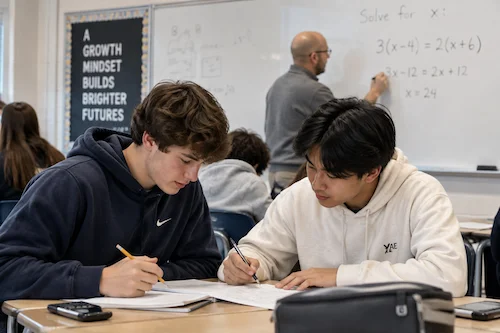
This public charter school is not just adopting project-based learning; it’s enhancing it in ways that could set new benchmarks for schools everywhere. Project-based learning has gained traction as an alternative to traditional rote learning methods, promoting critical thinking and problem-solving skills among students. However, while many schools claim to embrace this method, Northwest Passage is taking it a step further by allowing students to select their own projects based on their personal interests. This autonomy isn’t merely a nice-to-have; it fundamentally shifts the power dynamic in the classroom, giving students ownership over their educational journeys. This empowers learners to engage more deeply with the material.
The role of the educators in this model is crucial. They don't just stand in front of a classroom lecturing; instead, they act as guides and facilitators, ensuring that students remain focused and that their learning aligns with state standards and assessments. This blend of freedom and structure is essential. It’s an educational framework that encourages self-direction while still adhering to necessary academic benchmarks.
Expeditions: A Unique Learning Experience
Perhaps the school's most innovative feature is its offering of over 20 "expeditions." These real-world excursions last up to two weeks, pushing beyond the conventional classroom setup to foster meaningful relationships between students and adults. This experiential learning component is significant. Traditional education tends to confine learning to textbooks and classrooms, which can limit students’ exposure to real-world challenges and diverse perspectives.
The expeditions not only enrich students’ learning experiences but also cultivate soft skills such as collaboration, communication, and adaptability—qualities that are often overlooked in standardized curricula. These experiences offer opportunities for students to engage with their communities, interact with professionals, and apply their classroom knowledge in practical contexts, which is especially critical in today’s workforce where skills and experience are highly valued.
Moreover, the emphasis on real-world applications aligns perfectly with trends in modern education. As the job market rapidly evolves, there's a growing need for educational systems that prepare students not just academically, but also socially and emotionally. These expeditions serve as a bridge between school and the broader world, reinforcing the importance of community engagement.
The Impact of Student Autonomy
For those interested in student autonomy in education, Wieczorek’s insights promise to be enlightening. When students have the freedom to choose their projects, it often leads to a higher level of intrinsic motivation. This kind of self-directed learning can be a game-changer. The evidence suggests that students who feel a sense of control over their education are more likely to take initiative and develop a passion for learning. This approach can be particularly beneficial for students who struggle in traditional settings, where they may feel disconnected from the material.
Here’s the thing: the implications of these methods extend far beyond Northwest Passage High School. If you're working in this space, consider how these principles can inspire changes in your own educational environments, whether in schools, after-school programs, or even corporate training sessions. The need for educational reform is pressing, and schools adopting such progressive practices might offer a blueprint for others to follow.
Continuing Discussions on Progressive Education
After learning about Northwest Passage and its innovative educational strategies, listeners may also want to explore our podcast featuring Megan Power, who sheds light on Design39campus and its own set of progressive educational practices. Her insights complement the themes discussed by Wieczorek, emphasizing the need for flexibility, community involvement, and creativity in modern education.
By examining different models of education, we're encouraged to reflect on what learning truly looks like and how it can be improved. This exploration is vital in today's fast-paced society, where adaptability and critical thinking are more important than ever. The trend toward project-based learning, autonomy, and real-world applications isn’t just a fad; it represents a necessary shift in how we prepare the next generation for the future.
Looking Ahead: Implications for Education
The story of Northwest Passage High School raises questions about the future of education. Will more schools adopt similar project-based models? What might happen if traditional educational institutions begin to recognize the value of student autonomy and real-world experiences? The implications are far-reaching.
As schools continue to embrace project-based and experiential learning, a shift in assessment methods may also be necessary. Conventional testing wouldn’t adequately measure the competencies fostered by such transformative approaches. Educational stakeholders—including policymakers, educators, and parents—will need to collaborate on new methods that assess not only knowledge but also skills such as collaboration, communication, and critical thinking.
What this means for you is clear: as educators or individuals involved in schooling systems, the responsibility to adapt and advocate for progressive educational practices has seldom been more important. Innovation in learning—whether through projects, expeditions, or student choice—could set the foundation for a generation of learners who are better prepared for the challenges of the future.

Discussion
Sign in to join the discussion.