Mary Anne Moran and John Clements share insights on reshaping educational narratives at Nipmuc High School, emphasizing personalized learning experiences.
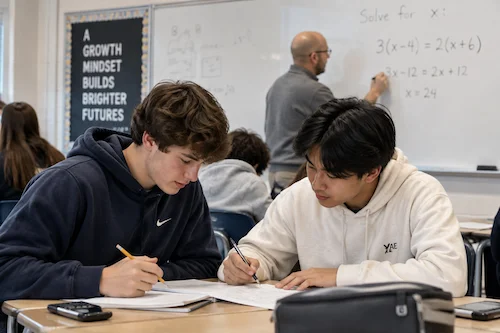
Traditionally, education has followed a rigid structure: students gather at set times, dictated by age and group dynamics, to absorb a standardized curriculum. However, this model is increasingly viewed as outdated, especially as the needs of today’s learners evolve. Educators now face the pressing challenge of rethinking and redefining the educational experience for the modern generation.
Shifting Perspectives in Education
This is more significant than it looks. The conventional educational model has long been one-size-fits-all, where learning is confined to physical classrooms and predetermined schedules. But as society progresses, the demands placed on students and educators alike shift. Factors such as technological advances, diverse learning needs, and a rapidly changing job market require an education that prepares students for an unpredictable future. Educators can no longer rely solely on standardized testing or rote memorization; they must cultivate critical thinking and adaptability in their students.
Innovators at Nipmuc High School
At the forefront of this transformation are Mary Anne Moran and John Clements, the dynamic co-principals of Nipmuc High School in Upton, Massachusetts. Over the past three years, they’ve spearheaded a concerted effort to craft a narrative around learning that diverges sharply from traditional educational storytelling. Both educational leaders have earned accolades including recognition as the 2017 Massachusetts Principal of the Year and the 2016 Assistant Principal of the Year, underscoring their commitment to progressive educational reform.
During their recent podcast discussion, Moran and Clements outlined fundamental shifts occurring at Nipmuc High. Their approach emphasizes inclusivity and community engagement, fostering conversations that re-envision the learning environment. “It’s all about creating a coherent narrative,” Clements noted, illustrating the point that while individual school journeys vary, core principles can guide any institution in redefining learning experiences. This sets a foundation for creating an ecosystem that not only accommodates but thrives on student diversity.
Transformative Educational Strategies
Their insights serve as a roadmap for educational leaders seeking to invigorate their own schools. Rather than adhering to outdated paradigms, Moran and Clements advocate for a personalized learning environment that acknowledges diverse student experiences and learning styles. This approach isn’t just a trendy catchphrase; it involves taking tangible steps that require dedication and a willingness to challenge established norms. Significant starting points include actively engaging the school community, challenging established norms, and leveraging student interests to guide curriculum development. The focus here is on ensuring that the engagement is meaningful, creating a sense of ownership among students.
And yet, while administrative reforms are essential, the execution often falters. Inviting students and parents to contribute their perspectives can lead to insights that fixed curricula might overlook. The incorporation of real-life applications into the curriculum also elicits enthusiasm from students, fostering a more potent learning experience. It’s not merely about textbooks; it’s about enabling students to practice relevant skills that will be useful as they navigate their future—whenever that future might be.
A Practical Approach to Leadership
Furthermore, Moran and Clements are leading by example, inviting educators to explore practical strategies through their newly launched course, “Launching Modern Learning: First Year Strategies for Change.” This offering is crafted to turn theoretical knowledge into tangible action, equipping educators with the tools necessary for meaningful transformation. If you’re working in this space, you’ll find such resources invaluable, as they bring focus to what can often feel like an overwhelming challenge.
In this course, participants can expect an immersive experience that features various modules designed to inspire and provoke thought. Real-world applicability is a priority, with resources aimed at immediate implementation within school frameworks. This initiative not only prepares educators for the changes they wish to enact but also encourages them to foster student-centric designs in everyday learning. The emphasis on practical strategies can help demystify the transformation process, making the shift less daunting and more achievable.
The Bigger Picture: Rethinking the Educational Narrative
The aim is clear: to shift the narrative of education from a prescriptive model to a vibrant, personalized learning journey that resonates with students. The broader implications of this shift cannot be underestimated. As these conversations develop, the education system could adapt to better reflect the diverse needs of students and the realities of the world they will enter. What this means for you in an educational role is an opportunity to engage with these evolving ideas. This isn’t just about following trends; it’s about ensuring that education prepares students for a world filled with uncertainties.
As you reflect on these insights, consider how you might contribute to reshaping the educational narrative in your own community. The journey toward a more engaging and relevant learning experience is one that every educator can participate in. And this is the part most people overlook: while change often starts at the leadership level, grassroots movements among educators can amplify those efforts.
For further exploration, listeners can access the podcast featuring Moran and Clements’ full discussion, which promises to offer additional thought-provoking ideas on advancing educational practices. If their message resonates, consider leaving a review on platforms like Apple Podcasts.

Discussion
Sign in to join the discussion.