Explore how Dave Cormier's rhizomatic learning concept redefines classroom dynamics by positioning community as the central curriculum element.
Each month, our podcast tackles a new theme, and this week we explore the concept of community through the lens of classroom practice. Specifically, we’re asking: what if the community itself served as the curriculum? This question has been gaining traction, particularly as educators seek to engage students in a more meaningful manner. Community-driven curricula promise to not only enrich the learning process but also to prepare students for real-world challenges by integrating diverse perspectives and experiences into their education.
Redefining Curriculum Through Community
This question has been a focal point for Dave Cormier, who's immersed in the idea of “rhizomatic learning” for over a decade. His approach challenges traditional notions of curriculum, suggesting it's not merely a set of predefined knowledge handed down by experts, but rather a dynamic construct shaped by the contributions of everyone involved in the learning experience. By viewing the community as a living curriculum, educators can engage students more effectively by tapping into the wealth of knowledge present around them.
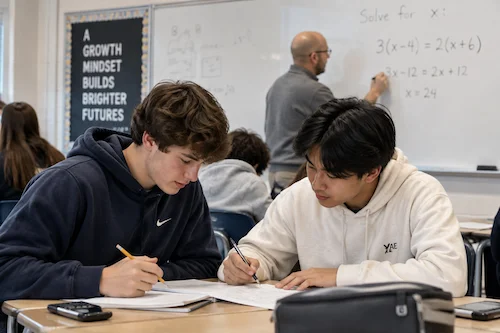
The implications of this perspective are significant. In many traditional educational settings, students often experience a one-size-fits-all approach to learning. They receive information in a linear format without interaction or input from their peers or their community. Such systems frequently alienate students and reduce their motivation to engage deeply with the material. Cormier’s interpretation of curriculum reshapes this landscape by proposing a model where learning becomes more about exploration and interaction rather than rote memorization of facts. This notion encourages learners to become co-creators in their educational journey.
While this model aligns well with the self-directed learning opportunities provided by the Internet, where individuals can select their educators and sources of information, it clashes with the rigidity of traditional educational systems, structures, and established curricula. For many educators, the transition from a standardized curriculum to one that pivots on community contribution is fraught with challenges; existing frameworks are slow to adapt, and entrenched practices are often resistant to change. This creates a paradox where innovative approaches like Cormier’s struggle to gain foothold against deeply rooted institutional practices.
The Nature of Rhizomatic Learning
In our conversation, Dave and I discuss what a rhizomatic learning environment entails, touching on critical themes like the role of language in driving change, the distinctions between complicated and complex educational problems, and the challenge of reshaping students' roles from being mere experts in their studies to becoming adept as learners. Here’s the thing: moving students from passive receivers to active participants is not just about adopting new methodologies; it’s about a fundamental shift in mindset for both educators and students.
The language surrounding education is pivotal. Words can shape perceptions, and in this context, shifting from a focus on “teaching” to “facilitating” can change the atmosphere in a classroom. When we use language that emphasizes collaboration, connection, and community, we open doors for students to view their learning as a shared journey. This shift is not trivial; it requires ongoing effort and critical reflection from educators, who must grapple with their own preconceptions about teaching and learning.
Moreover, distinguishing between complicated and complex educational problems is vital. Complicated issues can typically be solved with expert knowledge and a defined path, while complex problems require ongoing, iterative exploration. Education is often filled with these complex problems. Creating a community-based curriculum means embracing these complexities, allowing learning to evolve, and making it responsive to the community’s needs.
Professional Learning Opportunities
If you’re eager to challenge your thinking and enhance your global Professional Learning Community (PLC), don't miss our two major professional learning events this fall. The 9th Cohort of Change School launches on September 30th, and seats are limited. This 8-week intensive course dives deep into the shifts occurring in the educational landscape, equipping you with the skills to lead meaningful, sustainable change initiatives in your school or community.
Additionally, check out the series of Modern Learners Labs scheduled from October through January. My colleagues Gary Stager and Homa Tavangar will join me for two-day workshops along the east coast, designed to profoundly engage and inspire participants. You can find all the details on our Labs page. These workshops are designed not just to provide professional development but to foster genuine community building among educators.
Actionable Insights for Educators
To wrap up our conversation with Dave, I share three actionable steps you can take immediately to foster a stronger sense of community in your schools and classrooms. 1. Start small — facilitate group discussions where students can express their experiences and ideas about learning. 2. Encourage collaboration among students on projects that explore community issues, allowing them to tie their learning to real-world contexts. 3. Promote peer-led initiatives within the classroom, giving students ownership over specific aspects of their learning journey.
If you enjoyed this episode, please consider leaving us a review on iTunes. The feedback you provide not only helps us improve but also spreads awareness of these crucial themes within educational discourse. I look forward to seeing continued discussions around this vital topic happen within our modernlearner community. Thanks for listening!
Implications for the Future of Learning
As the conversation around community-driven curricula gains momentum, the implications for the future of education are profound. Ultimately, as more educators adopt this philosophy, we may see a significant shift in how educational institutions operate. Schools may transform from merely delivering knowledge to becoming vibrant community hubs where learners engage deeply with their environment. This isn’t just about educational reform; it’s about redefining what it means to learn.
For those working in education, the message is clear: embrace the community. What this means for you is fostering relationships among stakeholders—students, parents, local organizations—to reinforce the learning process. The community doesn't just serve as a backdrop; it’s the core of the educational experience moving forward.

Discussion
Sign in to join the discussion.